Summary:
How Retaining Walls Work on Sloped Terrain
A retaining wall does one job: it holds soil at an angle it wouldn’t naturally maintain. Without that wall, gravity pulls everything downhill. The steeper the slope, the faster that happens. You end up with erosion, exposed roots, washed-out garden beds, and water pooling in places it shouldn’t.
Retaining walls resist that lateral pressure. They create a vertical face that keeps soil in place, even when the grade behind it wants to slide. That’s not just about aesthetics—it’s about preventing long-term damage to your property and giving you flat, usable ground where there wasn’t any before.
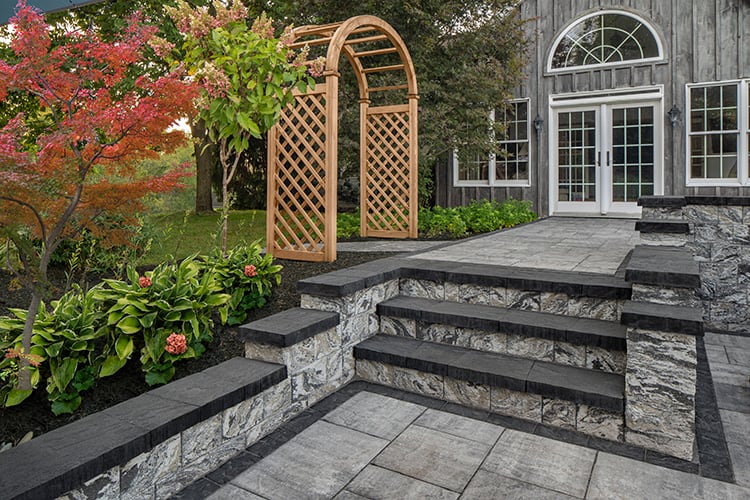
On sloped properties throughout Nassau County and Queens, retaining walls often serve double duty. They manage grade changes and create defined outdoor rooms. A single-tier wall might carve out space for a patio. A multi-tiered system can give you a patio on one level, a garden on another, and a lawn area on a third. Each tier steps down the slope, breaking up what would otherwise be an unusable incline.
Why Segmental Retaining Walls Handle Slopes Better
Not all retaining walls are built the same way. Traditional poured concrete walls are strong, but they’re rigid, expensive, and require heavy equipment. Timber walls rot. Natural stone looks great but demands skilled labor and time.
Segmental retaining walls use modular concrete blocks that interlock without mortar. You stack them, each course locks into the one below it, and the system relies on friction, weight, and proper backfill to stay in place. No mixing concrete. No waiting for cures. No massive footings that need to go below the frost line.
That flexibility matters on slopes. Segmental systems can curve, step down with the grade, and adapt to irregular terrain without custom cuts or engineering headaches. You’re not fighting the land—you’re working with it. And because the blocks are dry-stacked, they allow for slight movement. Soil shifts. Freeze-thaw cycles happen. Segmental walls accommodate that movement instead of cracking under the pressure.
Drainage is where segmental walls really shine. Water is the enemy of any retaining wall. If it builds up behind the structure, hydrostatic pressure increases and eventually pushes the wall out. Segmental systems are designed with drainage in mind. The joints between blocks let water escape. You add a layer of drainage rock behind the wall, install perforated pipe at the base, and the water moves through and away instead of pooling. That’s not an afterthought—it’s built into how these systems function.
For backyard landscaping projects in Nassau County and Queens, where you’re dealing with varied soil conditions and seasonal water movement, that drainage design is critical. A poorly drained wall fails. A properly drained segmental wall lasts decades.
What Cambridge Wall Systems Bring to the Table
Cambridge makes segmental retaining wall blocks in multiple styles, and they’re designed for real-world use. These aren’t decorative garden edging blocks. They’re engineered to handle load, height, and the kind of conditions you find in residential and commercial hardscaping.
The MaytRx system uses four different double-sided block shapes that offer five face sizes. That versatility means you can create corners, curves, and columns without cutting every other block. You’re not locked into straight runs. The blocks come in 3-inch and 6-inch heights, so you can mix them for a more natural, varied look—or stick with one height for clean, uniform courses.
Pyzique blocks are designed with a built-in interlock. Each block has grooves on top that guide the next course into place. That makes installation faster and more foolproof. You can build freestanding walls, retaining walls up to 3 feet, or even fire pit surrounds with the same block. One unit, multiple applications.
Olde English Wall blocks are the workhorse option. They’re 4 inches high, 8 inches deep, and 12 inches long—a universal size that stacks in unlimited patterns. You can run them horizontally, stand them vertically as “soldiers,” or mix orientations for visual interest. They work for retaining walls, freestanding walls, seating walls, and even edging. One block, multiple applications.
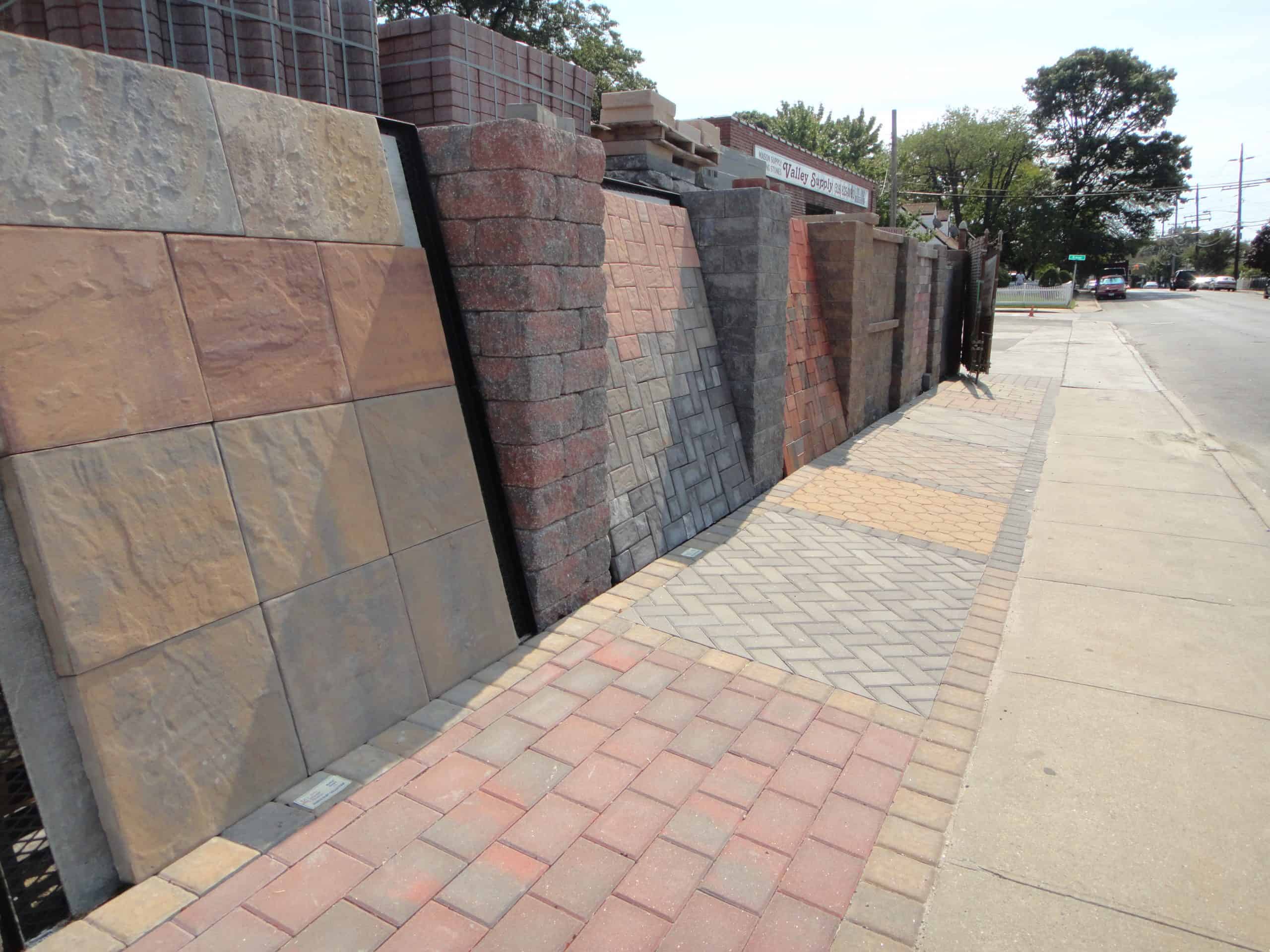
All of these systems are available in blended colors that match or complement Cambridge pavers. If you’re building a patio and retaining wall together, you’re not hunting for materials that sort-of-match. The colors are coordinated. The textures align. The finished project looks intentional, not pieced together.
And when you need engineering support—because taller walls or heavy loads require it—Cambridge has resources. They offer free takeoffs, geogrid layouts, and access to stamped engineering drawings through their partnership with HTS. That’s not common. Most block manufacturers sell you the product and leave you to figure out the engineering. Cambridge actually supports the design process.
Planning Multi-Level Outdoor Spaces with Retaining Walls
A single retaining wall creates one level. Multiple walls create zones. That’s where sloped yards start to make sense. Instead of fighting a 10-foot grade change with one massive wall, you build two or three smaller walls, each creating a distinct terrace. Each level serves a purpose.
The key is thinking about how you’ll use the space, not just how to hold back the dirt. Maybe the upper tier becomes a dining patio with pavers. The middle tier is a garden with raised beds. The lower tier is open lawn or a fire pit area. Each level connects with steps or pathways, and the retaining walls define the boundaries. This is backyard landscaping that actually works with your terrain instead of fighting it.
This approach also reduces the engineering load. A 6-foot wall requires more structural support than three 2-foot walls. By terracing, you’re distributing the soil retention across multiple structures instead of concentrating it in one. That often means you can stay under the height thresholds that trigger engineering requirements in Nassau County.
How to Think About Wall Height and Spacing
Wall height isn’t arbitrary. It’s driven by how much grade you need to manage and what you’re building behind the wall. A 2-foot wall can carve out space for a garden bed. A 4-foot wall can create a full patio level. Anything taller usually requires geogrid reinforcement and engineering.
In Nassau County, local codes often require a building permit and stamped engineering for walls over 4 feet in exposed height. Some municipalities set that threshold even lower. That doesn’t mean you can’t build a tall wall—it just means you need a plan that accounts for soil pressure, drainage, and structural reinforcement.
When you’re planning multiple tiers, spacing matters. If you stack walls too close together, the upper wall adds load to the lower one. That’s called surcharge, and it increases the pressure on the bottom wall. You need enough horizontal distance between tiers to let each wall function independently. A general rule: space walls at least twice the height of the lower wall. So if your lower wall is 3 feet tall, leave at least 6 feet of horizontal space before you start the next tier.
That spacing also gives you room to work. You’re not cramming a narrow planting bed between two walls. You’re creating actual usable space—room for a patio, a walkway, plantings that have space to grow. It’s the difference between a wall that looks like an afterthought and a design that feels planned.
Drainage still applies at every tier. Each wall needs its own drainage rock, perforated pipe, and filter fabric. Water doesn’t stop at one level—it moves downhill. If the upper wall drains into the space behind the lower wall, you’re just shifting the problem. Plan for water to exit at each tier, either through weep holes or by directing it to the sides of the structure.
Incorporating Outdoor Rooms into Tiered Designs
Once you’ve solved the slope problem, you can start thinking about function. Retaining walls don’t just create flat ground—they define spaces. A low wall can frame a seating area. A taller wall can back a built-in bench. Corners can become planters. Steps can integrate into the wall itself.
This is where Cambridge wall systems give you options. Because the blocks are modular and come in coordinating styles, you can mix retaining walls with seat walls, columns, and caps. A retaining wall on the lower tier holds back soil. A seat wall on the upper tier provides built-in seating around a fire pit. The blocks match. The design flows. You’re creating outdoor living spaces that feel intentional.
Lighting is another layer. Many segmental wall systems accommodate LED cap lights that sit on top of the wall or integrate into the face. That’s not just decorative—it’s functional. Lit walls make steps visible at night. They define edges. They extend how long you can use the space after dark.
Plantings soften the hardscape. A retaining wall by itself can feel stark. Add trailing plants that spill over the top, ornamental grasses that frame the edges, or low shrubs in front, and the wall becomes part of the landscape instead of dominating it. On tiered designs, each level offers planting opportunities. The upper tier might have perennials. The middle tier could be herbs or vegetables. The lower tier might be groundcover or flowering shrubs.
The goal is to make the retaining walls feel like they belong. They’re not an engineering fix you’re trying to hide—they’re part of the design. When that happens, your sloped yard stops being a problem and starts being an asset. You’ve got vertical interest, defined zones, and outdoor rooms that actually work.
Turning Sloped Nassau Yards into Functional Outdoor Living
Sloped yards aren’t easy, but they’re not impossible. With the right retaining wall system, you’re not just holding back soil—you’re creating space. Multi-level designs give you distinct outdoor zones. Segmental blocks give you flexibility, drainage, and long-term stability. Cambridge wall systems give you options that work together visually and structurally.
Whether you’re a contractor planning a project or a homeowner trying to figure out what’s possible, the principles are the same. Understand the grade. Plan for drainage. Think about how the space will actually be used. And choose materials that are engineered to handle the load, not just look good in a catalog.
If you’re sourcing materials for a Nassau County or Queens project, we carry Cambridge wall systems, retaining wall blocks, and the support products you need—drainage rock, geogrid, caps, and pavers that coordinate with your wall design. We’re here to help you think through the design and get the right materials on site.