Summary:
You got a couple of quotes. The numbers are all over the place. One contractor is pushing concrete, another is pushing pavers, and neither one is making it easy to understand what you’re actually paying for or why.
That’s the most common frustration we hear from Nassau County homeowners before they walk through our door. So consider this your no-nonsense breakdown — what concrete and pavers actually cost on Long Island in 2026, what drives those numbers up or down, and what tends to hold up better when a nor’easter rolls through and the ground freezes solid for the third time in February.
Concrete vs. Pavers Cost in Nassau County: What the Numbers Actually Look Like
Nationally, poured concrete runs about $6 to $15 per square foot installed. Pavers come in around $10 to $30. Those numbers get thrown around a lot — but they don’t mean much if you’re in Massapequa or Merrick, where labor rates are significantly higher than the national average.
In Nassau County, concrete driveways and patios typically run $12 to $25 per square foot installed. Pavers — depending on the material and pattern — generally fall between $16 and $35 per square foot. The gap is real, but it’s narrower than most people expect. And once you factor in what happens over the next 15 years, it often closes entirely.
What Drives Paver Installation Costs Higher on Long Island
A few things push costs up in Nassau County specifically. Labor is the biggest one. Wages here are among the highest in New York State, and skilled hardscape crews in Garden City or Rockville Centre aren’t working at the same rate as crews in the Midwest. That’s just the reality of the local market.
Base preparation is the other major cost driver — and the one that separates a paver installation that lasts 40 years from one that shifts and settles in five. A properly built paver base requires six to eight inches of compacted crushed stone, a one-inch bedding sand layer, and proper edge restraints around the perimeter. On Nassau County’s sandy, coastal soils — especially in communities closer to the South Shore like Oceanside or Valley Stream — that base work is not optional. It’s what keeps the surface stable when the ground moves.
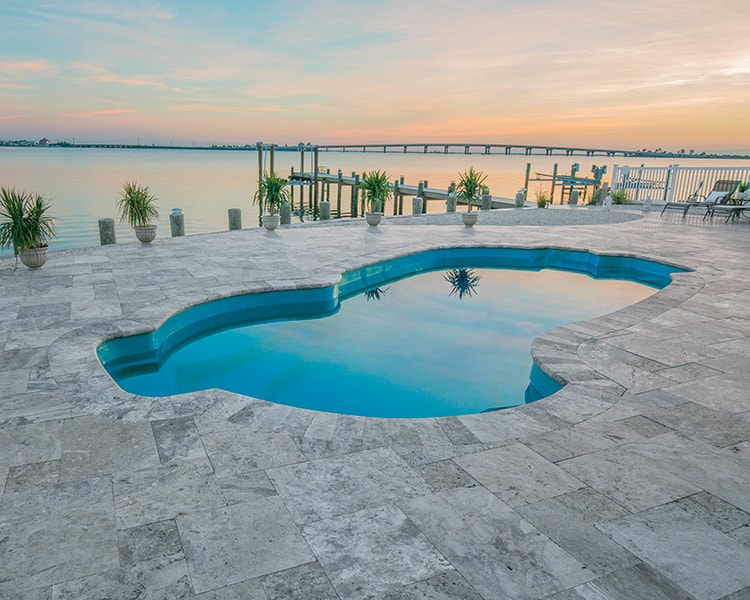
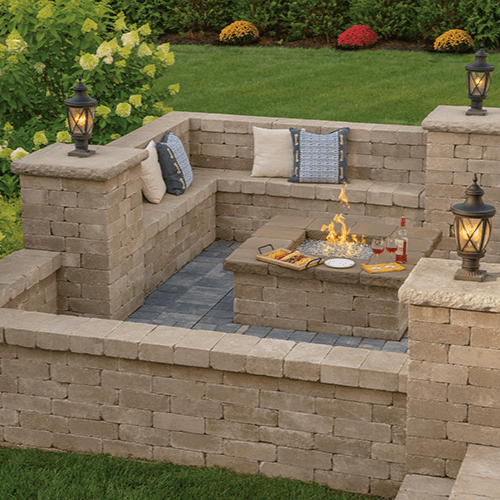
The type of paver matters too. Concrete pavers at the entry level run $16 to $19 per square foot installed locally. Brick pavers come in closer to $17 to $22. Natural stone pushes to $25 to $35 or more. Cambridge Pavingstones — which is the full line we carry here at our Elmont location — spans that range depending on the style and series, but every product in our line is engineered to exceed ASTM standards for freeze-thaw resistance, which matters more in Nassau County than almost anywhere else in the Northeast.
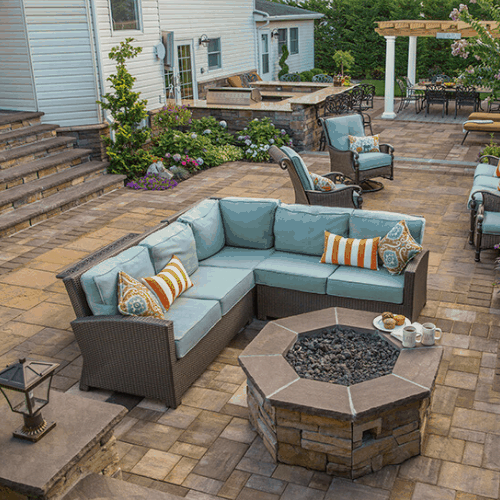
One thing worth understanding: the upfront cost of pavers reflects not just the material but the permanence of the installation. Done right, a paver driveway or patio in Nassau County can last 25 to 50 years with minimal intervention. That’s a different category of investment than a concrete slab.
Why Concrete Costs Less Upfront but More Over Time in Nassau County
Concrete’s lower installed price is real, and we’re not going to pretend otherwise. For a 400-square-foot patio, you might pay $4,800 to $10,000 for a concrete pour versus $6,000 to $14,000 for pavers. That difference is meaningful, especially if budget is tight.
But here’s what the concrete quote doesn’t include: resealing every two to three years at $1 to $3 per square foot, crack repairs that are never truly invisible, and — eventually — full removal and replacement when the slab deteriorates past the point of patching. In Nassau County’s climate, that timeline moves faster than it does in warmer markets. The ground here freezes and thaws repeatedly every winter. Water gets into microscopic cracks, freezes, expands, and widens those cracks with each cycle. It’s not a question of whether a concrete slab will crack in this climate. It’s a question of when.
Pavers handle that same ground movement differently. Because they’re individual interlocking units set in sand rather than a rigid slab, they flex slightly with the freeze-thaw cycle instead of fracturing under it. If a unit does get damaged — from a heavy vehicle, a tree root, or just time — you pull it out and replace it. The repair is seamless. No color-matching issues, no visible patchwork, no section of your driveway that looks like it had surgery.
Over a 15-to-20-year window, the long-term cost of concrete in Nassau County tends to eat into its upfront advantage significantly. Industry data suggests Nassau County homeowners also recoup 50% to 80% or more of their paver investment at resale, because buyers in this market recognize pavers as a premium feature — not a standard one.
Stamped Concrete vs. Pavers Cost: The Long Island Reality Check
Stamped concrete deserves its own conversation because it’s a genuinely appealing option on paper. It mimics the look of pavers or natural stone, it installs faster, and it typically costs less upfront — around $8 to $18 per square foot on Long Island versus $16 to $30 for pavers. For a lot of Nassau County homeowners, that combination is hard to ignore.
The problem is what happens after the first few winters. Stamped concrete is still a rigid slab, which means it’s subject to the same freeze-thaw cracking as plain concrete — just with a decorative surface on top that makes those cracks far more visible and far harder to repair convincingly.
Does Stamped Concrete Hold Up in Nassau County's Freeze-Thaw Climate?
The short answer is: not as well as pavers. Stamped concrete sits at roughly 2,500 to 3,000 PSI compressive strength. Standard concrete pavers — including the Cambridge line we carry — are engineered to 8,000 PSI or greater. That’s more than double the structural strength, and it shows in how each material responds to the stresses of a Long Island winter.
When stamped concrete cracks — and in Nassau County, it will — the repair is almost never clean. Matching the original color and pattern after a few years of UV exposure and weather cycling is extremely difficult. Most patched sections are visible from 10 feet away. For some homeowners, that’s acceptable. For most who chose stamped concrete specifically for its appearance, it’s a real source of regret.
There’s also the maintenance cost to factor in. Stamped concrete needs resealing every two to four years to maintain its color and prevent surface scaling. Skip the sealer once or twice and the deterioration accelerates quickly. Pavers require less frequent maintenance overall. Polymeric sand in the joints significantly reduces weed growth and ant activity, which are the two most common complaints about paver installations. Occasional re-sanding and optional sealing are about the extent of it for a properly installed surface. The maintenance burden is genuinely lighter than stamped concrete, even though the upfront cost is higher.
Cement vs. Pavers Cost: Clearing Up the Terminology Nassau County Homeowners Search
A quick note on terminology, because it comes up constantly. When people search “cement vs pavers cost,” they almost always mean concrete versus pavers. Cement is actually just one ingredient in concrete — the binding powder that, when mixed with water, sand, and aggregate, produces the finished material. You don’t pour cement; you pour concrete. It’s a small distinction, but worth knowing when you’re reading quotes and talking to contractors, so you understand what’s actually being described.
With that clarified: the cost of pavers vs concrete in Nassau County comes down to what you’re optimizing for. If the priority is lowest possible upfront cost, plain concrete wins. If the priority is durability, repairability, and long-term value in a freeze-thaw climate with sandy coastal soils, pavers are the stronger choice for most Nassau County applications.
What often gets overlooked in this comparison is the role of the materials themselves — not just the labor. Two paver installations can look identical on a quote but use very different products. The Cambridge ArmorTec line, for example, features a proprietary surface treatment engineered specifically for enhanced stain resistance, color retention, and reduced water absorption. That matters in a county where many homes sit within a few miles of the Atlantic Ocean and deal with salt air, heavy storm runoff, and UV exposure year-round. Not every paver on the market is designed for those conditions.
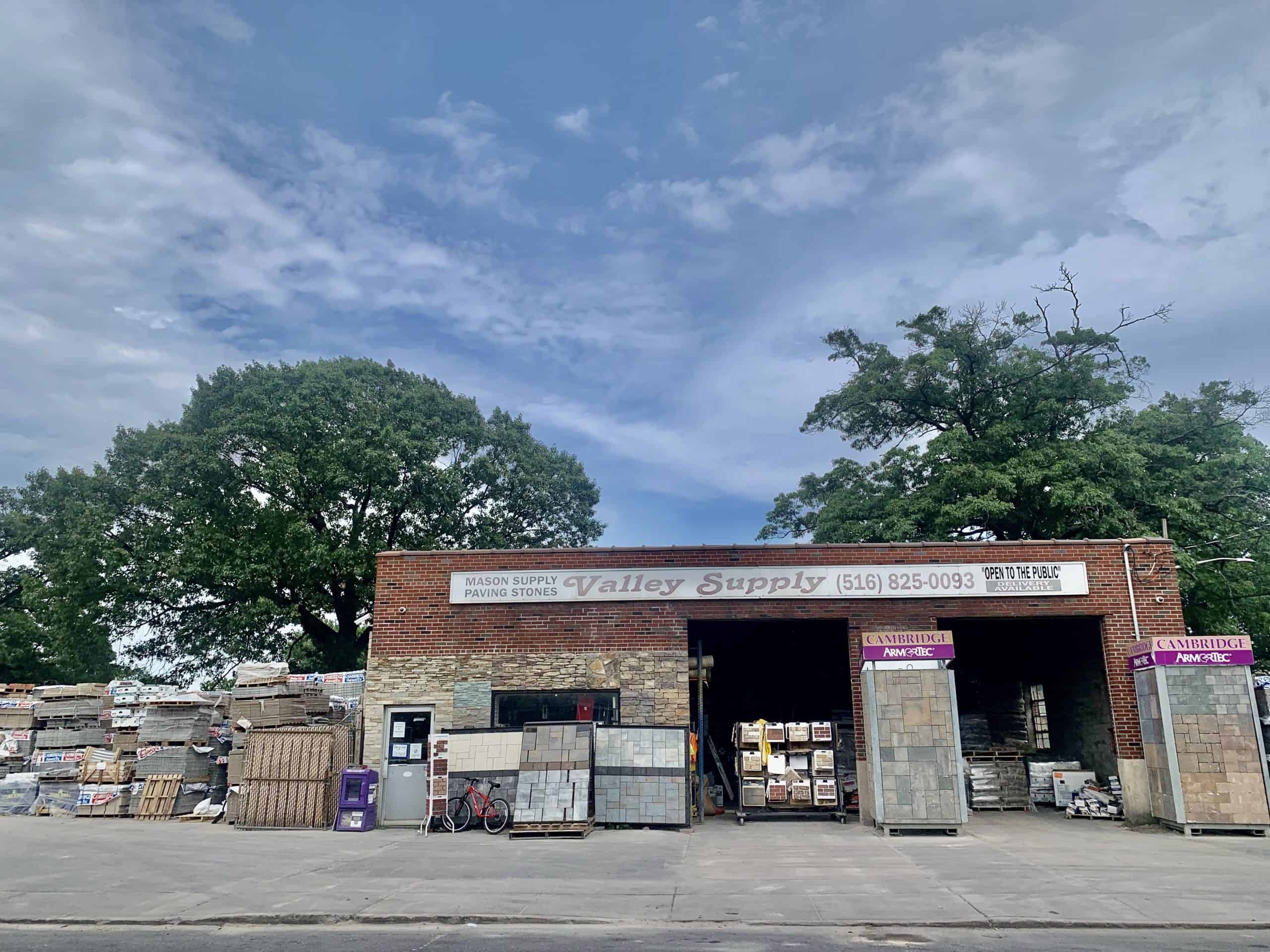
This is part of why we’ve been a Premier Cambridge Dealer for 19 years. It’s not just about carrying the full product line — it’s about knowing which products are right for which applications, and being able to walk a homeowner or contractor through that decision with real specificity. When you visit our 20,000-square-foot facility in Elmont, you can see the Cambridge line hands-on, compare styles and colors side by side, and ask questions from people who’ve been supplying these materials to Nassau County projects since before most of the contractors in this market were in business.
Where to Go From Here: Getting Accurate Paver and Concrete Costs for Your Nassau County Project
The honest takeaway is this: concrete costs less to install, pavers cost less to own. In Nassau County’s climate — with its freeze-thaw winters, sandy soils, and coastal exposure — that long-term math matters more than it does in most other markets. Stamped concrete sits somewhere in the middle, with an appealing upfront price and real durability limitations that tend to surface within the first five to ten years.
Whatever direction you’re leaning, the best thing you can do before signing a contractor quote is understand what the materials actually cost. When you know what Cambridge pavers run per square foot at the source, you’re in a much better position to evaluate whether a contractor’s estimate is fair — and what’s included versus what might be cut to hit a lower number.
We’ve been supplying masonry materials to Nassau County homeowners and contractors from our Elmont location since 1956. If you’re in the planning stages of a driveway, patio, or walkway project and want a straight answer on material costs and options, stop by Valley Supply Corp or give us a call. We’re open Monday through Friday, 7AM to 5PM, and Saturdays from 7AM to 2PM.