Summary:
If you’re standing in your driveway looking at cracked concrete or tired, faded pavers, you’ve probably already started Googling. And you’ve probably noticed that everyone seems to have a strong opinion about whether natural stone or manufactured pavers are the right call. The truth is, both can be excellent choices — and both can be the wrong choice, depending on your specific situation. Nassau County’s winters, soil conditions, and coastal exposure create a set of demands that most generic comparison guides completely ignore. This page is the honest version of that comparison, written from 67 years of experience supplying materials to contractors and homeowners across Long Island.
How Natural Stone Pavers Perform in Nassau County's Climate
Natural stone has a lot going for it. Pennsylvania Bluestone — quarried from the Catskills and northeastern Pennsylvania — has been used in Long Island outdoor applications for generations, and for good reason. Its density makes it naturally resistant to water infiltration, which is the primary enemy of any paving material in a freeze-thaw climate. Granite is even denser, making it the go-to choice for high-traffic applications like driveways where you need maximum durability.
The honest caveat is that not all natural stone performs equally here. Travertine, limestone, and sandstone are more porous than bluestone or granite, which means they absorb more water. In Nassau County — where the ground can cycle through 30 to 40 freeze-thaw events in a single winter — that porosity matters. Water expands nine percent when it freezes. Over time, that pressure works against any material that holds moisture.
Paver Material Comparison: What Each Stone Type Handles Best
Bluestone is the most commonly specified natural stone for Long Island patios and walkways, and the reputation is earned. It’s dense, it handles freeze-thaw cycles well, and it develops a natural patina over time that most homeowners find more appealing than the faded look of an aging concrete surface. If you’re replacing an old flagstone walkway in a Five Towns neighborhood or adding a patio to a Merrick backyard, bluestone is the material that has proven itself in this region over decades.
Granite holds up even better in high-stress applications. It’s the preferred choice for driveways, pool surrounds, and any area that takes heavy foot traffic or vehicle weight. It’s virtually impervious to water absorption, which means freeze-thaw cycles don’t threaten it the way they threaten more porous materials. The trade-off is cost — granite is typically at the higher end of the natural stone price range.
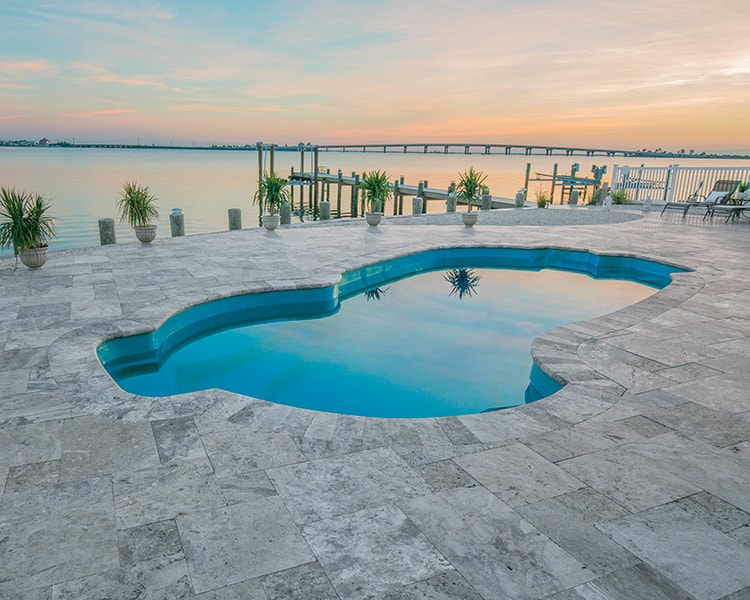
Travertine is worth a separate mention because it’s become popular for pool decks, largely because it stays cooler underfoot in direct sunlight than most other materials. That’s a real benefit on a hot Nassau County summer afternoon. But travertine is porous, and in this climate, it needs to be sealed regularly — plan on every three to five years — to prevent water infiltration and the freeze-thaw damage that follows. Skip the maintenance, and you’ll be looking at surface pitting and cracking within a few years.
One thing natural stone cannot offer is a manufacturer’s warranty. The material is geological — what you get is what the quarry provides. That’s part of its appeal, but it also means that color matching a replacement piece years down the road can be genuinely difficult. Quarry variations are real, and if one stone gets damaged or stained, finding an exact match isn’t always possible.
Stone Paver Durability in Long Island's Freeze-Thaw Climate
Durability in Nassau County comes down to one variable above everything else: water absorption. The materials that absorb the least water hold up the best through winter. Dense natural stones like bluestone and granite score well here. The challenge is that even the best natural stone installation can fail if the base preparation underneath it isn’t done correctly — and this is where Nassau County’s soil conditions create a specific local problem that most generic guides skip entirely.
Large portions of Nassau County — particularly in older communities like Elmont, Valley Stream, Hempstead, and Levittown — have clay-heavy soil. Clay doesn’t drain the way sandy or loamy soil does. It holds water near the surface and beneath paving systems, which means the base beneath your pavers is doing a lot of work to compensate. A minimum four-inch compacted aggregate base for frost resistance, proper drainage grading sloped at least two percent away from any structure, and edge restraints aren’t optional in this market — they’re the difference between a paver installation that lasts and one that starts heaving within a few winters.
This is also why the “just put pavers on top of existing concrete” approach requires a careful assessment rather than an assumption. If the existing concrete slopes correctly and the drainage is sound, it can work. If it doesn’t, you’re building a new problem on top of an old one.
Natural stone’s lifespan, when properly installed and maintained, is genuinely impressive. Bluestone and granite installations can last well over a hundred years. That’s not marketing language — it’s a reflection of what these materials are. But that lifespan is contingent on the base being right, the drainage being right, and the maintenance being consistent. The material itself is only part of the equation.
Manufactured Pavers: What Cambridge ArmorTec® Offers
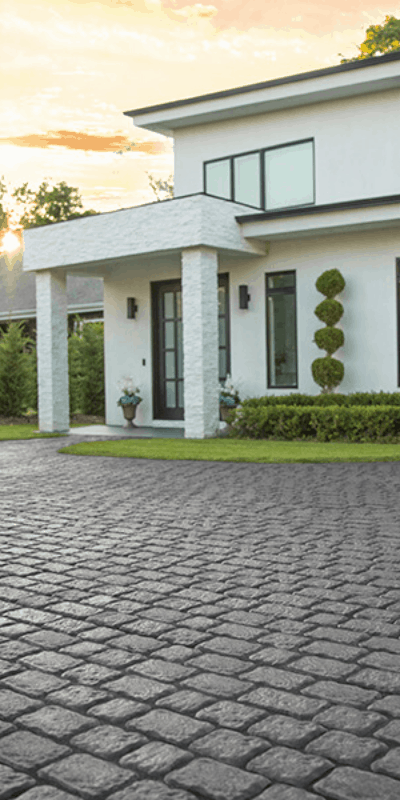
Manufactured pavers have come a long way from the generic concrete blocks that gave the category a reputation for looking cheap. Cambridge ArmorTec® pavers are engineered specifically for the Northeast — manufactured in New York, meeting ICPI and ASTM International standards, including ASTM F1678 for slip resistance. The ArmorTec face mix is fused directly into each paver during manufacturing, not applied as a surface coating. That distinction matters because it means the color and density are integral to the paver, not sitting on top of it waiting to wear off.
The result is a product that handles Nassau County’s freeze-thaw cycles well, resists the salt air exposure that coastal communities on the south shore deal with year-round, and holds its color without the fading that plagues lower-quality concrete products.
Why Nassau County Homeowners Choose Manufactured Pavers Over Concrete Slabs
The comparison most Nassau County homeowners should actually be making isn’t natural stone versus manufactured pavers — it’s either of those versus a poured concrete slab. Concrete slabs crack. They crack because they’re rigid, and rigid materials don’t flex when the ground beneath them moves. In a market with freeze-thaw cycles and clay-heavy soil that shifts seasonally, the ground beneath your paving is moving. Interlocking pavers — whether natural stone or manufactured — are designed to accommodate that movement. A single paver can be lifted and reset. A cracked concrete slab requires grinding, patching, or full replacement.
We also give you something natural stone can’t: design flexibility at scale. Cambridge offers hundreds of color and pattern combinations across multiple collections — from the look of old-world Belgium block to clean, contemporary large-format slabs. If you have a specific vision for your outdoor space, manufactured pavers can execute it with a consistency that natural stone, which gives you what the quarry provides, simply cannot match.
The warranty is another real differentiator. Cambridge’s Fade-Proof Color Guarantee is a transferable lifetime warranty — meaning if you sell your home, the warranty transfers to the new owner. In a Nassau County real estate market where median home values sit between $775,000 and $840,000 and homes sell in about 25 days at or above asking price, that transferable warranty is a legitimate selling point. It’s not just peace of mind for you — it’s a documented quality signal for the next buyer.
Cost and Long-Term Value: Which Paver Material Makes More Financial Sense?
The upfront cost comparison is straightforward: manufactured pavers are typically 15 to 20 percent less expensive per square foot than natural stone alternatives. If initial budget is the primary constraint, that difference is real and meaningful.
The longer view is more nuanced. Concrete pavers in commercial applications typically require replacement after 20 to 25 years. Dense natural stone — bluestone, granite — can last well over a century with proper maintenance. When you factor in replacement cost, the labor to remove and reinstall, and the disruption of redoing a patio or driveway a decade or two down the road, the lifecycle cost calculation often shifts in favor of natural stone for buyers who are thinking long-term.
That said, Cambridge ArmorTec® manufactured pavers are not standard concrete. They’re engineered to outperform generic concrete products significantly, and their lifespan reflects that. The comparison isn’t “stone lasts forever, concrete doesn’t” — it’s more accurate to say that quality manufactured pavers deliver strong long-term performance, while natural stone’s ceiling is higher if the installation and maintenance are done right.
The ROI framing matters here too. Paver patios deliver more than 80 percent return at resale — higher than decks, and one of the strongest returns available for any outdoor improvement. The National Association of Realtors gives new patios a satisfaction score of 9.7 out of 10, the highest of any home project category they track. In Nassau County’s market, where 51 percent of homebuyers say they’d pay a premium for a home with outdoor living space, the investment in quality paving — whether natural stone or manufactured — is rarely money poorly spent.
The honest answer to “which costs more” is: it depends on which specific products you’re comparing, how long you plan to stay in the home, and how much maintenance you’re willing to commit to. Those are exactly the kinds of questions worth talking through with someone who has been selling both materials to Nassau County homeowners and contractors for decades.
Which Paver Is Right for Your Nassau County Project?
There’s no universal right answer here, which is why pages that tell you one material is simply better than the other aren’t giving you the full picture. Bluestone and granite are exceptional materials with a proven track record on Long Island. Cambridge ArmorTec® manufactured pavers are engineered for this climate, backed by a transferable warranty, and offer design flexibility that natural stone can’t match. The right choice depends on your project, your soil conditions, your budget, and how long you’re planning to stay in the home.
What does matter universally — regardless of which material you choose — is that the base is right, the drainage is right, and the installation is done properly. In Nassau County’s clay-heavy soil and freeze-thaw climate, there’s no shortcut on that front.
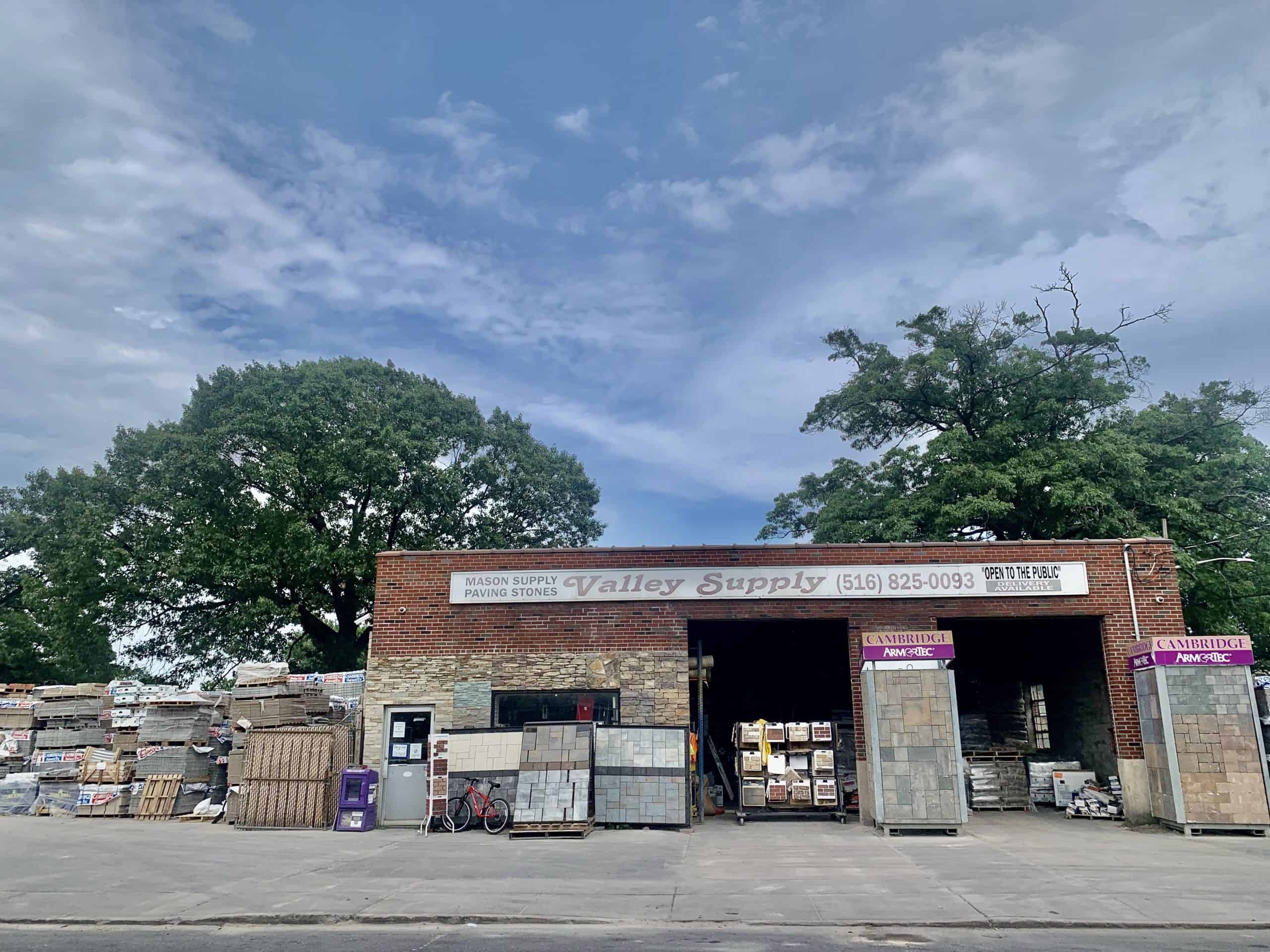
If you want to see both options in person before you decide, we carry natural stone and the complete Cambridge line at our 20,000 square foot facility at 747 Meacham Avenue in Elmont. You can walk the displays, ask questions, and leave with a clear picture of what works for your specific project. We’ve been helping Nassau County homeowners and contractors make exactly this decision since 1956 — and we’re here Monday through Friday, 7AM to 5PM, and Saturdays until 2PM.
—
**Frequently Asked Questions**
**Which lasts longer — natural stone or manufactured pavers?** Dense natural stones like bluestone and granite can last well over a hundred years with proper installation and maintenance. Quality manufactured pavers, like Cambridge ArmorTec®, are engineered for long-term performance and typically outlast standard concrete significantly. In Nassau County specifically, where freeze-thaw cycles and clay soil put real stress on any paving system, the quality of the base preparation matters just as much as the material itself. We’ve seen properly installed bluestone patios from the 1950s still holding strong in Manhasset and Garden City — that’s the kind of durability you’re looking at with dense natural stone.
**What’s more cost-effective for Nassau County’s freeze-thaw climate?** Manufactured pavers are typically 15 to 20 percent less expensive upfront. But in Nassau County specifically, the more important cost question is long-term: how often will you need to repair or replace? Dense natural stone and quality manufactured pavers both hold up well when installed correctly over a proper compacted aggregate base. The material that costs you less over 20 years is often not the one with the lower initial price tag. We recommend thinking about your timeline — if you’re planning to stay in your Nassau County home for 15+ years, the lifecycle cost of natural stone often wins out.
**Do I need to seal natural stone pavers?** It depends on the stone. Bluestone and granite are dense enough that sealing is optional but beneficial. More porous stones — travertine, limestone, sandstone — should be sealed every three to five years in Nassau County’s climate to prevent water infiltration and the freeze-thaw damage that follows. Skipping maintenance on a porous stone in a Long Island winter is a reliable way to shorten its lifespan considerably.
**Can I replace a single paver if one gets damaged?** With manufactured pavers like Cambridge, yes — their consistent manufacturing process makes replacement matching straightforward, and we’ve been a Cambridge dealer for over 20 years, so sourcing a match is rarely a problem. With natural stone, it’s more complicated. Quarry variations mean that a replacement piece pulled years later may not be an exact color or texture match. It’s worth factoring in when you’re making your initial material decision.
**Do manufactured pavers look as good as natural stone?** Modern manufactured pavers are not the flat gray concrete blocks of 30 years ago. Cambridge ArmorTec® pavers come in hundreds of color and pattern combinations, and the engineering behind the face mix produces a product that holds its appearance over time. Whether they look “as good” as natural stone is genuinely subjective — but they look different, not inferior. The best way to answer that question for yourself is to see them side by side in person, which you can do at our Elmont location at 747 Meacham Avenue.