Summary:
What Makes Masonry "Marine-Grade"
Marine-grade isn’t just marketing language. It’s a specific set of performance characteristics that separate coastal-worthy materials from standard options.
The difference comes down to density, absorption rates, and chemical resistance. When moisture penetrates porous masonry and freezes, it expands by roughly 9%. That expansion creates internal pressure strong enough to crack even quality materials if they’re not engineered for it. Marine-grade products are manufactured with lower water absorption rates and denser compositions that resist this freeze-thaw damage.
Salt exposure adds another layer of complexity. Sodium chloride and other compounds don’t just sit on the surface—they penetrate the material, crystallize, and expand with enough force to cause spalling and surface deterioration. Materials rated for marine environments are specifically formulated to resist these chemical reactions.
How salt air damages standard masonry materials
Most people don’t realize the damage is happening until they see it. By then, the salt has already done its work.
When wind carries moisture off the ocean, it’s loaded with sodium chloride and other corrosive compounds. These penetrate the surface of your brick and mortar. As temperatures drop—which happens frequently in Nassau County winters—that moisture freezes and expands. The cycle repeats dozens of times each season.
Salt crystals form just below the surface as moisture evaporates. They’re sharp, they grow, and they push outward from inside the material. You’ll notice it first as efflorescence, that chalky white residue on your brick face. That’s your warning sign. Ignore it, and you’re looking at spalling—where the surface literally flakes away—and eventually structural issues that require complete replacement.
The splash zone is particularly brutal. This is the area where materials are intermittently wet and dry, with sufficient oxygen to accelerate corrosion. For waterfront properties in Oceanside or Seaford, this zone extends further than you’d expect. Even properties several blocks from the water experience these effects because salt air travels on wind patterns across the entire coastal region.
Standard masonry products aren’t manufactured to handle this. They’re designed for inland conditions where freeze-thaw cycles are less frequent and salt exposure is minimal. Use them in a coastal zone, and you’re setting yourself up for premature failure.
High-density blocks vs. standard concrete units
The density of your masonry units determines how well they perform in coastal conditions. This isn’t about weight for the sake of weight—it’s about reducing the pathways moisture can travel.
High-density concrete blocks can reach densities up to 4.0 tons per cubic meter, compared to standard units around 2.4 tons per cubic meter. That extra density means fewer pores, less water absorption, and better resistance to both freeze-thaw damage and salt penetration. Modern manufacturing produces units specifically designed for coastal environments, with enhanced resistance built into the firing or curing process.
The absorption rate is critical. When water penetrates inferior materials and freezes, it expands approximately 9%, generating tremendous internal pressure. High-quality, high-density units have lower absorption rates and denser compositions that resist this damage. They also maintain structural integrity when exposed to salt air, which causes rapid deterioration in lower-grade options.
For Nassau County waterfront construction, this matters more than in inland projects. The combination of salt air, high winds, heavy precipitation, and dramatic temperature swings creates a perfect storm of challenging conditions. Premium materials aren’t just recommended—they’re necessary for anything that’s going to last more than a few seasons without significant maintenance.
The cost difference upfront is real. High-density units typically run higher than standard blocks. But factor in the maintenance costs, the repair work, and the potential for complete replacement within 10-15 years with inferior materials, and the math changes quickly. You’re not paying more for the same thing—you’re paying for materials that actually perform in the environment where you’re building.
Specialized Mortars for Waterfront Construction
Your blocks are only as good as what holds them together. Standard mortar fails in coastal zones for the same reasons standard blocks do—it’s not engineered for the conditions.
Marine-grade mortars are polymer-modified, cementitious formulations with enhanced properties for aggressive environments. They’re designed for areas subject to early immersion, meaning they can handle moisture exposure much sooner after installation than standard options. This matters in coastal construction where humidity is constant and weather doesn’t always cooperate with your construction schedule.
The key difference is in the resistance to chloride penetration and the ability to cure properly even in wet conditions. Standard mortar absorbs moisture, which then carries salt deeper into the joints. Marine formulations create a denser matrix that resists this penetration and protects against the ingress of acid gases, moisture, and chlorides.
Preventing efflorescence with proper mortar selection
Efflorescence is that white, powdery deposit you see on masonry surfaces. It’s not just cosmetic—it’s a warning that moisture is moving through your masonry and bringing soluble salts to the surface.
Three conditions must exist for efflorescence to occur. First, water-soluble salts must be present somewhere in the wall. Second, sufficient moisture must be in the masonry to render those salts into solution. Third, there must be a path for the soluble salts to migrate through to the surface where moisture evaporates, deposits the salts, and crystallizes.
The most effective prevention is minimizing water penetration through material selection. This means using mortars with low soluble salt content and formulations that create a denser, less permeable barrier. In coastal areas, where moisture exposure is constant, this becomes even more critical.
Marine-grade mortars are specifically formulated to reduce the salts present in the mix and to create a tighter matrix that resists moisture migration. They also cure to a harder, more water-resistant finish than standard options. For properties in Glen Cove or Seaford where salt spray is a daily occurrence, this difference in formulation can mean the difference between masonry that lasts decades and masonry that shows efflorescence within the first year.
It’s worth noting that efflorescence on new construction—called “new building bloom”—is often temporary and weathers off within months. But persistent efflorescence means excess moisture is entering the system, and if not remedied, it’s a precursor to more serious damage. The right mortar selection is your first line of defense.
Mortar mix ratios and additives for salt resistance
The ratio of cement to sand in your mortar affects its performance in coastal conditions. Too much cement and you get a mix that’s prone to cracking. Too little and you sacrifice strength and water resistance.
For marine environments, the minimum strength grade should be C35 (35 MPa compressive strength) or higher. Functional admixtures like ground granulated blast-furnace slag (GGBS) are often mixed in to improve chloride penetration resistance through increased watertightness. GGBS has been specifically recommended for use in coastal areas due to its long-term watertightness improvement and superior chloride ion binding capacity.
Calcium chloride—sometimes added to mortar as a set accelerator—should be limited or avoided entirely in marine applications. It can cause corrosion of metal embedded in mortar and can contribute to efflorescence. Specifications typically limit chloride ions to 0.2 percent for mortar admixtures in coastal construction.
Water-cement ratios also matter. Lower ratios produce denser, less permeable mortar, but they can be harder to work with. The balance is finding a mix that’s workable for installation while still providing the density and chemical resistance needed for long-term performance. This is where working with a knowledgeable supplier makes a difference—we can guide you to formulations that have proven performance in Nassau County’s specific coastal conditions rather than guessing based on general specifications.
Finding the Right Masonry Yard for Coastal Construction Supplies
Not every masonry yard stocks materials rated for coastal use. And not every supplier understands the difference between standard products and what actually performs in waterfront conditions.
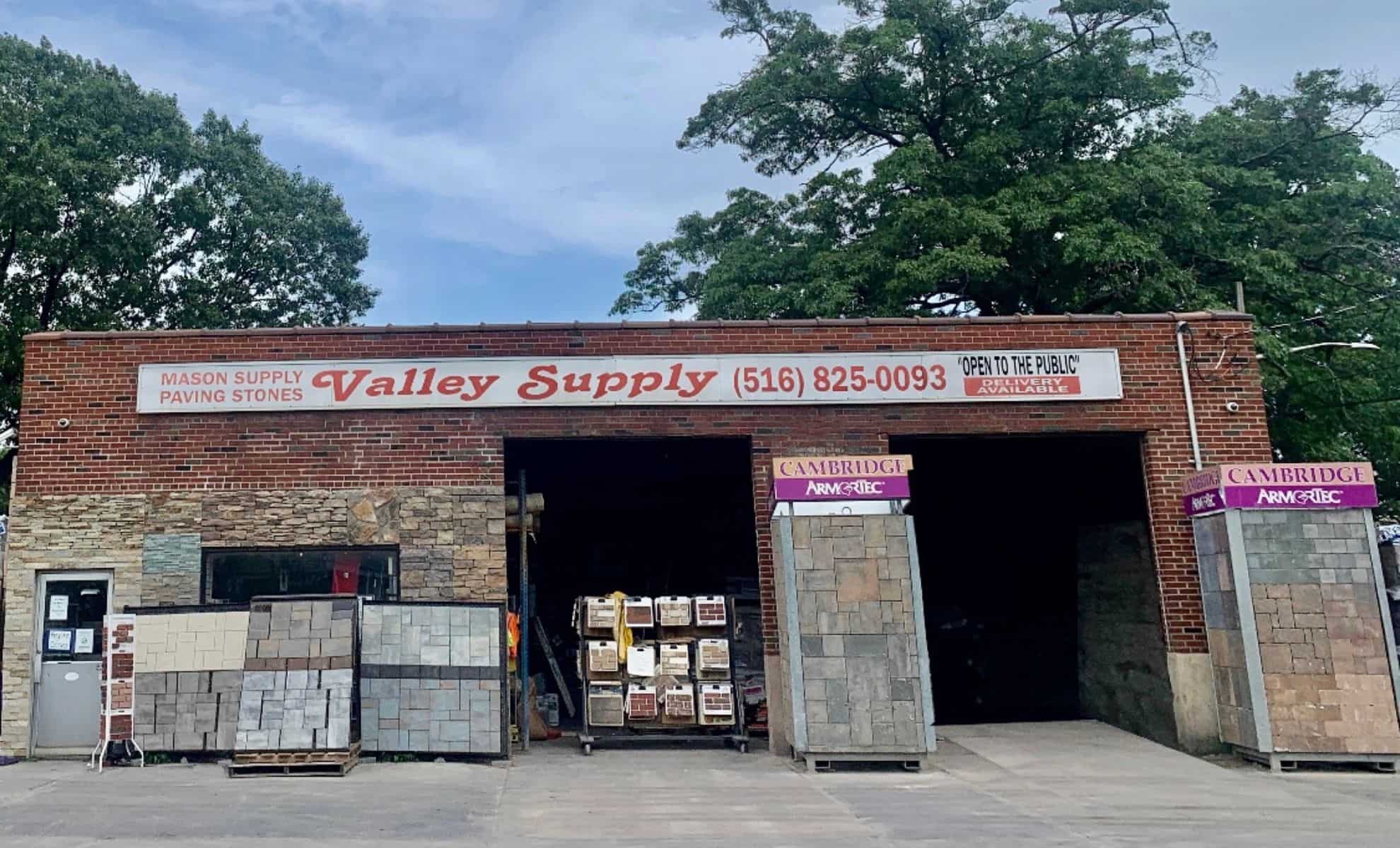
We’ve been supplying masonry materials to Nassau County and Queens since 1956. That’s over 65 years of understanding exactly what works in coastal zones and what fails. Our 20,000 square foot facility in Elmont stocks high-density blocks, specialized mortars, and salt-resistant brick specifically for waterfront construction supplies. When you’re building or repairing in Oceanside, Seaford, or Glen Cove, having a local supplier who knows these materials means you’re not experimenting with your project budget.
The value isn’t just in the products—it’s in the expertise. Our staff can calculate exactly how much material you need, recommend the right mortar formulations for your specific application, and ensure you’re getting materials that will actually perform in the environment where you’re working. For contractors and property owners dealing with coastal masonry challenges, that knowledge saves time, money, and the headache of premature material failure. If you’re working on a waterfront property in Nassau County, reach out to us at our Elmont location.