Summary:
If you’ve ever ordered aggregate and gotten something that didn’t quite match what you asked for, or waited on a delivery that pushed your crew back half a day, you already know the problem. Crushed rock isn’t complicated — but sourcing it right in Nassau County takes more than a quick search and a phone call to whoever comes up first.
The material matters. The sizing matters. And frankly, the person on the other end of the counter matters more than most buyers expect. Here’s what you need to know before you buy — and what we’ve learned supplying this market since 1956.
Crushed Rock for Sale in Nassau County: Types, Sizes, and What They're Actually Used For
Not all crushed rock is the same, and the difference matters more in Nassau County than in most places. Our western communities — Elmont, Valley Stream, Franklin Square, Floral Park — sit on heavier clay-loam soils that drain poorly and hold water against foundations, driveways, and retaining walls. Choosing the wrong aggregate for that environment doesn’t just underperform. It fails.
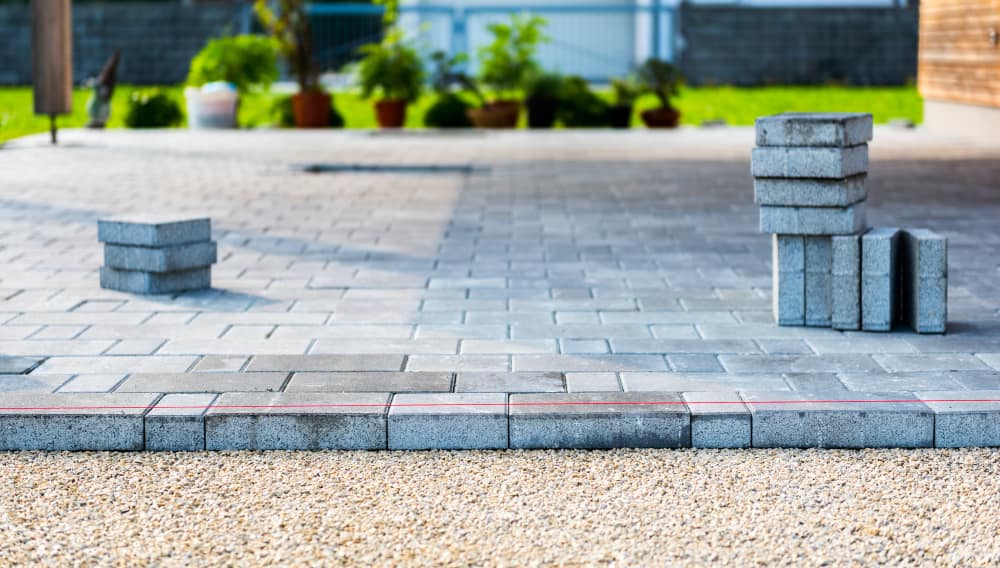
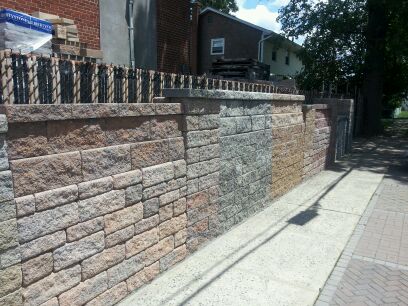
The most commonly used type for residential and contractor work is #57 stone — a 3/4-inch clean crushed stone with minimal fines. It’s the go-to for French drains, retaining wall backfill, and drainage layers beneath paver installations because it maintains void space that allows water to move through rather than pool. If you’re building a paver base, #411 — a blend of #57 and stone dust — is the standard. The fines compact into a firm, stable surface that holds up through freeze-thaw cycles without shifting.
Larger stone (1.5 to 3 inches) is used in high-flow drainage applications. Smaller material like pea gravel works for decorative purposes but has limited structural value. Knowing which one you need before you order saves time, money, and a return trip.
Bulk Aggregate Suppliers: What to Expect When You're Ordering by the Ton
Ordering aggregate in bulk is where a lot of buyers run into friction — not because the material is hard to find, but because the logistics around it are easy to get wrong. Quantity estimates, delivery windows, and material consistency all become more important when you’re talking about a full truckload rather than a few bags.
The first thing most contractors and homeowners underestimate is how much they actually need. A French drain running 50 feet behind a retaining wall, for example, requires more stone than it looks like on paper once you account for trench depth, pipe bedding, and cover layer. If you’re not sure, ask before you order. We’d rather walk you through the math than have you short a half-ton on a Saturday morning.
Delivery timing is the other variable that separates bulk aggregate suppliers who know their market from those who don’t. Nassau County’s traffic — particularly around the Elmont and Valley Stream corridor near our Meacham Avenue location — is real. A supplier who doesn’t account for that in their delivery scheduling will cost you time you don’t have. Our location at the Queens/Nassau border means shorter haul distances to most of the county, which translates to more predictable delivery windows and lower fuel-related costs passed on to you.
Material consistency matters too, especially on multi-phase projects. When you’re pouring a base in stages or extending a drainage system later, you want the same gradation you used the first time. That’s easier to guarantee when you’re sourcing from a supplier with a stable, established inventory — not one pulling from whatever’s available through a third-party aggregator.
We carry crushed stone in the sizes most commonly needed for Nassau County residential and commercial work. If you’re a contractor managing multiple jobs, we can work with you on scheduling and volume. If you’re a homeowner tackling a drainage fix or a patio base, we’ll tell you exactly what you need and how much — without upselling you on material you won’t use.
Crushed Concrete Supplier Options: Is RCA the Right Call for Your Project?
Recycled concrete aggregate — RCA, or crushed concrete — has moved well past the “budget alternative” reputation it used to carry. For the right application, it performs comparably to virgin crushed stone and often costs less.
The practical question is whether it fits your project. RCA works well as a base course for driveways, parking areas, and utility trenches where you need compaction and stability but don’t require the void space of clean-washed stone. It’s not the right call for a French drain, where fines would clog the drainage layer over time. But for a driveway sub-base or a road base application, it’s a legitimate, cost-effective option that holds up well in Nassau County’s climate.
One thing worth knowing: RCA can vary more in gradation and composition than virgin aggregate, because it’s processed from demolished concrete rather than quarried from a single source. That’s not a dealbreaker, but it does mean the quality of your crushed concrete supplier matters. You want someone who can tell you where the material came from and how it was processed — not just hand you a price per ton and move on.
If you’re weighing RCA against virgin stone for a specific project, we can walk you through the tradeoffs. In some cases the cost savings are significant enough to make it the clear choice. In others, the application demands virgin stone. There’s no universal answer, but there’s usually a right answer for your specific job — and that’s the kind of guidance that comes from knowing the material, not just selling it.
Local Aggregate Suppliers vs. Online Platforms: What Nassau County Buyers Should Know
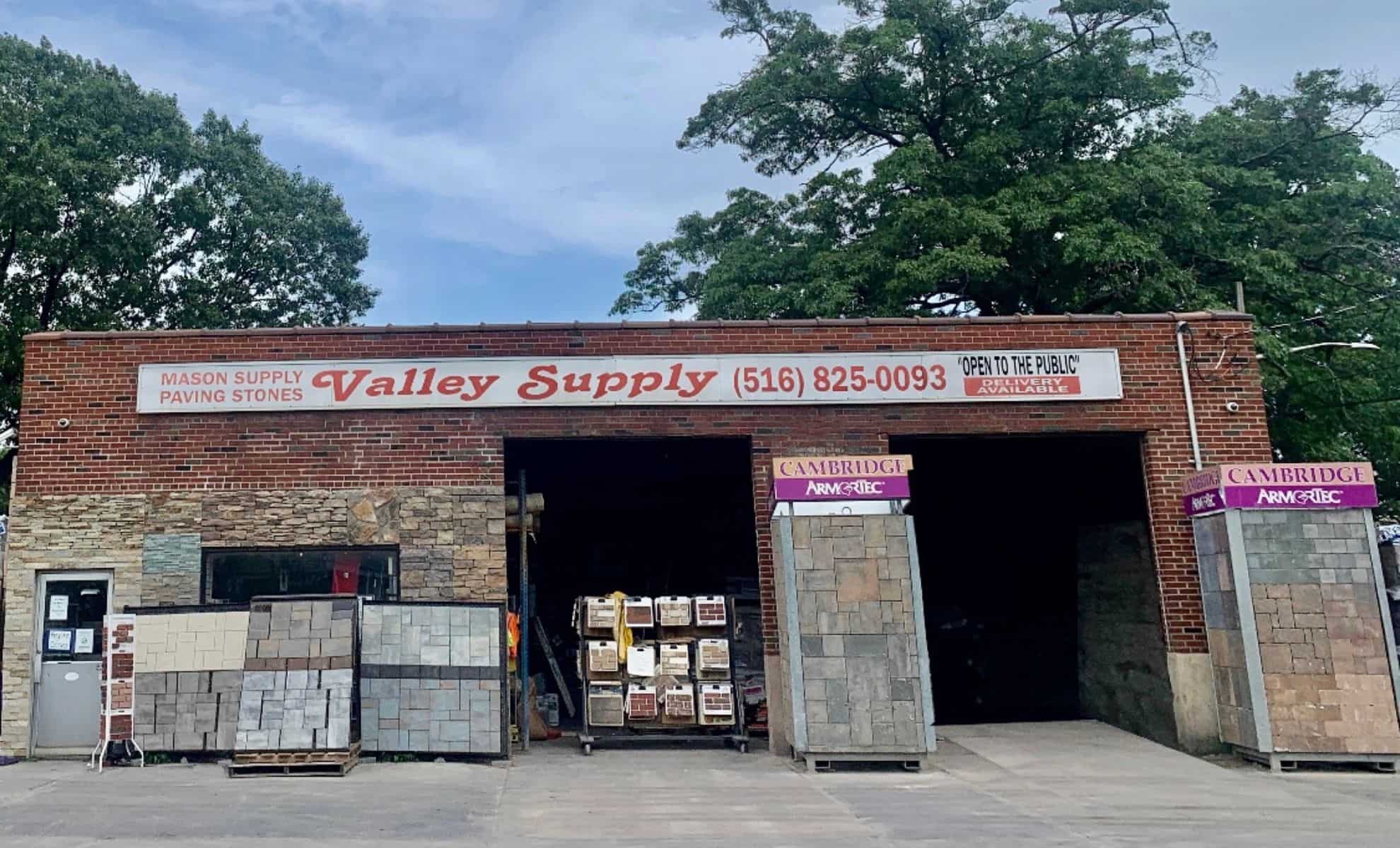
National aggregator platforms have made it easier to get a quote fast. What they haven’t made easier is getting the right material, from a knowledgeable source, delivered reliably to a specific address in Nassau County. There’s a real difference between a platform that connects you to whoever’s available and a supplier who has been stocking the same yard on Meacham Avenue since 1956.
That difference shows up most clearly when something goes wrong — wrong gradation, short delivery, a question you need answered on a Saturday morning. With us, you’re calling someone who knows your area, knows the material, and has a reputation in the community worth protecting. That accountability changes how problems get handled.
Why the Nassau County Market Specifically Rewards Local Supplier Relationships
Nassau County is one of the densest counties in the country — roughly 1.4 million residents across 453 square miles, most of them in single-family homes built between 1945 and 1975. That housing stock is aging into a wave of drainage failures, driveway deterioration, and retaining wall repairs that’s going to keep contractors busy for years. The aggregate demand here isn’t theoretical. It’s consistent, it’s volume-based, and it rewards suppliers who can keep up with it reliably.
The local soil conditions add a layer of specificity that generic platforms don’t account for. Western Nassau — Elmont, Valley Stream, Floral Park, Franklin Square — has clay-heavy soils that don’t forgive poor drainage design or undersized base material. The South Shore communities like Freeport, Merrick, and Oceanside carry the legacy of Superstorm Sandy: a decade of drainage infrastructure investment that’s still ongoing. The Five Towns area, just a few miles from our location, has a high concentration of premium hardscape projects where the base material under a Cambridge paver installation has to be right because the surface above it is too expensive to redo.
None of that context lives in an aggregator’s database. It lives in the experience of a counter staff that has been answering questions about Long Island soil conditions, Nassau County drainage challenges, and paver base requirements for decades. Our team brings over 50 years of combined experience in this market. When you walk in or call with a specific project, you’re not getting a generic answer. You’re getting one calibrated to what actually works in Nassau County.
The other factor is simply geography. Our address at 747 Meacham Avenue puts us at the western edge of Nassau County, directly adjacent to the Queens border. That’s a shorter delivery radius to most of Nassau than any Suffolk County yard can offer — which means more predictable timing and fewer variables between your order and your delivery.
Frequently Asked Questions About Buying Crushed Rock in Nassau County
**What’s the difference between crushed stone and gravel?**
Crushed stone is machine-manufactured — it’s quarried rock that’s been mechanically broken down into angular pieces. Gravel is naturally occurring and typically rounded from water erosion. For structural applications like paver bases, retaining wall backfill, and drainage layers, angular crushed stone is the better choice because it compacts more effectively and interlocks under load. Rounded gravel tends to shift. In Nassau County’s freeze-thaw climate, that distinction matters every winter.
**What size crushed stone do I need for a French drain in Nassau County?**
For most residential French drain applications in Nassau County — particularly in clay-heavy areas like Elmont, Valley Stream, and Franklin Square where water doesn’t move through the soil easily — 3/4-inch clean crushed stone (#57) is the standard. It maintains enough void space to let water flow freely without clogging over time. If someone recommends using stone with a lot of fines for a drainage application, that’s worth questioning.
**How much crushed stone do I need for my project?**
This is the question we get most often, and the honest answer is: it depends on the project dimensions, the depth of the application, and the material type. A paver base typically requires 4 to 6 inches of compacted base material. A French drain trench needs stone from the bottom of the pipe to at least a few inches above it. If you give us your measurements, we can help you work out the quantity before you order — that’s a normal part of the conversation here, not an extra step.
**Can I pick up material myself, or do I need delivery?**
Both. We’re open to the public Monday through Friday from 7AM to 5PM and Saturday from 7AM to 2PM at 747 Meacham Avenue in Elmont. Contractors and homeowners both walk in and load out regularly. For larger orders, delivery is available throughout Nassau County. If you’re a contractor managing a tight schedule, call ahead and we’ll make sure your order is ready.
**Is crushed concrete a good option for a driveway base in Nassau County?**
For a driveway base or sub-base, RCA (recycled crushed concrete) is a legitimate and cost-effective option. It compacts well, holds up under vehicle load, and is widely accepted for this application. It’s not ideal for drainage applications where clean void space is critical, but for structural base work it performs comparably to virgin stone in Nassau County conditions. We can help you determine whether it makes sense for your specific project.
Where to Buy Crushed Rock for Sale in Nassau County Without Guessing
The right aggregate for a Nassau County project isn’t hard to find — but it does require knowing what you need, buying from someone who stocks it consistently, and working with a supplier who can actually answer your questions rather than just process your order.
We’ve been doing this at 747 Meacham Avenue since 1956. The contractors who come back year after year aren’t coming back because we’re the only option. They’re coming back because they got the right material, the right guidance, and a delivery they could count on. Homeowners who walk in for the first time leave with what they actually need — not an oversized order and a vague explanation.
If you’re working on a drainage project, a paver installation, a driveway base, or anything in between, reach out to Valley Supply Corp. We’ll tell you what you need, how much of it, and when we can get it to you.