Summary:
You’ve probably already looked up the national average. Maybe you saw something like $8 to $25 per square foot and thought that sounded reasonable — then got a quote from a local contractor and wondered if there was a typo. There wasn’t. Nassau County runs higher, and there are real reasons for that. Labor costs more here. The soil in a lot of western Nassau communities requires deeper base work. And if you want materials that actually survive Long Island winters without heaving or cracking, you’re not shopping at the low end of the range. Here’s what you actually need to know before committing to anything.
What Paver Patio Installation Costs in Nassau County
For most Nassau County homeowners, the cost to have a paver patio installed lands somewhere between $16 and $35 per square foot — and that range reflects real variables, not contractor guesswork. A straightforward rectangular patio on flat ground with standard concrete pavers typically falls in the $20 to $25 range. Move into higher-quality materials, more complex patterns, or a site with drainage challenges, and you’re looking at $25 to $35 or more.
A 300-square-foot patio — a common size for a back yard entertaining area in communities like Valley Stream, Franklin Square, or Elmont — will generally run between $7,500 and $10,500 installed. A 400-square-foot project can reach $14,000 depending on material selection and site conditions. These numbers include excavation, base preparation, the pavers themselves, polymeric sand, edge restraints, and cleanup.
What they don’t always include — and what catches a lot of homeowners off guard — are the extras we’ll get into shortly.
What's Actually Driving the Cost of Paver Installation on Long Island
The single biggest cost driver in any paver project isn’t the pavers themselves — it’s the base. This is where Long Island’s geology becomes relevant in a very practical way. In western Nassau County, particularly in areas like Elmont, Valley Stream, and the Five Towns, the soil tends to have higher clay content. Clay holds water. Water freezes. Frozen, saturated ground expands, and that expansion is what pushes pavers up and out of alignment — a problem known as frost heave.
To counteract this, a quality installation requires excavating to the right depth, typically six to eight inches, and filling that space with a compacted aggregate base — crushed stone that drains well and doesn’t hold moisture the way clay does. The more clay in your soil, the more base material you need, and the more that adds to your project cost. This isn’t padding — it’s what separates a patio that looks the same in year ten as it did in year one from one that’s already shifting by year three.
Labor is the other major variable. Nassau County’s cost of living and contractor rates are simply higher than the national average the online guides are quoting. An experienced masonry crew on Long Island charges more than one in the Midwest, and for good reason — they’re working in a market where the winters are hard, inspections are real, and homeowners have high expectations. Skilled labor isn’t where you want to cut corners, and most Nassau County homeowners who’ve been through a failed patio project once will tell you exactly that.
Material quality matters too. Not all pavers are manufactured the same way. Cambridge Pavingstones use an exclusive ArmorTec process that concentrates the densest, most durable material on the surface layer — the part that takes all the foot traffic, freeze-thaw stress, and de-icing salt exposure. That technology costs more to produce than a standard concrete paver, but it also comes with a transferable lifetime warranty and a track record that holds up in climates like ours. When you’re pricing out a project, understanding what you’re actually comparing is worth the time.
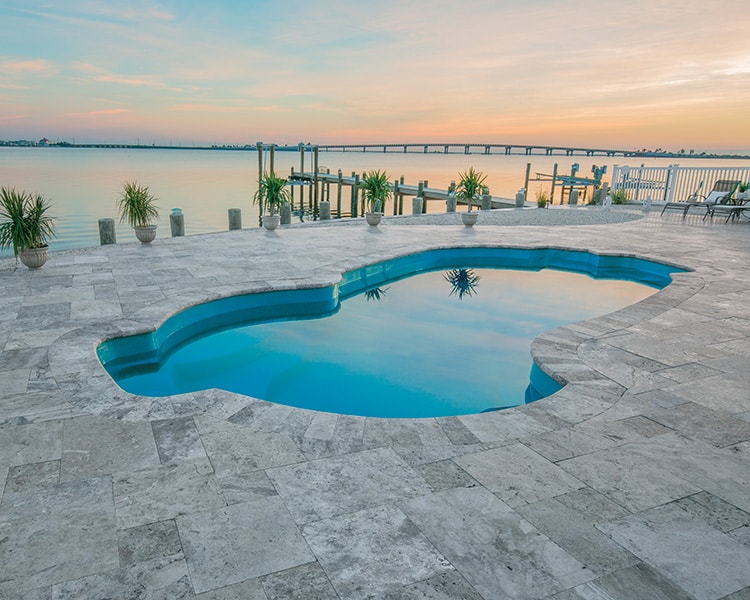
Block Paving Driveway Cost in Nassau County
Driveways follow similar pricing logic as patios, but they cost more per square foot for a straightforward reason: they have to support the weight of vehicles. That means deeper excavation, a heavier compacted base, and often thicker pavers — all of which add to the total. In Nassau County, block paving driveway installation typically runs between $20 and $32 per square foot for concrete pavers, depending on the scope of the project and site conditions.
For a standard two-car driveway in the 500 to 600 square foot range, you’re realistically looking at $10,000 to $19,000 installed. That’s a wide range, and the spread comes down to a few things: whether the existing driveway needs to be demolished and removed first, how much grading is required, whether there are drainage issues near the street or curb, and what material you choose.
One thing worth knowing if you’re in a community governed by the Town of Hempstead — which covers Elmont, Valley Stream, Franklin Square, Floral Park, and much of western Nassau County — is that driveway projects near the street may involve coordination with the town regarding curb cuts and drainage. It’s worth a quick call to the building department before you finalize your plans, not because it’s necessarily complicated, but because it’s better to know upfront than to find out mid-project.
The material choice matters here just as much as it does for patios. Cambridge’s ArmorTec pavers are rated for driveways — they meet ASTM standards for skid resistance and are engineered to handle the freeze-thaw cycling that Long Island winters deliver every year. Salt and de-icing chemicals, which are unavoidable on any Long Island driveway from November through March, are also a real concern. The ArmorTec surface is specifically designed to resist that kind of chemical exposure, which is part of why contractors who work in this area consistently recommend it over generic alternatives.
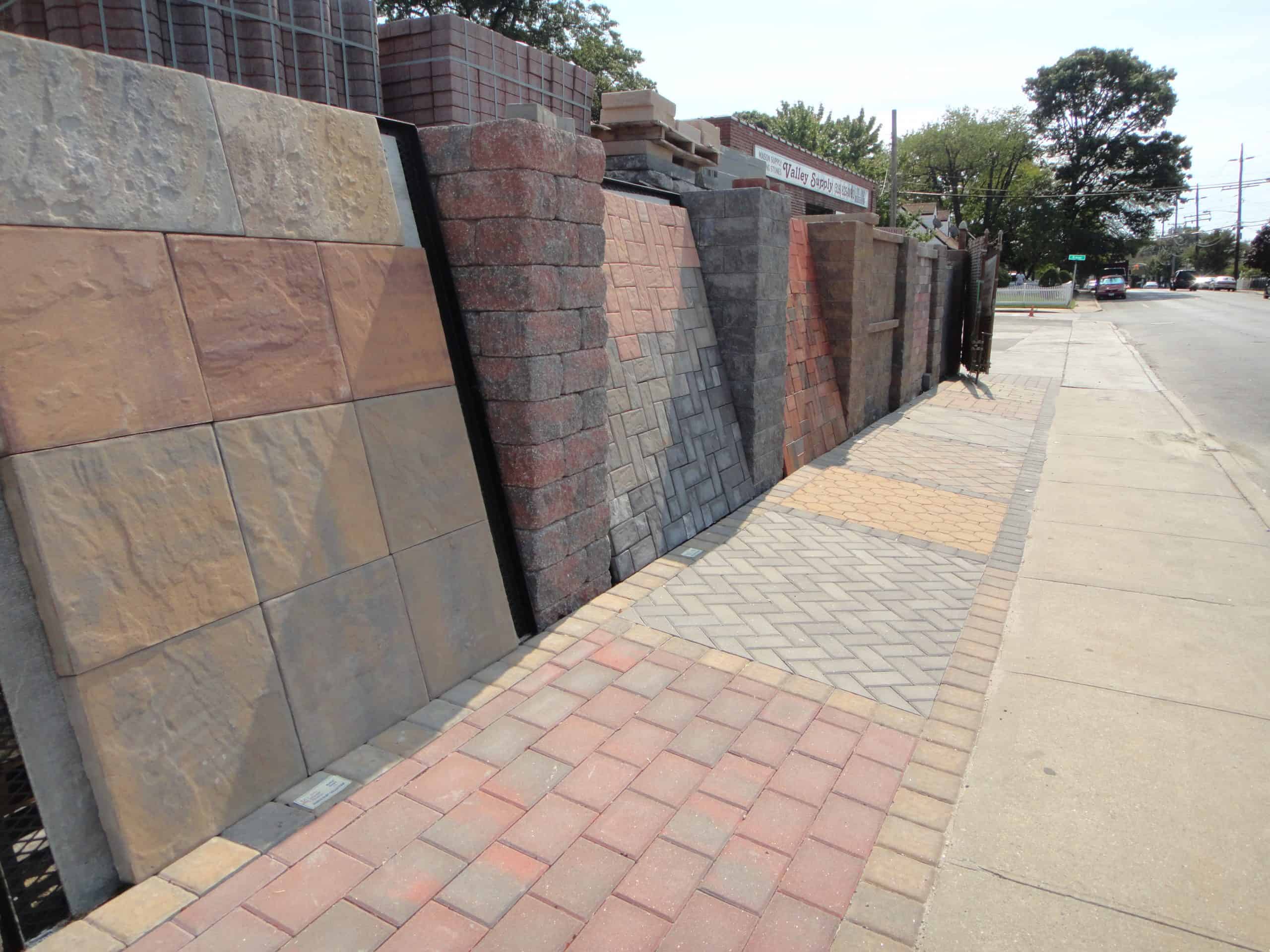
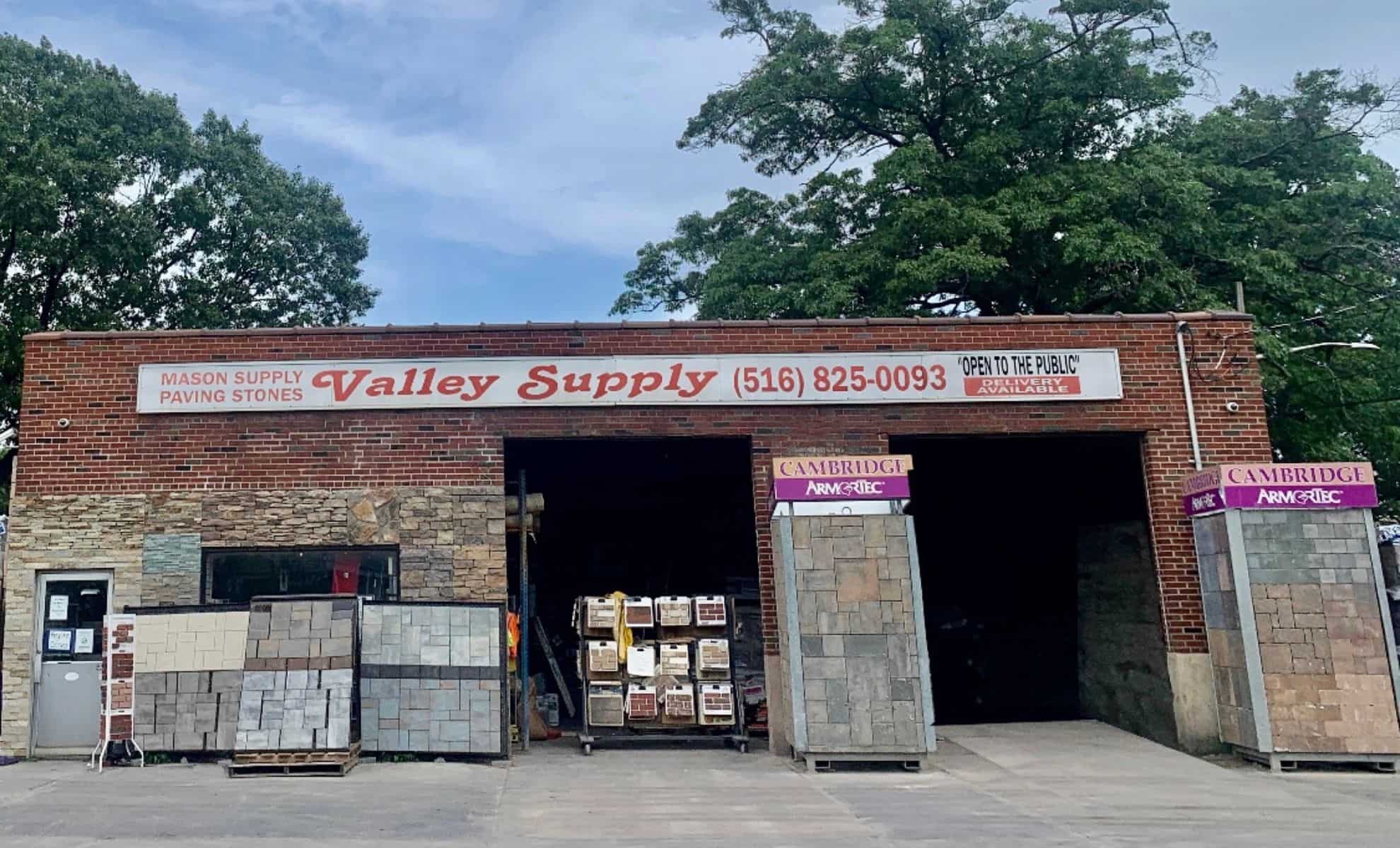
If you’re weighing a driveway project alongside a patio, it’s worth visiting our facility at 747 Meacham Ave to see the materials in person. Our staff can walk you through the differences, help you estimate quantities, and give you a realistic sense of what each option costs at the material level — before you’re in a contractor conversation trying to figure it out on the fly.
Hidden Costs Nassau County Homeowners Often Don't See Coming
The base quote a contractor gives you usually covers the straightforward stuff. What it sometimes doesn’t cover — at least not explicitly — are the conditions specific to your site and your municipality. Nassau County has a few of these worth knowing about before you sign anything.
Drainage work is one of the most common add-ons. If your yard has poor natural drainage, or if your soil is clay-heavy enough that water consistently pools after rain, your contractor may recommend a French drain, dry well, or additional grading. This isn’t optional — it’s what keeps the base stable and prevents the frost heave problem mentioned earlier. Depending on the scope, drainage additions can add $1,500 to $4,000 or more to a project.
Demolition of an existing surface is another one. If you’re replacing an old concrete patio or cracked asphalt driveway, the removal and disposal of that material costs money. It’s worth asking for that to be itemized separately in any quote so you can compare apples to apples across contractors.
Nassau County Permit Requirements for Paver Projects
The good news is that ground-level paver patios typically don’t require a building permit in most Nassau County municipalities. They’re considered a surface improvement rather than a structure, which keeps the process simpler than, say, adding a deck or pergola. That said, “typically” is doing real work in that sentence — requirements vary by incorporated village, and Nassau County has a lot of them.
If you’re in an incorporated village like Lynbrook, Rockville Centre, or any of the Five Towns communities, your village may have its own rules that differ from the Town of Hempstead’s baseline. Some villages have setback requirements for hardscape near property lines. Others have rules about impervious surface coverage — meaning there’s a limit to how much of your property can be covered by non-porous materials before drainage concerns trigger a permit requirement.
The safest approach is a quick call to your local building department before work begins. It takes ten minutes and eliminates the possibility of a stop-work order or a fine that costs far more than the permit would have. Nassau County home improvement contractors are also required to be licensed by Nassau County’s Department of Consumer Affairs — something worth verifying before you hand over a deposit. Ask for the license number and confirm it’s current. A legitimate contractor will have no hesitation providing it.
One more thing on the contractor side: ICPI certification matters. The Interlocking Concrete Pavement Institute sets the installation standards that Cambridge’s transferable lifetime warranty requires. If a contractor doesn’t install according to ICPI guidelines, the warranty on the materials is void. It’s a simple question to ask upfront, and the answer tells you a lot about how seriously a contractor takes the work.
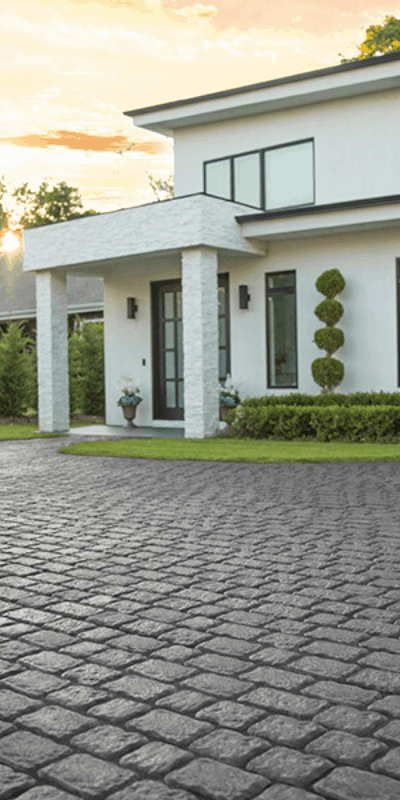
Is a Paver Patio Worth the Investment in Nassau County's Real Estate Market?
This is a question worth taking seriously, especially given what homes in Nassau County are worth. Outdoor living improvements generally recoup between 50% and 80% of their cost at resale, and in a market like Nassau County — where buyers arrive with high expectations and outdoor space is genuinely valued — that return can be on the higher end of that range.
More practically, a paver patio done right lasts 25 to 50 years with reasonable maintenance. A concrete patio, by comparison, typically starts showing cracks within five to ten years in Long Island’s climate, and once it starts going, it goes fast. The cost to rip out a failed concrete slab and start over often exceeds what a quality paver installation would have cost in the first place. That math isn’t hypothetical — it’s what brings replacement customers through our door at 747 Meacham Ave.
There’s also the warranty angle, which is specific to Cambridge products and genuinely worth factoring into your thinking. Cambridge’s transferable lifetime warranty covers defective pavingstones and passes to the next owner with valid proof of purchase. In Nassau County’s competitive real estate market, that’s a documented, transferable asset — not just a nice-to-have. Buyers who understand what they’re looking at will recognize it. Real estate professionals on Long Island consistently describe paver patios as premium upgrades, the kind of feature that moves a property from “expected” to “stands out.”
One thing we hear often from homeowners who planned their projects in winter rather than waiting for spring: they got better contractor availability, more scheduling flexibility, and in some cases better pricing on materials before the spring rush hit. Nassau County contractors book up fast once March arrives. Homeowners who come into our facility in January or February to select materials, get quantity estimates, and nail down a contractor before the season peaks tend to have much smoother project experiences — and they’re usually enjoying their patio by Memorial Day weekend while their neighbors are still waiting for a callback.
Where to Start Your Nassau County Paver Project
Getting the cost right on a paver patio starts with understanding what you’re actually buying — not just the pavers, but the base, the drainage, the installation standards, and the materials behind the warranty. In Nassau County, where soil conditions, freeze-thaw cycles, and local permit requirements all play a real role, those details aren’t secondary. They’re what determine whether your patio looks great for decades or starts showing problems after a couple of winters.
If you’re in the planning stage and want to see the materials in person, talk through your project with someone who knows the product, or get a realistic sense of what quantities you’ll need, we’re at 747 Meacham Avenue in Elmont. We’ve been here since 1956, we’re open to the public, and we carry the full Cambridge Pavingstones line as a Premier Dealer — every style, color, and collection, with hands-on displays so you can see what you’re choosing before you commit.
Reach out to us to get started — or stop by any weekday between 7AM and 5PM, or Saturday from 7AM to 2PM. Bring your measurements if you have them. We’ll take it from there.