Summary:
Most people start thinking about a driveway or patio project when the weather turns warm. That’s understandable. But by the time spring arrives in Nassau County, prices have already moved. Contractors are booked. Material demand is up. And the window to get ahead of the cost curve has quietly closed.
It doesn’t have to work that way. If you understand how seasonal pricing affects building materials — and you plan around it — you can get the same quality project for less. Here’s what we’ve seen over 67 years of selling masonry materials on Long Island, and what it means for your 2026 project.
Seasonal Pricing Patterns for Building Materials in Nassau County
Building material prices aren’t random. They follow a rhythm tied directly to construction demand, and in Nassau County that rhythm is especially pronounced because the hardscape season runs roughly from March through November. When contractors are active and homeowners are ready to spend, suppliers see higher demand — and prices reflect that.
The general pattern looks like this: prices are softer in the winter months, climb steadily through early spring, peak during the busy summer season, and ease slightly in the fall before dropping again as activity slows. If you’re buying pavers or masonry materials in June, you’re buying at or near the top of that curve. If you’re planning in December or January, you have real leverage.
Why Do Paver and Masonry Prices Rise in Spring?
The short answer is demand. When the ground thaws and homeowners across Nassau County start calling contractors, everyone is trying to source materials at the same time. Suppliers who haven’t pre-ordered inventory face tighter availability. Delivery lead times stretch. And manufacturers — including Cambridge Pavingstones — typically issue annual price adjustments at the start of the construction season.
That last point matters more than most people realize. Cambridge, like most major manufacturers, builds cost increases into their pricing structure on a yearly cycle. Those adjustments tend to land in late winter or early spring, right before the busy season begins. Homeowners who have already selected their materials and confirmed pricing before that adjustment takes effect are essentially paying last year’s rates for this year’s project.
There’s also a labor component. Nassau County hardscape contractors are a finite resource. The good ones — the ones with solid reputations and clean installs — fill their calendars fast. If you’re calling in May hoping to get on someone’s schedule for June, you’re often looking at a wait or a premium for expedited work. Starting your planning in the fall or winter doesn’t just protect you on materials. It gives you first access to the contractors you actually want.
The freeze-thaw reality of Long Island adds another layer to this. Nassau County experiences somewhere between 20 and 40 freeze-thaw cycles in a typical winter. That’s what cracks concrete driveways, heaves poured surfaces, and sends homeowners back to square one every 15 to 20 years. Interlocking pavers handle that stress differently — individual units flex and move rather than fracturing as a slab. But the point here is that Nassau County’s climate creates consistent, recurring demand for quality hardscape materials. That demand drives the seasonal pricing cycle, and it’s not going away.
The practical takeaway: if you have a project in mind for 2026, the best time to visit our showroom, select your materials, and nail down pricing is right now — before the spring rush, before the annual price adjustment, and before every contractor in Nassau County is already booked three months out.
How Nassau County Homeowners Can Beat the Seasonal Price Curve
The strategy isn’t complicated, but it does require getting ahead of the calendar. The winter months — roughly November through January — are historically when material availability is highest and pricing pressure is lowest. Supply yards have inventory. Contractors have openings. And you have time to make decisions without rushing.
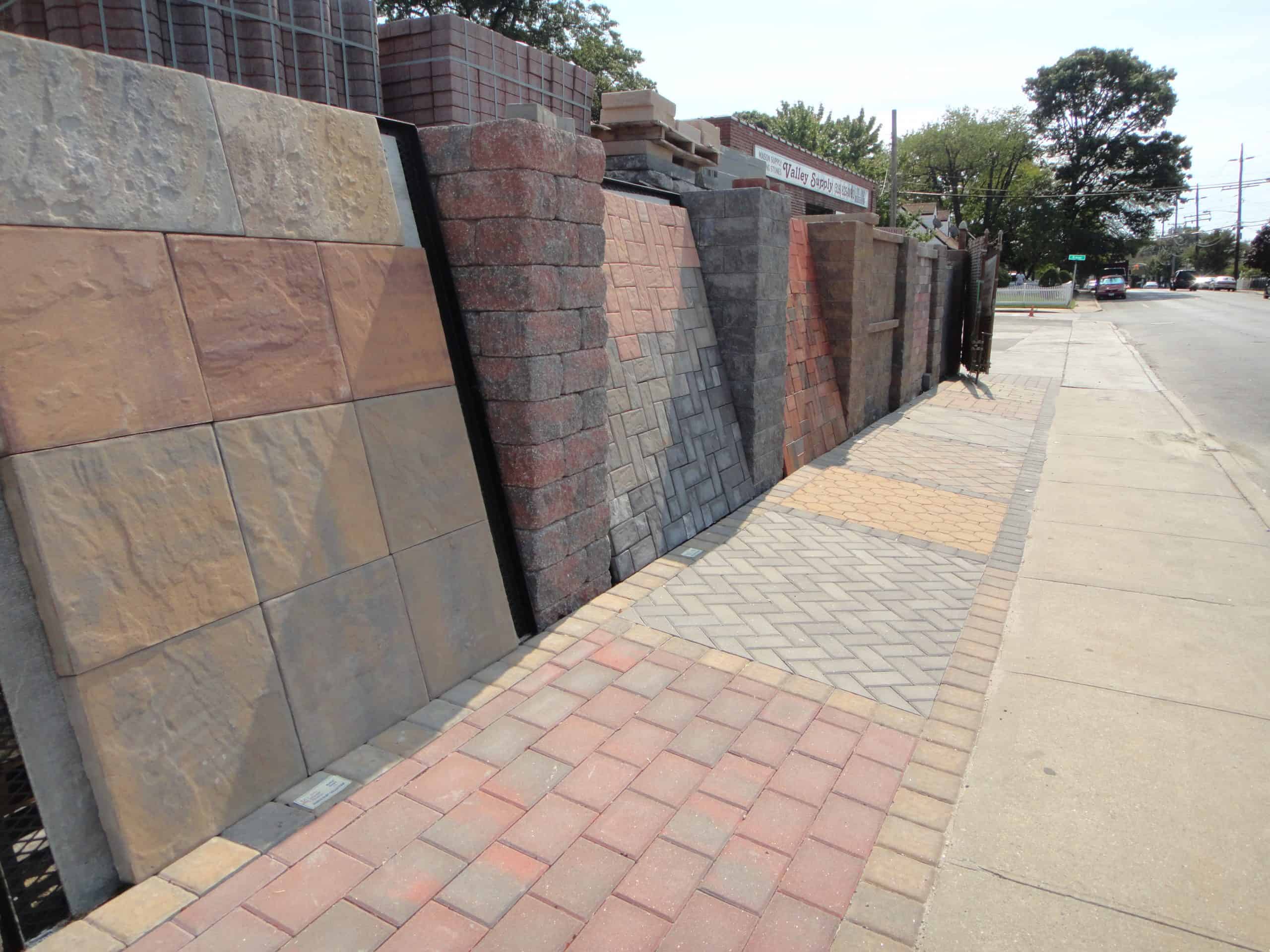
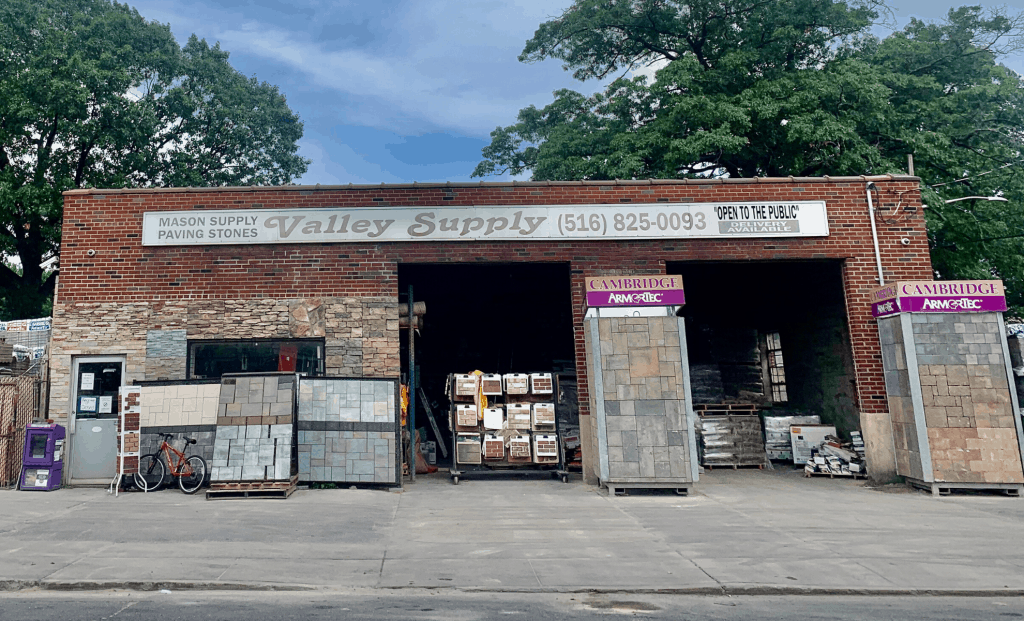
Start by visiting our showroom while the pressure is off. When you can walk through displays without a deadline hanging over you, you make better decisions. You compare colors in natural light. You ask questions without feeling like you’re holding anyone up. Our 20,000 square foot facility in Elmont has hands-on wall and paver displays set up specifically for this kind of unhurried exploration — so you can see and touch the actual materials before committing to anything.
Once you’ve selected your materials, you can lock in pricing and schedule your spring delivery. That sequence — select in winter, deliver in spring, install when conditions are right — is how experienced contractors manage their own project timelines. There’s no reason homeowners can’t use the same approach.
It’s also worth understanding what “hidden costs” actually look like in this market. A lot of the budget surprises that homeowners run into aren’t from the materials themselves — they’re from underestimating quantities, last-minute substitutions when a product is out of stock, or delivery surcharges during peak season. When you buy early and work with staff who know how to calculate material quantities accurately, most of those surprises disappear. We’ve been doing this since 1956, and helping customers figure out exactly what they need — not just what sounds close — is a big part of what we do at the counter every day.
One more thing worth noting: Nassau County municipalities have increasingly strict stormwater management requirements, particularly on the South Shore. Permeable pavers, which allow water to filter directly into the ground, can satisfy those drainage requirements while also giving you a finished surface that looks far better than concrete. They run roughly $18 to $28 per square foot installed — a range worth knowing as you plan your budget.
Building Material Prices: What to Expect in Nassau County for 2026
Getting a realistic sense of what things cost before you start calling contractors puts you in a much better position. You can evaluate quotes more accurately, ask better questions, and avoid the frustration of a number that feels like it came from nowhere.
Material costs on Long Island in 2026 are still being shaped by global supply chain pressures and ongoing trade policy changes — both of which tend to push prices up, not down. That makes the timing of your purchase more important than it’s been in calmer years. Knowing the general price ranges for common project types gives you a baseline to work from.
Average Cost of a New Driveway in Nassau County, NY
A new driveway in Nassau County in 2026 can range from roughly $4,200 on the low end — typically a smaller asphalt surface — to well over $40,000 for a large paver or Belgian block installation. The fully loaded price includes demolition of the existing surface, base preparation, the surface material itself, edge details, and any coordination with the town for apron work.
The four most common driveway materials and their approximate 2026 per-square-foot ranges for Nassau County look like this: asphalt runs $7 to $15 per square foot, concrete falls between $12 and $25, pavers land in the $20 to $35 range, and Belgian block can reach $30 to $70 or more depending on the scope and complexity.
Pavers carry a higher upfront cost than asphalt or poured concrete, and that’s a real number — not something to minimize. But the comparison changes significantly when you factor in lifespan. A well-installed paver driveway can last 50 years. A concrete driveway typically starts showing serious cracking within 20 to 30 years, and asphalt often needs resurfacing or replacement even sooner in Nassau County’s climate. When you spread the cost over the life of the surface, pavers often come out ahead — and that’s before accounting for the fact that a damaged paver can be replaced individually, while a cracked concrete slab usually means patching or a full tear-out.
Cambridge ArmorTec® pavers also carry a transferable lifetime warranty. In a market like Nassau County — where home values are high and real estate turnover is active — that warranty transfers to the next owner. It’s a documented quality signal that adds tangible value at resale, not just a nice-to-have.
For materials only, standard concrete pavers from Cambridge, Nicolock, or Belgard typically run $4 to $8 per square foot before installation. That’s the number relevant to homeowners who want to understand what they’re actually paying for when they get a contractor quote — or who want to purchase materials directly and have their contractor install them.
Frequently Asked Questions About Seasonal Pricing for Long Island Projects
**When is the best time to buy pavers or masonry materials on Long Island?**
The window between November and January is consistently the best time to buy. Demand is lower, inventory is more available, and you’re ahead of the spring price adjustment that manufacturers typically issue before the construction season starts. If you’re planning a spring or summer project in Nassau County, buying materials in winter and scheduling delivery for when your contractor is ready is the most cost-effective approach.
**Do building material prices really go down in winter, or is that just general advice?**
It’s not just general advice — it reflects the actual demand cycle on Long Island. The hardscape season here runs March through November. Once that window closes, contractors slow down, supply yards see less traffic, and pricing pressure eases. In Nassau County specifically, the winter slowdown is pronounced because the freeze-thaw cycles that damage concrete and asphalt create peak demand the moment spring arrives. You won’t always see dramatic discounts, but you will see better availability, less competition for scheduling, and pricing that hasn’t yet been adjusted for the new season. For Nassau County homeowners, that difference can be meaningful on a mid-to-large project.
**How do I know how much material I actually need?**
This is one of the most common questions we hear at the counter, and it’s a good one. Quantity miscalculations are one of the biggest sources of budget surprises in hardscape projects — either you run short mid-job and pay rush pricing for additional material, or you overbuy and waste money on product you don’t use. Our staff can help you calculate quantities accurately based on your project dimensions, the specific Cambridge product you’ve selected, and the installation method your contractor is using. It’s a straightforward conversation that can save you real money.
**Does Valley Supply sell to homeowners, or only to contractors?**
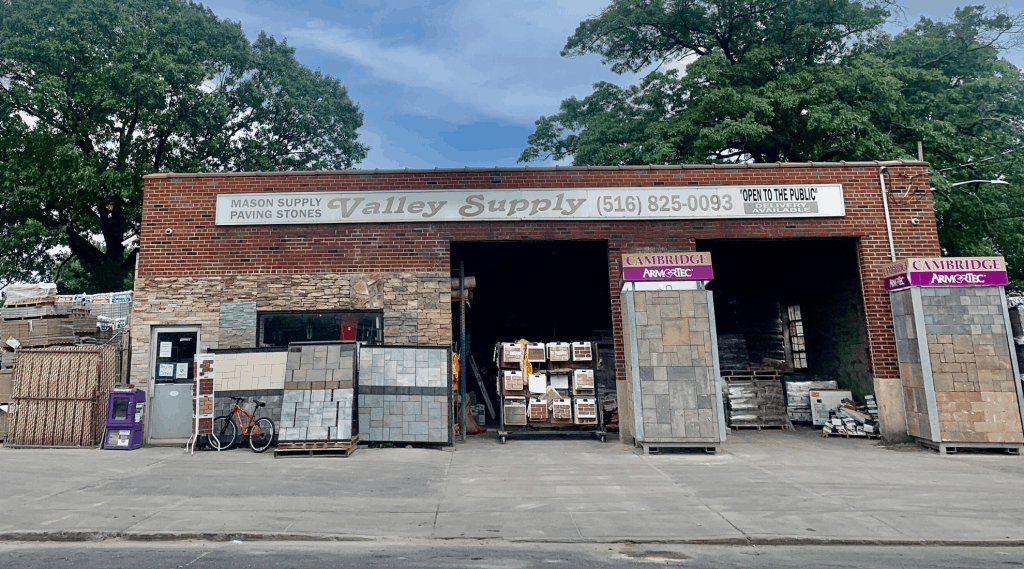
We’re open to the public, and homeowners are welcome at our Elmont, NY location the same as any contractor. The materials you’d buy here are the same ones Nassau County’s most experienced hardscape professionals use. You’re not getting a consumer-grade substitute — you’re buying from the same inventory, with the same product guidance. Our hours are Monday through Friday, 7AM to 5PM, and Saturday from 7AM to 2PM.
**What makes Cambridge pavers worth the price compared to cheaper options?**
Cambridge ArmorTec® technology is specifically engineered to handle the conditions Long Island throws at it — freeze-thaw cycling, road salt exposure, UV fading. The manufacturing process and the transferable lifetime warranty aren’t available from generic paver suppliers. The difference between a Cambridge driveway and a lower-cost alternative tends to show up clearly after 10 to 15 Long Island winters. For homeowners in Nassau County who are making a long-term investment in their property, that distinction matters.
Plan Your 2026 Nassau County Project Before the Season Starts
The homeowners who get the best results — on price, on scheduling, and on the finished product — are almost always the ones who started planning before everyone else did. That means visiting our showroom in the fall or winter, selecting materials without the pressure of a spring deadline, and locking in pricing before the seasonal adjustment hits.
We’ve been helping Nassau County homeowners and contractors do exactly that since 1956. The market changes. Prices shift. But the basic logic of buying smart and buying early holds every year.
If you’re thinking about a driveway, patio, retaining wall, or any other hardscape project in 2026, Valley Supply Corp is a good place to start the conversation — no pressure, just honest answers from people who’ve been doing this for a long time.