Summary:
If your Nassau County backyard turns into a swamp after every rainstorm, you’re not imagining it — and you’re not alone. The clay-heavy soil that runs through much of western and central Nassau holds water like a sponge, and the flat terrain doesn’t give it anywhere to go. Add in Long Island’s freeze-thaw winters and the occasional Nor’easter, and you’ve got a drainage problem that generic advice from a national home improvement site isn’t going to solve. This guide covers what actually works here, what goes into building it right, and how to avoid the material mistakes that cause most drainage systems to fail before their time.
Yard Drainage Solutions That Work in Nassau County's Clay
Most drainage guides are written for average conditions — average soil, average rainfall, average terrain. Nassau County is not average. The clay-heavy soil in communities like East Meadow, Levittown, and Merrick has extremely low permeability, meaning water moves through it very slowly and pools above it rather than draining down. After a heavy rain, that water can sit for days. After a hard winter, frozen ground makes it even worse.
The good news is that several drainage solutions are well-suited to these conditions. French drains, catch basins, dry wells, and permeable paving systems all address different parts of the problem. The key is understanding which one — or which combination — matches what’s actually happening in your yard.
Landscape Drainage Planning: Why Getting This Wrong Is So Expensive
The most common and costly mistake homeowners make is treating drainage as an afterthought — something to fix after the patio goes in, or after the basement floods for the second time. By then, you’re not just solving a drainage problem. You’re potentially pulling up a paving stone installation that was never designed to drain properly in the first place.
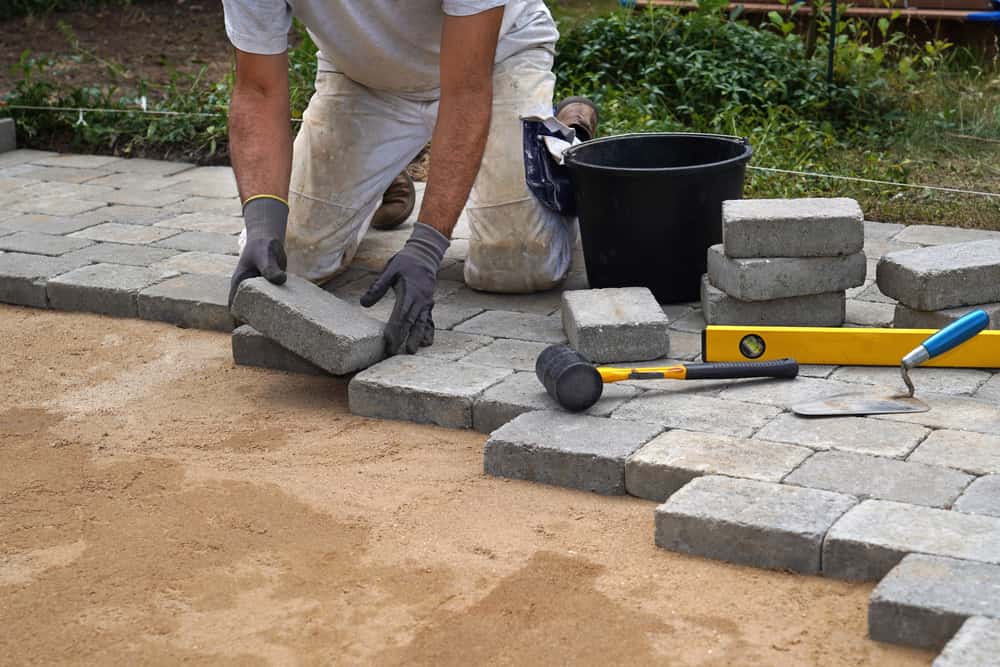
In Nassau County’s climate, water beneath a paving stone patio or driveway doesn’t just cause soggy ground. It freezes. It expands. It lifts pavers, cracks edges, and shifts entire sections of a hardscape installation that might have cost thousands of dollars. That’s not a paver problem — it’s a drainage problem that was never addressed at the design stage.
Proper landscape drainage planning starts before a single stone gets laid. It means understanding the natural slope of your property, identifying where water currently flows and where it pools, and designing a drainage system that works with your hardscape rather than independently of it. A French drain running beneath or adjacent to a patio, connected to a dry well or a proper discharge point, is a fundamentally different — and far more durable — installation than a patio dropped onto unprepared clay soil.
For homeowners in Elmont, Franklin Square, Floral Park, and Valley Stream, where lots tend to be smaller and impervious surface coverage is high, this integrated approach matters even more. Every square foot of driveway, patio, and roof surface that sheds water has to go somewhere. If the soil can’t absorb it and there’s no system to redirect it, it ends up against your foundation or in your basement.
The materials used in landscape drainage systems determine how long they perform. Clean, washed crushed stone — not mixed aggregate — is what belongs inside a French drain trench. Non-woven geotextile filter fabric, wrapped completely around the gravel bed, is what keeps Nassau County’s clay particles from migrating into the system and clogging it within a few years. These aren’t upsells. They’re the difference between a system that lasts twenty years and one that fails in five.
Backyard Drainage Solutions for Nassau County's Flattest, Wettest Lots
Flat backyards in Nassau County present a specific challenge that sloped properties don’t have: water has nowhere natural to go. Without grade working in your favor, drainage systems have to do more of the work — and they have to be built right the first time.
For most Nassau County backyards, a French drain is the workhorse solution. A perforated pipe buried in a gravel-filled trench collects groundwater and surface runoff and moves it toward a discharge point — either daylight at a property edge, a dry well that allows slow percolation into surrounding soil, or a connection to a catch basin. When installed correctly with a minimum 1% slope maintained throughout the entire pipe run, a French drain can redirect the volume of water that would otherwise saturate your yard and creep toward your foundation.
Catch basins are often paired with French drains in Nassau County yards because they handle surface water that accumulates at specific low points — the corner of a yard that always floods first, the area at the base of a downspout, the low spot near the fence line. A grated catch basin inlet collects that pooled surface water and channels it into the same underground pipe system as the French drain, creating a more comprehensive solution than either system alone.
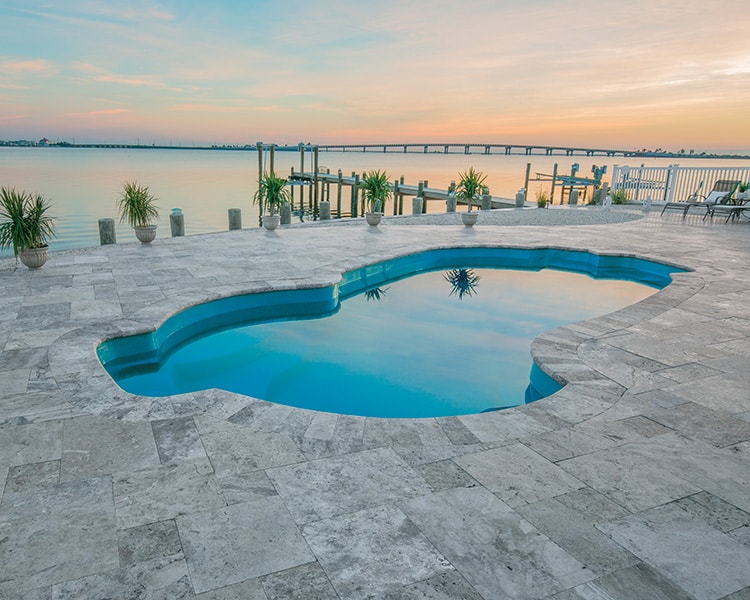
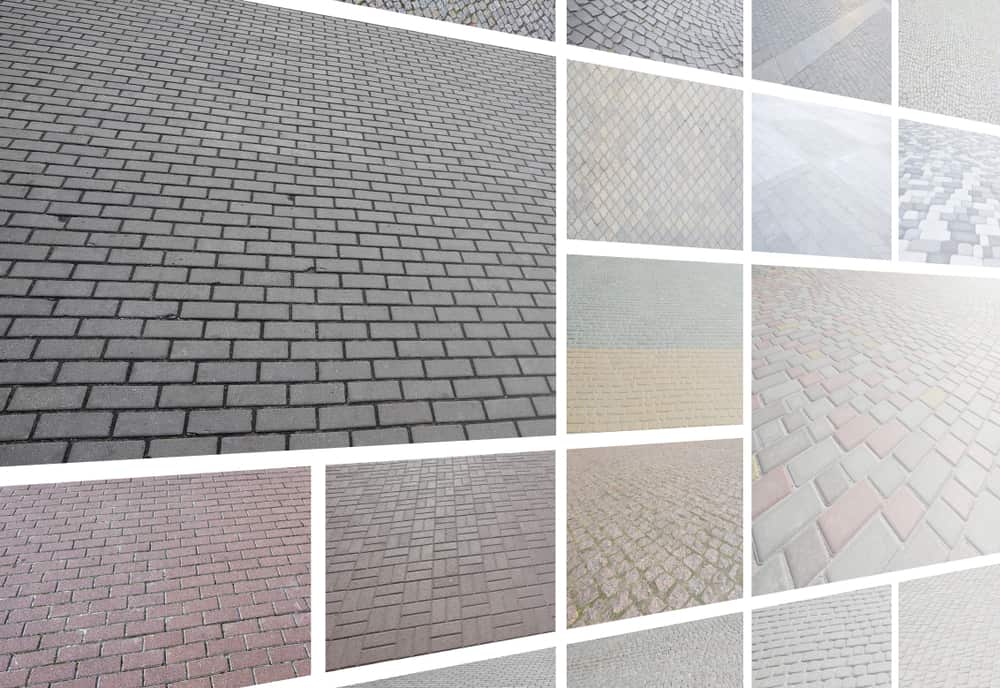
For homeowners who want to address drainage while improving their outdoor space at the same time, permeable paver systems are worth understanding. Cambridge ArmorTec® permeable pavers allow water to pass through the paver surface into an engineered aggregate base below, reducing surface runoff at the source rather than redirecting it after the fact. In a Nassau County backyard where every inch of impervious surface adds to the drainage burden, replacing a traditional concrete patio or conventional paver system with a permeable design can meaningfully reduce the volume of water your drainage system has to handle. We carry the full ArmorTec® line as a Cambridge Premier Dealer and can help you understand how these systems work alongside conventional drainage.
Dry wells deserve mention here as well, particularly for downspout drainage. Rather than letting roof runoff discharge directly onto clay soil — where it immediately pools — a dry well connected to your downspouts collects that water and releases it slowly into the surrounding soil. It’s a straightforward, relatively low-cost addition that can make a noticeable difference in how quickly your yard recovers after a storm.
How a French Drain in Your Yard Actually Works
Despite the name, a French drain has nothing to do with France. It was named after Henry French, a Massachusetts farmer who popularized the concept in the mid-1800s. The design itself is simple: a trench, filled with gravel, containing a perforated pipe that collects water and moves it away from where it’s causing problems.
Simple in concept, but the execution — especially in Nassau County clay — requires getting several things right. The depth, the gravel grade, the filter fabric, the slope, and the discharge point all matter. Get any one of them wrong and you’ve built a system that either doesn’t work or fails within a few years.
What Nassau County Homeowners Should Know Before Digging a French Drain
Before any drainage trench gets dug in Nassau County, two things need to happen. First, call 811. This is the national dig-safe line that marks underground utilities — gas, electric, water, cable — before excavation. It’s a legal requirement, not a suggestion, and skipping it can turn a drainage project into an emergency.
Second, check whether your project requires a permit. Nassau County’s Department of Public Works has specific requirements for drainage installations, particularly those that connect to public stormwater infrastructure or alter drainage patterns across property lines. Some straightforward yard French drains don’t require permits; others do. The length of the system and where it discharges are the key variables. A local drainage contractor familiar with Nassau County’s requirements can advise you on this before work begins.
Once those boxes are checked, the installation itself follows a clear sequence. The trench is excavated to the appropriate depth — typically 12 to 24 inches in Nassau County, though soil conditions and drainage goals affect this — and lined with non-woven geotextile filter fabric before any gravel goes in. The fabric wraps completely around the gravel bed, not just across the bottom. This is the step that most failed DIY installations skip, and it’s the reason clay particles eventually clog systems that weren’t built with it.
Clean, washed crushed stone — typically ¾” or 1½” — goes into the trench, surrounding the perforated pipe. The pipe must maintain a consistent downward slope of at least 1% toward the discharge point. If that slope isn’t maintained throughout the entire run, water will pool inside the pipe at low spots and the system won’t drain properly. The trench is then closed, the filter fabric folded over the top of the gravel, and the surface restored.
A properly built French drain in Nassau County clay can last more than 20 years. The variables that shorten that lifespan — wrong gravel, no filter fabric, inadequate slope, no discharge plan — are all avoidable with the right materials and the right installation approach.
FAQs Nassau County Homeowners Ask About Drainage
**Why does my Nassau County yard stay wet for days after it rains?** The short answer is clay soil. Unlike the sandy soil found further east on Long Island, Nassau County’s clay-heavy ground has very low permeability — water moves through it slowly and pools above it rather than draining down. Flat terrain in communities like East Meadow and Levittown compounds the problem because there’s no natural slope to move surface water away. After a significant rain event, it’s not unusual for Nassau County yards to hold standing water for two to three days. A properly designed French drain or catch basin system addresses this by giving the water a path out rather than leaving it to sit.
**Will a French drain fix my wet basement?** It depends on where the water is coming from. An exterior French drain installed around the foundation perimeter can significantly reduce hydrostatic pressure — the force that pushes groundwater through foundation walls — and is often the right first step for Nassau County homes with basement moisture issues. However, if water is entering through cracks in the foundation wall or floor slab, drainage alone may not be sufficient and interior waterproofing may also be needed. A drainage contractor who assesses your specific situation will give you a more reliable answer than any general guide can.
**What’s the difference between a French drain and a catch basin?** A French drain manages subsurface water — groundwater moving through the soil and accumulating below the surface. A catch basin collects surface water at a specific low point through a grated inlet and channels it away through underground pipe. Many Nassau County drainage systems use both: the French drain handles the groundwater that saturates the yard from below, while a catch basin handles the surface pooling at the yard’s lowest point. They connect to the same discharge system and work together as a complete solution.
**Can I install a French drain myself?** For an exterior yard French drain, yes — if you’re comfortable with the excavation, understand the material requirements, and can maintain proper slope throughout the pipe run. We stock professional-grade materials at our Elmont location, and our counter staff can walk you through what you need for your specific situation. Interior basement French drains are a different story — they involve jackhammering reinforced concrete, working under a slab, and integrating with a sump pit. That’s a job for an experienced contractor, not a weekend project.
**How much does a French drain cost in Nassau County?** Professionally installed, most homeowners pay somewhere in the range of $1,650 to $12,250. In Nassau County, clay soil can push labor costs toward the higher end of that range because excavation is harder and the system requires more careful material specification to perform long-term. The cost per linear foot typically runs $10 to $100 depending on depth, discharge complexity, and site conditions.
Where to Get Drainage Materials in Nassau County, NY
Getting the drainage system right starts with getting the materials right — and that’s where most Nassau County homeowners run into trouble. The gravel at a big-box store is often mixed aggregate with fines that compact over time. Filter fabric gets skipped because nobody mentioned it. The pipe goes in without proper slope because there was no one experienced enough to flag it.
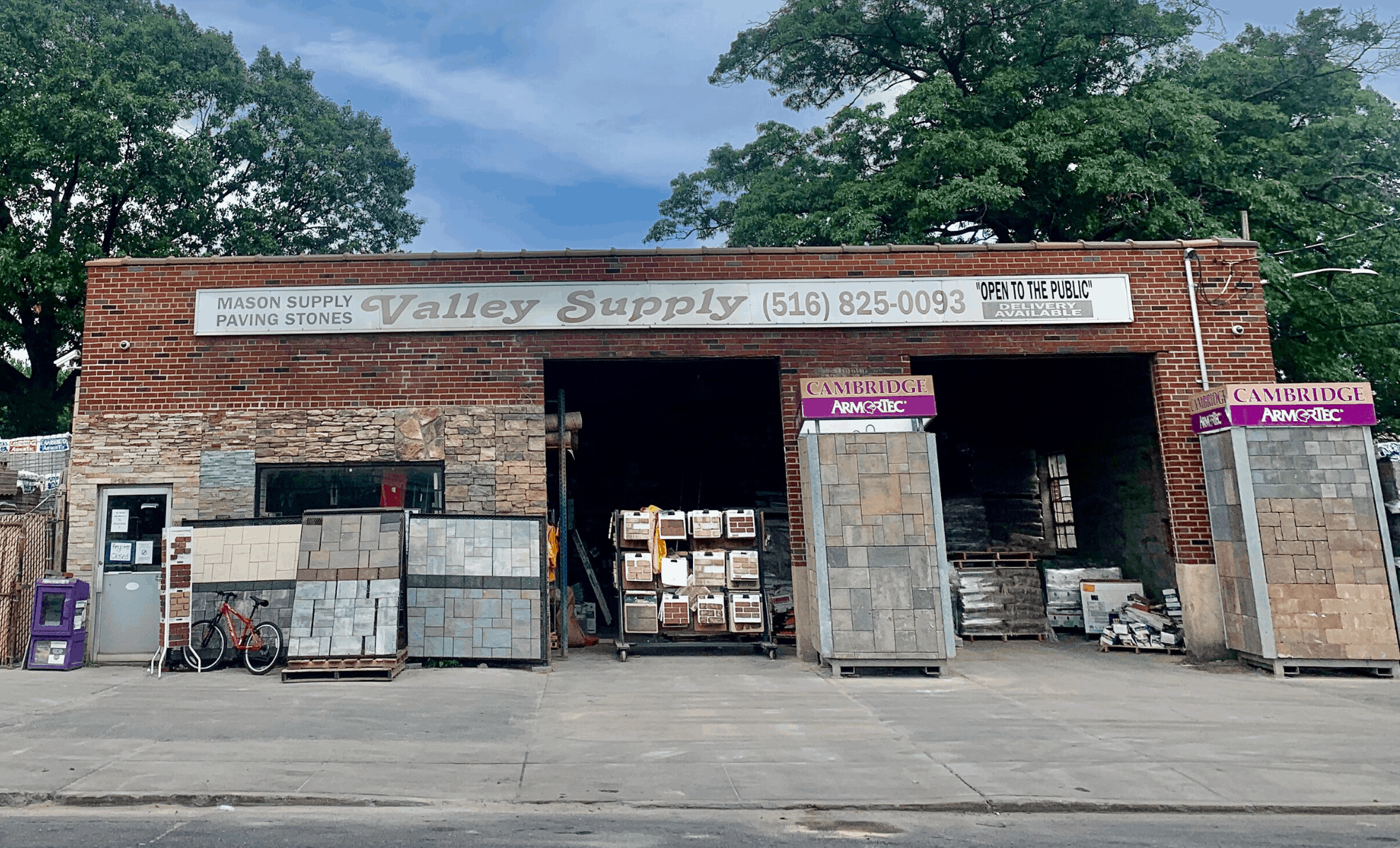
We’ve been supplying professional-grade masonry and drainage materials to Nassau County homeowners and contractors from our Elmont location since 1956. Pete and Steve at our counter have more than 50 combined years of experience helping people figure out exactly what they need — and just as importantly, what they don’t. If you’re planning a drainage project and want honest guidance on materials before you commit to anything, stop by or give us a call. We’re open to the public Monday through Saturday, and there’s no pressure to buy — just people who know this market and want to help you get it right.