Summary:
If you’ve tried to budget a masonry project in Nassau County recently, you already know how hard it is to get a straight answer on what things cost. Contractor quotes vary wildly. Big-box stores carry a fraction of what you actually need. And most online cost guides are pulling national averages that have nothing to do with what you’ll pay in Elmont, Valley Stream, or the Five Towns.
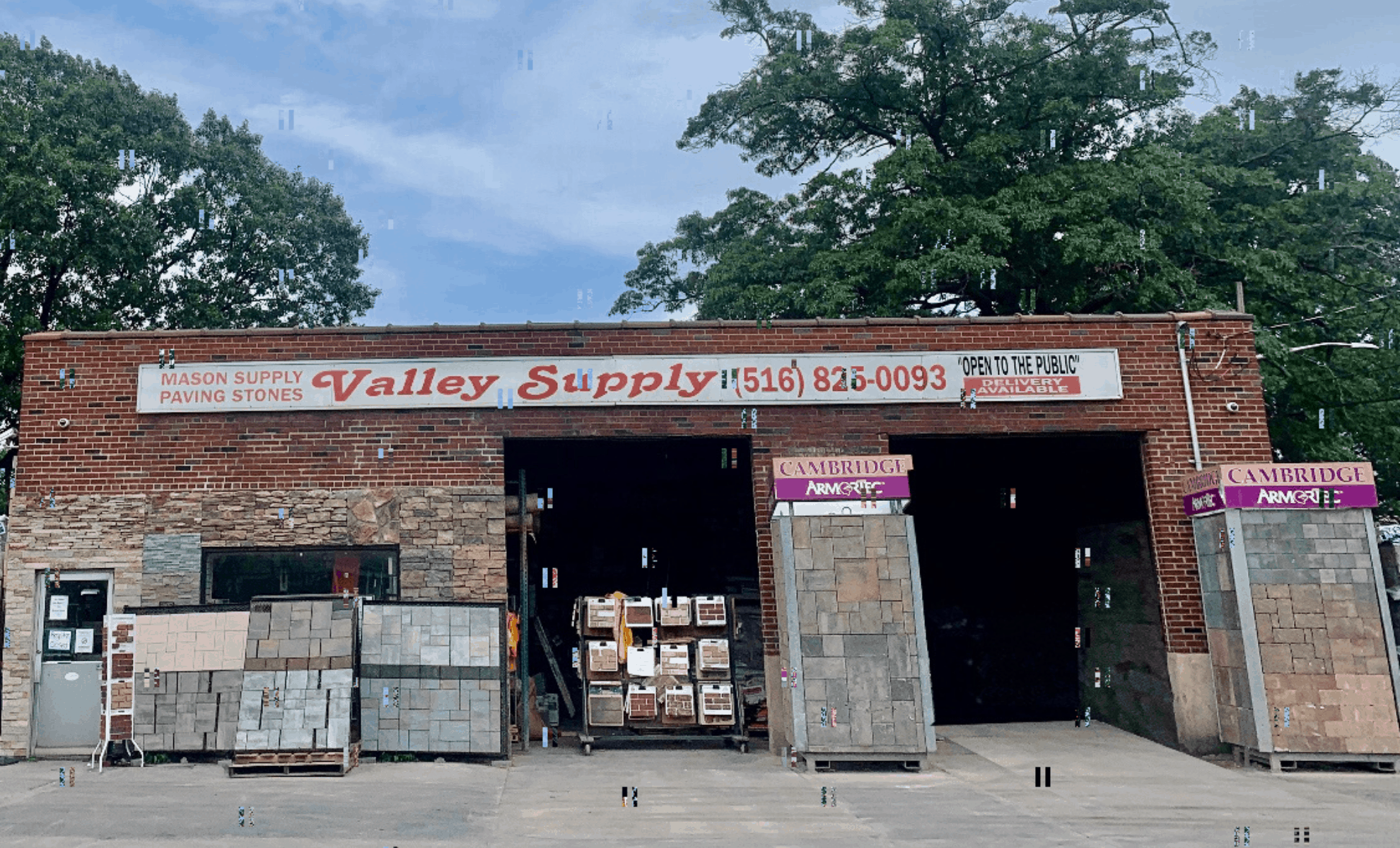
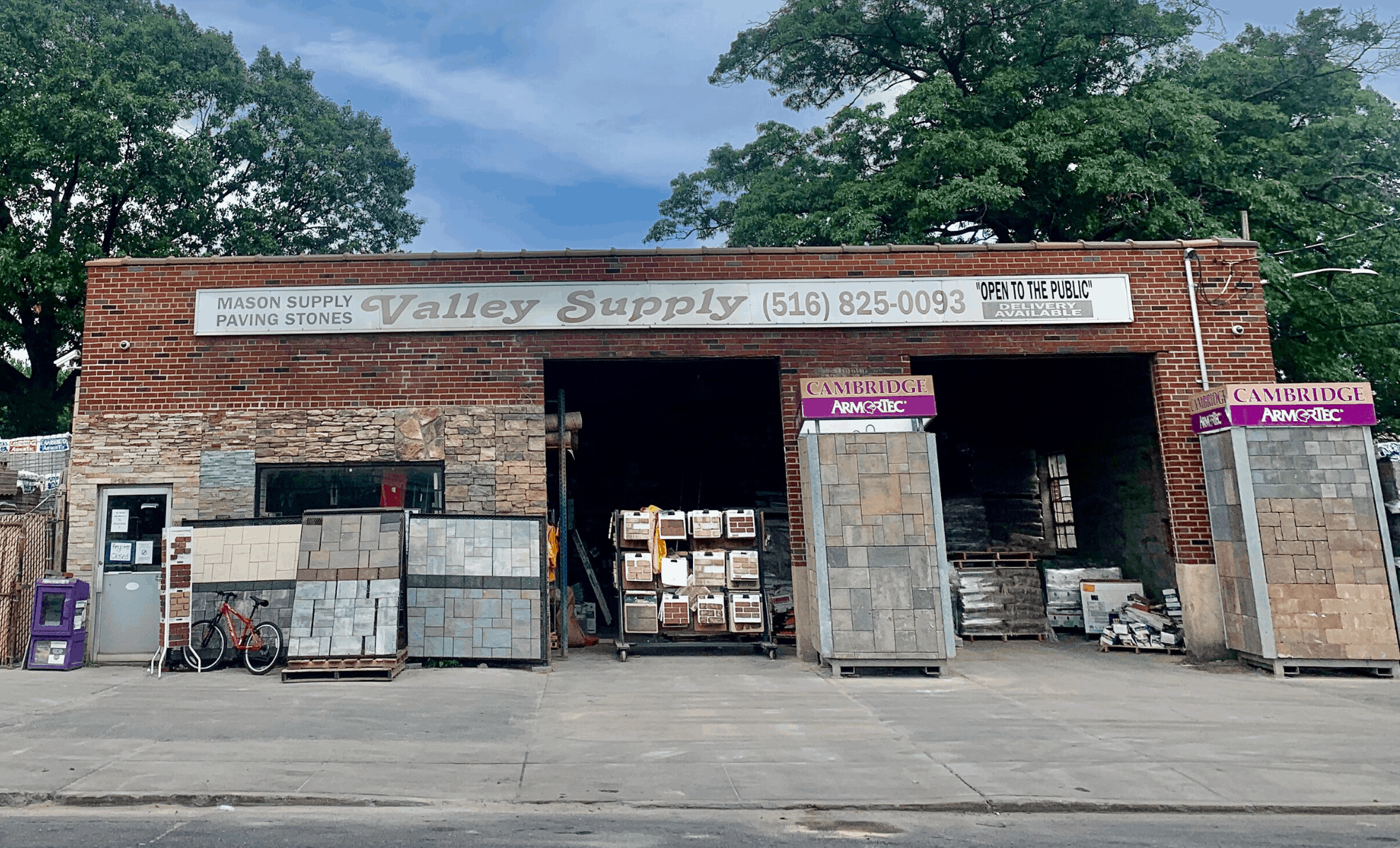
We’ve been supplying masonry materials to Nassau County homeowners and contractors from our yard at 747 Meacham Ave since 1956, and we know what things actually cost here — by material type, project size, and time of year. Here’s what you need to know heading into 2026.
Masonry Materials Cost Breakdown for Nassau County in 2026
The first thing worth understanding is the difference between material cost and installed cost. When a contractor quotes you $28 per square foot for a paver patio, that number includes excavation, base prep, labor, equipment, and cleanup — not just the pavers themselves. Material cost, meaning what you’d pay at a supply yard for the pavers alone, typically runs $6 to $12 per square foot for Cambridge Pavingstones depending on the collection.
That gap matters. Knowing the material cost gives you a real benchmark when you’re comparing contractor quotes or deciding whether to supply your own materials. It also tells you where your budget is actually going.
Masonry Supply Prices in Nassau County: What's Changed in 2026
Material prices across the board are running about 3 to 6 percent higher in 2026 than they were a year ago. That’s not unique to Nassau County — it’s a combination of ongoing material cost inflation and tighter supply chains for specialty brick and natural stone that haven’t fully recovered to pre-2020 norms. If you’re pricing a project now versus what you budgeted last spring, expect the numbers to be different.
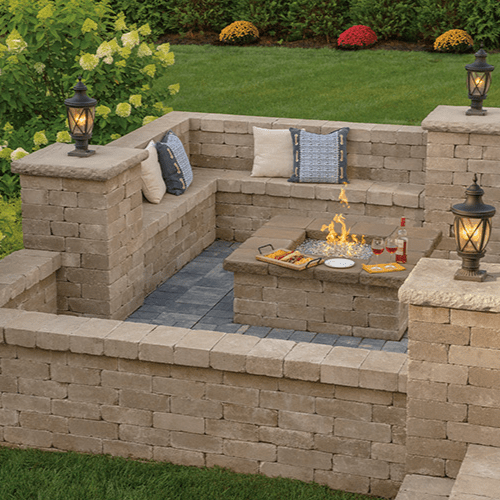
For pavers specifically, a fully installed Cambridge paver patio in Nassau County runs between $22 and $38 per square foot in 2026, depending on the product line and site conditions. A standard 300-square-foot patio — enough for a modest backyard entertaining space — comes in around $7,500 on the lower end for a straightforward Classic-tier install, and can climb to $36,000 or more for a fully custom outdoor living setup with multiple materials and design elements.
One thing buyers often overlook is the cost of base materials. Compacted gravel, polymeric sand, and edge restraints are not optional — they’re what keep your pavers level and weed-free five winters from now. Budget an additional $2 to $4 per square foot for these components on top of whatever the paver material itself costs. Skipping or skimping on base prep is the single most common reason paver installations fail early, and it’s also the reason experienced masons in Nassau County won’t cut that corner even when a homeowner asks them to.
Nassau County’s climate is harder on masonry than most national cost guides account for. The freeze-thaw cycles from December through March cause real damage — cracked pavers, spalling brick, heaved walkways — and that means the materials you choose need to be rated for it. Cambridge ArmorTec pavingstones, for example, are specifically engineered for this kind of climate and carry a transferable lifetime warranty. That warranty follows the pavers to the next owner if you sell your home, which matters in a market as active as Nassau County’s.
When to Buy Masonry Materials in Nassau County to Save Money
Timing your purchase can make a real difference. The masonry season on Long Island runs roughly March through October, and we see the sharpest demand spikes in April and May when homeowners are planning summer projects. That’s also when pricing tends to firm up and specialty items go on backorder fastest.
If you have flexibility, buying materials in late fall or winter gives you two advantages. First, masonry labor rates are often 5 to 10 percent lower during the off-season, since contractors have more availability and are more willing to negotiate. Second, you lock in current material pricing before the typical spring increase. A project you’re planning for April can be budgeted and materials secured in January — and you’ll likely spend less doing it that way.
The flip side is lead time. Specialty brick colors and large-format natural stone can take 4 to 8 weeks during peak season if a supplier needs to reorder. If your contractor is starting in three weeks and you haven’t ordered yet, that’s where a well-stocked local yard becomes genuinely important. We carry deep inventory across Cambridge’s full product line, multiple brick brands, and natural stone — so we can often fill orders on short notice that other suppliers can’t. One of our contractor customers once forgot to place a large brick order before a job started on a Monday. We got it handled. That kind of thing is harder to pull off if your supplier is running lean.
For homeowners doing their own material sourcing, the standard rule of thumb is to add 10 to 15 percent to your calculated square footage to account for cuts, pattern waste, and breakage. Underestimating by even 5 percent on a large project can mean a second delivery charge and a delay while you wait for matching material. Our counter staff will calculate exact quantities for you — it takes a few minutes and saves a lot of headaches.
Brick Cost and Stone Cost for Nassau County Projects in 2026
Brick and natural stone pricing covers a wide range depending on the product, and the gap between material types is significant enough to shape your entire project budget. Understanding what drives those differences helps you make a smarter decision upfront rather than discovering mid-project that you’ve priced the wrong material.
We carry brick from Watsontown, Belden, Cushwa, and Glen Gery, as well as Pennsylvania Bluestone, Indiana Limestone, Eldorado Stone, and thinstone veneer — materials you won’t find at a big-box store and that vary considerably in cost, character, and application.
Brick Cost in Nassau County: What You'll Pay Per Square Foot in 2026
Standard face brick runs between $350 and $800 per thousand bricks in 2026, depending on the manufacturer and color. For brick pavers specifically — the kind used for driveways, walkways, and patios — material cost runs $4 to $10 per square foot, with installed cost landing between $9 and $18 per square foot once you add labor.
Brick veneer, which gives you the look of full masonry at a fraction of the structural cost, is a popular choice in Nassau County — especially for home exteriors and retaining walls where full-thickness brick isn’t structurally necessary. Full-size brick veneer runs $12 to $18 per square foot installed. Thin brick veneer is lower, at $3 to $13 per square foot for materials and $8 to $18 installed, depending on the product and the complexity of the application.
The cost difference between veneer and full masonry is worth understanding before you commit to a scope. On a typical Nassau County home, veneer might run $15,000 for an exterior project where full masonry would cost $45,000. Both can look identical from the street. What drives the decision is usually structural requirements, HOA guidelines (which are real factors in many Nassau County villages and incorporated communities), and long-term maintenance expectations.
One thing our counter staff gets asked constantly is about matching existing brick — for repairs, additions, or extensions of existing masonry. This is genuinely difficult work. Brick varies by batch, manufacturer, and weathering, and getting a close match requires experience and access to a broad product range. We’ve been doing this for over 67 years and carry multiple brick lines for exactly this reason. Bring in a sample if you can, and we’ll do our best to find something compatible.

Stone Cost for Nassau County Hardscaping and Wall Projects
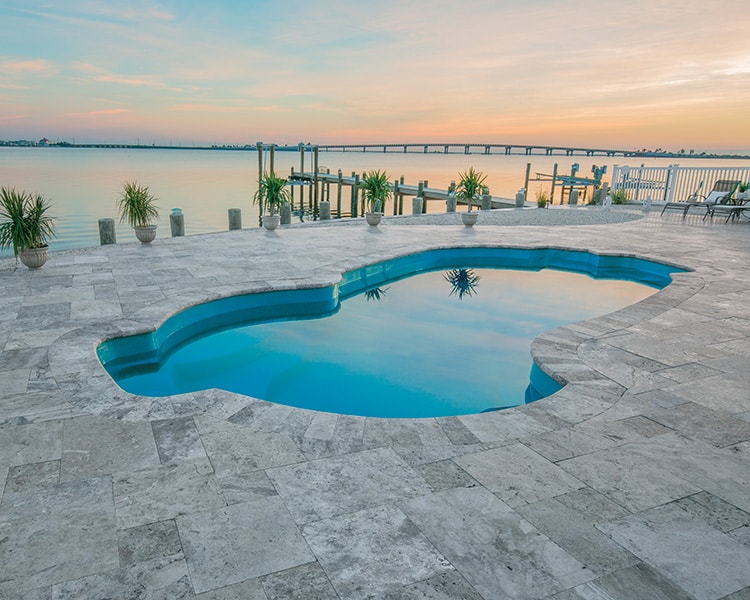
Natural stone pricing covers more ground than almost any other masonry material category. Pennsylvania Bluestone — one of the most requested materials we carry, and a staple of Long Island landscaping for decades — runs $10 to $20 per square foot for materials alone. With labor, a Pennsylvania flat stone installation typically lands at $40 to $50 per square foot, depending on the complexity of the pattern and site conditions.
For stone walls — whether you’re building a retaining wall along a grade change or a decorative garden wall — installed cost runs $10 to $75 per square foot, with dry-stack stone walls typically landing in the $20 to $60 range. The wide spread reflects real differences in stone type, wall height, foundation requirements, and drainage integration. A low decorative wall in a flat backyard is a very different structural challenge from a tiered retaining wall managing a significant grade change — and Nassau County’s soil conditions, which vary considerably between the South Shore and the North Shore, factor into that too.
Interior stone accent walls have become increasingly popular in Nassau County homes, particularly in entryways and living areas where homeowners want the texture and warmth of natural stone without a full exterior project. Those typically run $1,000 to $4,500 for an average room feature, or $10 to $45 per square foot depending on the stone and installation complexity.
The coastal proximity of South Shore communities — Long Beach, Oceanside, Rockville Centre — means elevated salt air exposure that can affect certain stone finishes over time. If your project is within a mile or two of the water, that’s a conversation worth having before you choose your material. We’ve been supplying these communities long enough to know which products hold up and which ones don’t, and we’ll tell you straight.
Where to Get Masonry Materials in Nassau County Without the Guesswork
Masonry materials cost what they cost — but how much you actually spend depends heavily on where you buy, when you buy, and whether you’re getting honest guidance on what your project actually requires. The difference between a well-planned material purchase and a reactive one can easily be $1,000 to $3,000 on a mid-sized project.
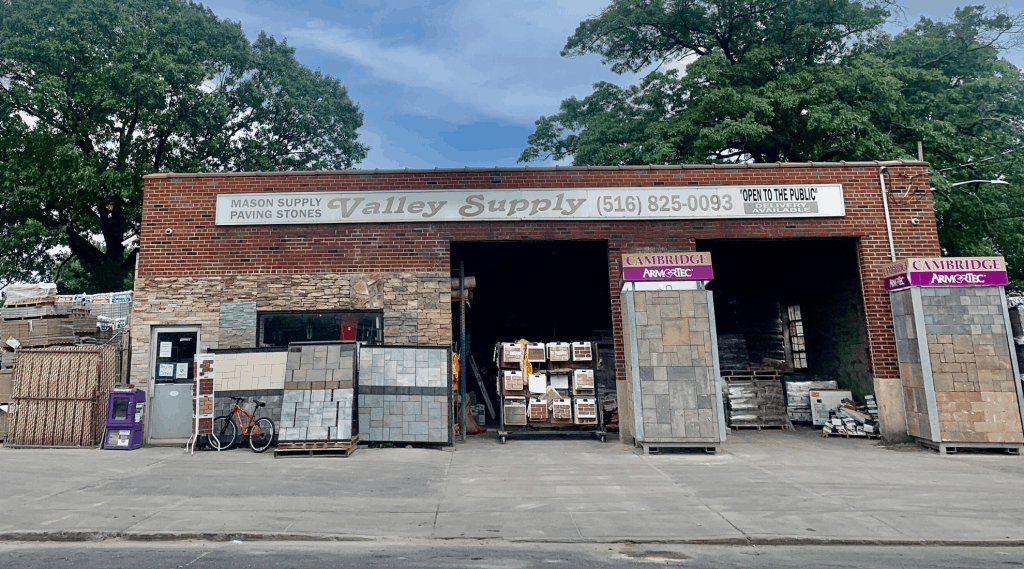
We’ve been at 747 Meacham Ave in Elmont since 1956, and we’re open to the public — no contractor license required. Pete and Steve at the counter have over 50 years of combined experience between them, and they’ll help you calculate quantities, match existing materials, and figure out what you actually need before you spend a dollar. Our showroom has hands-on wall and paver displays so you can see and compare materials in person, not just guess from a photo online.
If you’re planning a project in Nassau County — whether it’s a Cambridge paver patio in Floral Park, a bluestone walkway in Garden City, or a brick repair in Valley Stream — stop in or give us a call. We’re open Monday through Friday, 7 AM to 5 PM, and Saturdays from 7 AM to 2 PM. We’ve been the answer to this question for a long time, and we’re happy to be yours.