Summary:
You noticed the cracks last spring. Maybe you’ve been ignoring them since. Now they’re wider, there are more of them, and you’re starting to wonder whether a quick fix will actually hold — or whether you’re throwing money at a problem that’s only going to come back worse next winter.
That’s a fair concern, especially in Nassau County, where freeze-thaw cycles are brutal on concrete and a lot of driveways are pushing 40, 50, even 60 years old. This guide gives you real 2026 cost ranges for concrete driveway repair, explains what drives those costs up or down, and helps you figure out whether repair is actually worth it or whether replacement makes more sense.
What Concrete Driveway Repair Actually Costs in Nassau County, NY
The honest answer is: it depends on how bad the damage is. But here are the real numbers Nassau County homeowners are working with in 2026.
Minor crack filling — the kind you can handle yourself with a quality filler product — runs anywhere from $15 to $60 in materials for surface hairline cracks under a quarter inch wide. Professional crack repair for more significant damage typically runs $100 to $400 per crack for surface-level issues, and $500 to $2,000 or more when the crack is deep, wide, or tied to a structural problem underneath.
If your driveway needs resurfacing — meaning the surface is spalling, pitted, or showing widespread deterioration but the base is still solid — expect to pay roughly $3 to $10 per square foot for professional resurfacing. On a 400 square foot driveway, that puts you somewhere between $1,200 and $4,000. For full concrete driveway replacement in Nassau County, installed costs run $12 to $25 per square foot depending on thickness, reinforcement, and finishing. A standard two-car driveway can easily run $4,000 to $9,000 or more once demolition and disposal are factored in.
Why Nassau County Driveways Crack Faster Than You'd Expect
If it feels like your driveway is fighting a losing battle every winter, you’re not imagining it. Nassau County’s climate is genuinely hard on concrete, and a few specific local conditions make the damage worse than you’d see in warmer parts of the country.
The biggest culprit is the freeze-thaw cycle. Water finds its way into even the smallest crack in your driveway surface. When temperatures drop overnight — which happens dozens of times between November and March in Nassau County — that water freezes and expands by roughly nine percent. That expansion puts pressure on the surrounding concrete from the inside. By the time spring arrives, what started as a hairline crack is now a quarter inch wide or more. Leave it another winter, and you’re looking at structural damage.
Road salt makes it worse. Nassau County municipalities apply de-icing chemicals heavily during winter storms, and the runoff doesn’t stay on the road. It migrates onto driveway surfaces and edges, chemically attacking the concrete and accelerating a process called spalling — where the surface layer starts to flake and pit. If you’ve noticed that your driveway edges look worse than the middle, salt runoff is almost certainly part of the reason.
Then there’s the soil. A lot of Nassau County sits on clay-heavy ground, and clay moves. It expands when it absorbs water and contracts when it dries out. That constant ground movement puts stress on concrete slabs from below, which is why you see cracking and heaving in driveways that were poured correctly — the problem isn’t always the concrete itself, it’s what’s underneath it.
Finally, consider the age of the housing stock. Most of the single-family homes in communities like Elmont, Valley Stream, Lynbrook, Rockville Centre, and Levittown were built in the 1940s, 50s, and 60s. A lot of those original driveways are still in place. A 60-year-old concrete driveway has been through hundreds of freeze-thaw cycles, decades of salt exposure, and a lifetime of ground movement. At some point, repair stops being the right answer.

Concrete Driveway Repair vs. Full Replacement: How to Make the Call
This is the question most homeowners are actually trying to answer when they start researching costs. And the honest answer isn’t always “repair it” — even though repair is almost always cheaper upfront.
A general rule of thumb in the industry: if your repair costs are approaching 50 to 60 percent of what full replacement would cost, replacement usually makes more financial sense. You’re spending nearly the same money but getting a fraction of the lifespan. That’s especially true in Nassau County, where a well-built concrete driveway should last 30 to 40 years — but only if it was installed correctly with proper base preparation, adequate concrete thickness, and properly spaced control joints.
Surface cracks under a quarter inch wide, with no heaving and no drainage issues underneath, are generally good candidates for repair. You fill them, seal the surface, and get several more years out of the driveway. But if you’re dealing with cracks wider than half an inch, sections that have heaved or sunk, or damage that keeps coming back in the same spots every year, those are signs of a base problem or structural failure — and patching the surface won’t fix what’s happening below it.
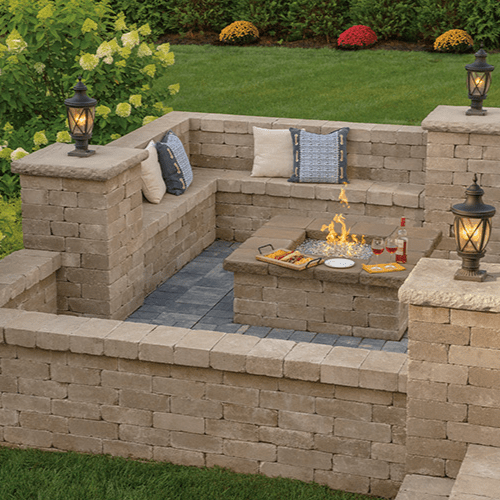
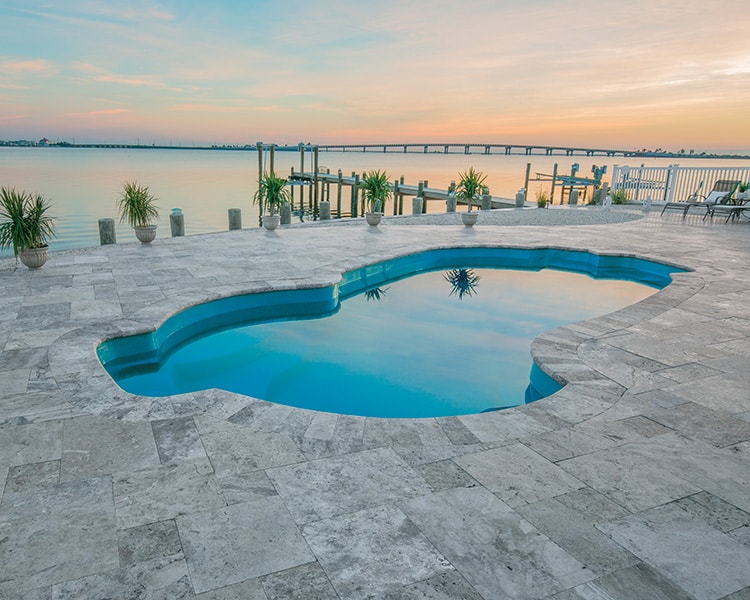
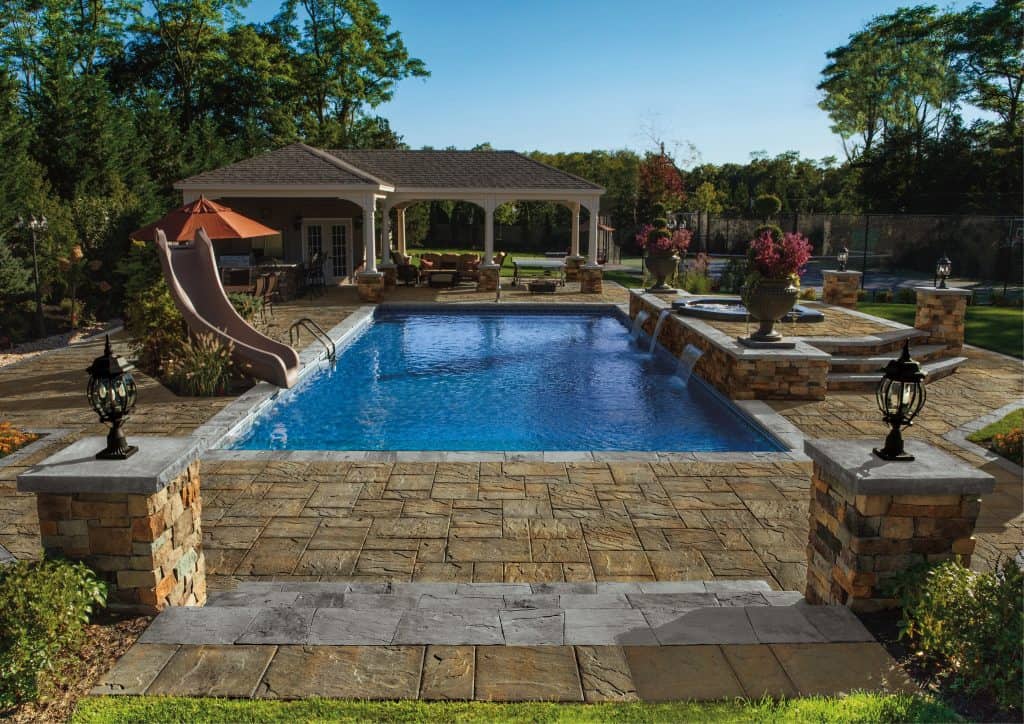
One option worth serious consideration in Nassau County is replacing a deteriorating concrete driveway with Cambridge Pavingstones rather than pouring new concrete. It’s a different category of product entirely. Cambridge Pavers are engineered specifically for northeastern climates — they flex with ground movement rather than cracking, individual units can be replaced if one is ever damaged, and they come with a transferable lifetime warranty. Concrete doesn’t come with any warranty at all. The upfront cost is higher, but when you’re looking at a driveway that’s already failed once and you’re in a market where curb appeal directly affects home value, the long-term math often favors pavers. We’ve been a Premier Cambridge Dealer for over 20 years, and our 20,000 square foot facility in Elmont carries the full line — so if you want to see the options in person before making a decision, you’re welcome to come in any time.
Cement Driveway Repair Cost: What's the Difference?
A lot of homeowners search for “cement driveway repair cost” and mean exactly the same thing as “concrete driveway repair cost.” It’s worth clearing up the terminology, because the distinction matters when you’re buying materials or talking to a contractor.
Cement is an ingredient — it’s the binding agent that, when mixed with water, sand, and aggregate, becomes concrete. So what you have in your driveway is concrete, not cement. That said, the repair costs are the same regardless of which term you use to search for them. If a contractor or supplier gives you a puzzled look when you say “cement driveway,” just know you’re talking about the same product.
What does vary is the quality of the concrete mix used in repair work. For Nassau County’s climate, you want a minimum of 4,000 PSI concrete — not the 3,000 PSI minimum that technically meets residential code. The higher PSI mix handles freeze-thaw stress better and holds up longer. It costs a bit more per yard, but it’s the right call for this region.
Concrete Driveway Maintenance: What Keeps Repair Costs Down Over Time
The cheapest repair is the one you never have to make. Concrete driveways in Nassau County require some ongoing attention — not a lot, but skipping it entirely is how minor surface issues turn into structural problems.
Sealing is the most important maintenance step. A quality concrete sealer fills micro-pores in the surface and creates a barrier against water infiltration and salt damage. In Nassau County’s climate, you should be sealing your driveway every two to three years. It’s not expensive — materials for a DIY seal coat on a standard driveway run $50 to $150 — and it dramatically slows the freeze-thaw damage cycle that causes most of the cracking you see on older driveways.
Crack filling should happen before winter, not after. If you notice a crack forming in late summer or fall, fill it before the first freeze. Once water gets in and goes through even one freeze-thaw cycle, the crack is wider and deeper than it was. A tube of concrete crack filler costs a few dollars and takes ten minutes to apply. Waiting until spring costs you the entire winter’s worth of expansion damage.
Avoid using rock salt or sodium chloride-based de-icers directly on your concrete driveway. They’re effective on roads, but they accelerate surface spalling significantly. Sand provides traction without the chemical damage. If you use a de-icer, look for ones specifically formulated as concrete-safe — they exist and they’re worth the extra cost.
Keeping the driveway clean also matters more than most homeowners realize. Oil stains, in particular, penetrate concrete and weaken the surface over time. A pressure wash once or twice a year removes surface contaminants before they do lasting damage. None of this is complicated or expensive. The homeowners in places like Merrick, Bellmore, and Garden City who have driveways that still look good after 25 years are almost always the ones who’ve been consistent with these basics.
Asphalt Driveway Maintenance: How It Compares to Concrete
A lot of Nassau County homeowners have asphalt driveways, and the maintenance picture is different enough from concrete that it’s worth addressing separately — especially if you’re weighing materials for a replacement project.
Asphalt is generally cheaper to install than concrete. On Long Island, asphalt runs $7 to $15 per square foot installed, compared to $12 to $25 per square foot for concrete. A typical two-car driveway in asphalt runs roughly $4,200 to $9,000. That lower upfront cost is why asphalt is common in Nassau County, particularly in communities like Hempstead, West Hempstead, and Franklin Square where the housing stock is dense and budgets are practical.
The trade-off is ongoing maintenance. Asphalt requires seal coating every two to five years to prevent oxidation and surface cracking. Without it, the asphalt dries out, becomes brittle, and starts to crack and crumble — a process that accelerates in Nassau County’s sun and heat during summer months. Crack sealing and pothole patching are also more frequent with asphalt than with concrete, though individual repairs are generally less expensive.
The key difference between asphalt and concrete maintenance is consistency. Asphalt is more forgiving in terms of upfront installation — it’s easier to pour, sets faster, and handles minor ground movement reasonably well. But it demands more regular attention over its lifespan. Concrete, installed correctly with proper base prep and the right PSI mix, can go longer between maintenance interventions — but when it does fail, the repairs tend to be more involved.
If you’re replacing a driveway and trying to decide between the two, the honest answer is that neither is universally better. Asphalt is the lower-cost entry point with higher ongoing maintenance. Concrete is a larger upfront investment with lower long-term maintenance if installed well. And Cambridge Pavingstones sit above both in terms of longevity and warranty protection — worth a serious look if you’re making a long-term decision on a property you plan to keep.
Where to Get Concrete Repair Materials in Nassau County, NY
If you’ve done the math and repair makes sense, the materials you use matter as much as the labor. Low-grade filler and generic sealers fail faster — especially in Nassau County’s climate — and you end up doing the same job again in two years.
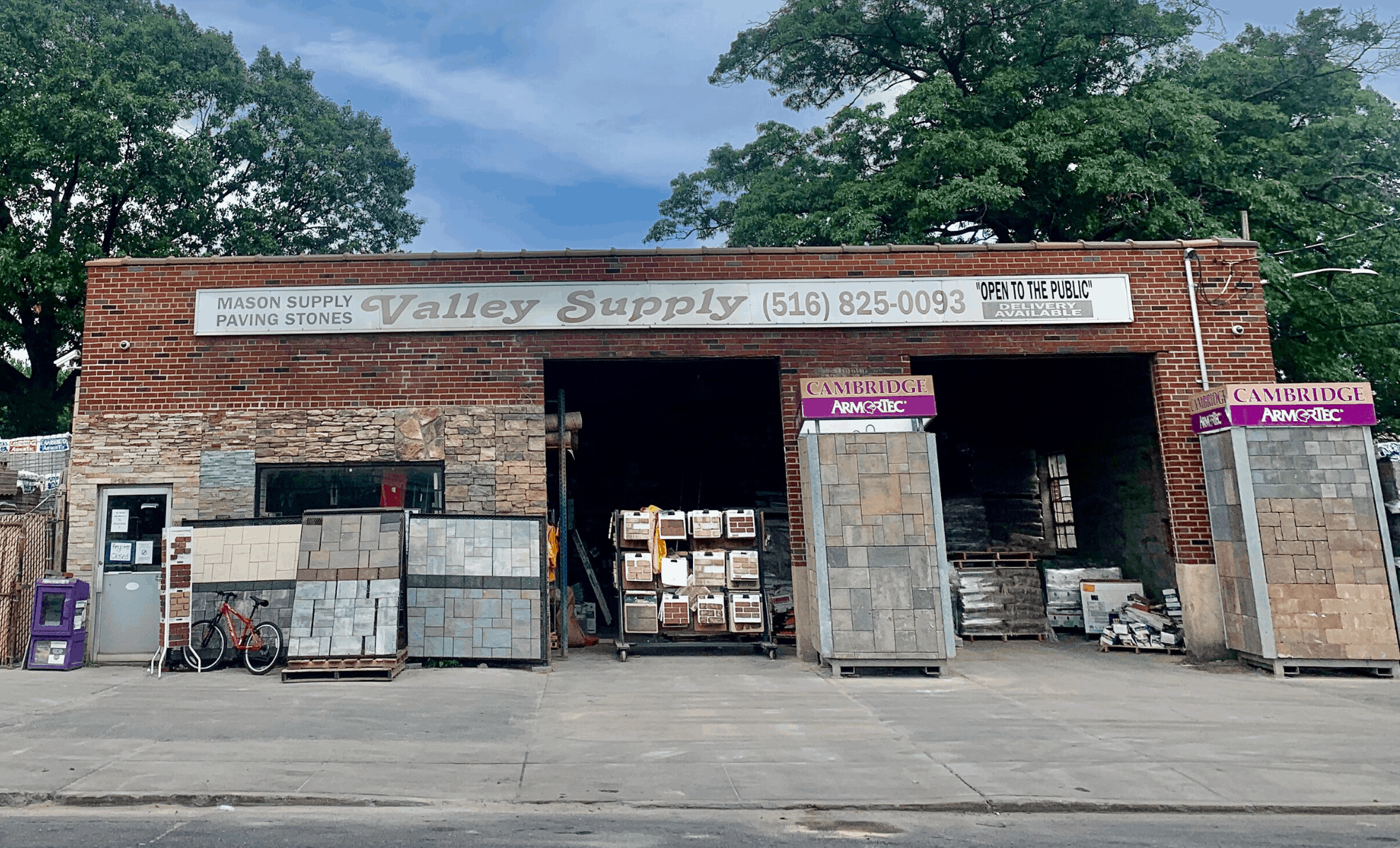
We carry everything you need at our Elmont location. We’ve been at 747 Meacham Avenue since 1956, and our staff — including Pete and Steve, with over 50 years of combined counter experience between them — can tell you exactly what your project requires from start to finish. We’re open to the public Monday through Friday, 7AM to 5PM, and Saturday, 7AM to 2PM.
And if you’re leaning toward replacement rather than another round of repairs, come see the Cambridge Pavingstone displays in person. It’s a different conversation once you’ve actually seen the product. Reach out to us and we’ll point you in the right direction — whether that’s materials, a contractor referral, or just an honest answer about what your driveway actually needs.
—
**FAQs: Concrete Driveway Repair Cost in Nassau County**
**How much does it cost to repair a cracked concrete driveway in Nassau County?** Minor surface crack repairs run $100 to $400 per crack when done professionally. More significant structural cracks or widespread surface damage can push repair costs to $1,200 to $4,000 or more depending on the scope. In Nassau County, freeze-thaw cycles between November and March accelerate crack development faster than in most other regions, so catching damage early saves money.
**Is it cheaper to repair or replace a concrete driveway?** Repair is cheaper upfront, but not always the smarter long-term call. If your repair estimate is more than half the cost of full replacement — or if the damage keeps returning in the same spots — replacement is usually the better investment. In Nassau County, where a lot of driveways are 40 to 60 years old and have endured decades of salt exposure and ground movement, full replacement with a better material is often the more cost-effective answer over a five to ten year horizon.
**What is the average cost of a new driveway in Nassau County?** Asphalt runs $7 to $15 per square foot installed; concrete runs $12 to $25 per square foot. A standard two-car driveway (roughly 600 square feet) in concrete typically costs between $7,200 and $15,000 fully installed, including demolition of the existing surface. Cambridge Pavingstones are priced at a premium over poured concrete but include a transferable lifetime warranty — which concrete doesn’t offer at any price.
**Can I repair a concrete driveway myself?** For hairline cracks under a quarter inch wide with no heaving or drainage issues, yes — DIY crack filler from a quality masonry supplier works fine. For anything wider, deeper, or showing signs of base failure, professional repair is the right call. DIY patching on a structural problem is a cosmetic fix that will fail within a winter or two in Nassau County’s climate.
**What causes concrete driveways to crack in Nassau County specifically?** The main factors are freeze-thaw cycling, road salt runoff from municipal de-icing, and clay-heavy soil that expands and contracts with moisture changes. Nassau County averages dozens of freeze-thaw cycles per winter, and the post-WWII housing stock means many driveways were poured with thinner concrete and less base preparation than current standards call for. Age, climate, and soil conditions all compound each other here in a way that’s genuinely more aggressive than what you’d see in most other parts of the country.