Summary:
You’ve probably noticed the damage. A crack running the length of the driveway. A sunken section near the garage. Maybe a neighbor just had theirs redone and it got you thinking. Whatever brought you here, you’re asking the right question at the right time — because choosing between concrete and asphalt isn’t just a preference call. In Nassau County, it’s a decision shaped by clay soil, hard winters, and homes that were built when Eisenhower was president. We’ve been supplying driveway materials to Nassau County homeowners and contractors since 1956, and we’ve seen what holds up and what doesn’t. Here’s the honest version.
Concrete Driveway Performance in Nassau County's Climate
Concrete is the longer-lasting material — that part is straightforward. A well-installed concrete driveway in Nassau County can hold up for 30 to 40 years with minimal routine maintenance. That’s roughly twice the lifespan of asphalt under the same conditions, and for a lot of homeowners, that math alone settles the question.
The catch is that concrete is rigid. It doesn’t flex. When water works its way into the surface, freezes, and expands — which happens multiple times between November and March in this county — that expansion has to go somewhere. If the base underneath isn’t properly prepared, you’ll see it in the surface within a few seasons. That’s not a knock on concrete. It’s a reason why installation quality matters more here than it does in warmer climates.
Does Concrete Hold Up Through Long Island Freeze-Thaw Cycles?
The honest answer is: it depends on how it was installed. Nassau County doesn’t just get one hard freeze per winter — it gets repeated freeze-thaw cycles, sometimes multiple times in a single week during January and February. Each cycle puts stress on rigid surfaces. Concrete that was poured over an inadequate base, without proper drainage or control joints, tends to show that stress early.
The communities around Elmont, Valley Stream, Floral Park, and Franklin Square sit on some of the more clay-heavy soil in the county. Clay retains moisture. It expands when wet and contracts when dry, which means the ground underneath a driveway is constantly shifting in small ways. A concrete slab sitting on top of that movement without a deep, well-compacted stone base is fighting an uphill battle from day one.
The industry standard for Long Island is 8 to 10 inches of excavation depth before a single inch of concrete is poured. That base — properly graded, properly compacted — is what determines whether a concrete driveway lasts 35 years or 12. Most failures we hear about from homeowners in Nassau County trace back to the base, not the material itself.
There’s also the de-icing salt issue. Nassau County roads get heavily salted during winter storms, and that salt tracks onto driveways. Concrete surfaces, especially in the first year or two after installation, are vulnerable to salt damage — a process called spalling, where the surface layer flakes and deteriorates. It’s manageable with the right sealers and by avoiding rock salt on the driveway itself, but it’s a real consideration that a lot of homeowners don’t hear about until after they’ve already poured.
What Does a Concrete Driveway Actually Cost in Nassau County?
Installed concrete driveway costs on Long Island generally run between $12 and $25 per square foot, depending on the contractor, the scope of the base work, and whether you’re adding any decorative finish. For a standard two-car driveway — roughly 600 square feet — that puts you somewhere between $7,200 and $15,000. Those are real Nassau County numbers, not national averages that don’t account for local labor rates.
The higher end of that range isn’t necessarily a red flag. It often reflects deeper base excavation, better drainage grading, and the kind of prep work that actually makes the driveway last. The lower end is where you want to ask questions — specifically, how deep are they going, and what does the base look like?
Concrete’s maintenance costs are relatively low over its lifetime. You’re not on a resealing schedule the way you are with asphalt. But when concrete does need repair, it’s expensive. Patching a concrete driveway is difficult to do invisibly, and resurfacing runs anywhere from $850 to $2,900 depending on the scope. That’s worth factoring into the long-term cost calculation, not just the upfront price.
On the property value side, a concrete driveway consistently adds to a home’s curb appeal and resale value — estimates generally land in the 5 to 10 percent range for a new driveway, and concrete tends to perform better than asphalt in buyer perception. In a market like Nassau County, where homes are priced well above the national median and buyers notice every detail at a showing, that matters.
Asphalt Driveway Durability and Maintenance on Long Island
Asphalt costs less upfront — that’s the starting point for most conversations. On Long Island, installed asphalt runs roughly $7 to $15 per square foot, which puts a 600-square-foot driveway between $4,800 and $9,000. For homeowners working with a tighter budget, that gap compared to concrete is real and significant.
What asphalt has going for it beyond price is flexibility. Unlike concrete, asphalt bends slightly under stress rather than cracking. That makes it more forgiving in freeze-thaw conditions — a meaningful advantage in Nassau County winters. It also absorbs heat from the sun, which helps snow and ice melt faster off the surface. In practical terms, your driveway clears quicker after a storm.
How Long Does an Asphalt Driveway Last in Nassau County?
With proper maintenance, an asphalt driveway in Nassau County typically lasts 15 to 20 years. Some installations push closer to 25 years when the base work is solid and the surface is kept sealed. But that maintenance piece is non-negotiable — asphalt needs to be resealed every three to five years to stay in good shape. Skip a few cycles and you’ll see oxidation, surface cracking, and water infiltration that shortens the lifespan considerably.
That resealing schedule is something a lot of homeowners underestimate when they’re comparing upfront costs. The material is cheaper to install, but it requires more ongoing attention than concrete. Over a 20-year period, those resealing costs add up — and they need to be factored into any honest cost comparison between the two materials.
One thing asphalt has working in its favor here is that repairs are cheaper and less visible than concrete repairs. If a section cracks or settles, patching asphalt is relatively straightforward and blends in reasonably well. That’s a practical advantage for homeowners who want to extend the life of a driveway without a full replacement.
The clay soil issue applies to asphalt just as much as concrete. Asphalt’s flexibility helps it absorb some of the ground movement caused by Nassau County’s moisture-retaining soil, but it still needs a properly excavated and compacted base to perform well over time. A thin layer of asphalt over a shallow, poorly graded base will fail regardless of how well the surface is sealed. The 8 to 10 inch excavation standard applies here too, and any contractor who’s not talking about base preparation before they talk about material is worth questioning.

Frequently Asked Questions About Driveways in Nassau County
A few questions come up consistently from homeowners in this area, and they’re worth addressing directly.
Which lasts longer in Nassau County — concrete or asphalt? Concrete, by a significant margin. A well-installed concrete driveway can last 30 to 40 years in this climate. Asphalt typically runs 15 to 20 years with regular maintenance. The tradeoff is upfront cost and installation sensitivity — concrete demands more precise base work and is more vulnerable to salt damage in Nassau County’s winters, where roads get heavily salted and that salt tracks onto residential driveways.
What’s more cost-effective long term for Long Island homes? When you divide total cost — installation plus maintenance — by the number of years the driveway lasts, concrete often comes out ahead despite the higher upfront price. Asphalt’s resealing requirements and shorter lifespan narrow that initial price gap over time. That said, if budget is the primary constraint right now, asphalt is a legitimate choice — just go in with realistic expectations about the maintenance commitment.
Does concrete crack in Nassau County winters? It can, and it does — but usually because of inadequate base preparation or missing control joints, not the material itself. Properly installed concrete with a deep compacted base, good drainage grading, and control joints cut at the right intervals handles Nassau County winters well. The freeze-thaw cycle is a real stress factor, but it’s manageable with the right installation.
Is asphalt or concrete better for clay soil? Asphalt’s flexibility gives it a slight edge on clay-heavy ground because it can absorb minor movement without cracking. But both materials need the same deep base work in Nassau County’s inland communities — Elmont, Valley Stream, Franklin Square, and similar areas where clay content is high. The base is the answer to the clay soil problem, regardless of which surface material you choose.
Can I use de-icing salt on my driveway? Not on concrete, especially in the first two winters after installation. Salt accelerates surface deterioration on concrete and causes spalling. Sand or calcium magnesium acetate are safer alternatives. Asphalt is more tolerant of salt, though it still benefits from avoiding harsh chemical de-icers. This is a real day-to-day consideration for Nassau County homeowners, given how heavily the county salts roads during winter storms.
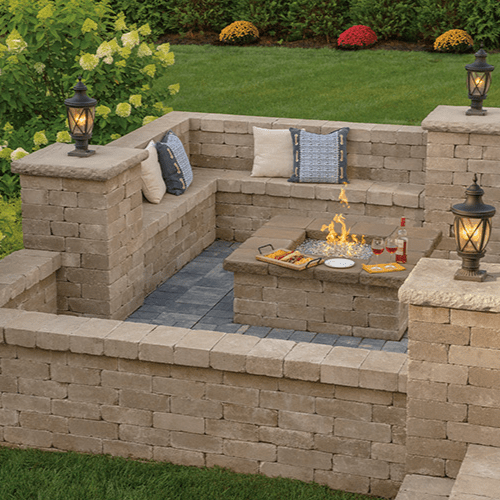
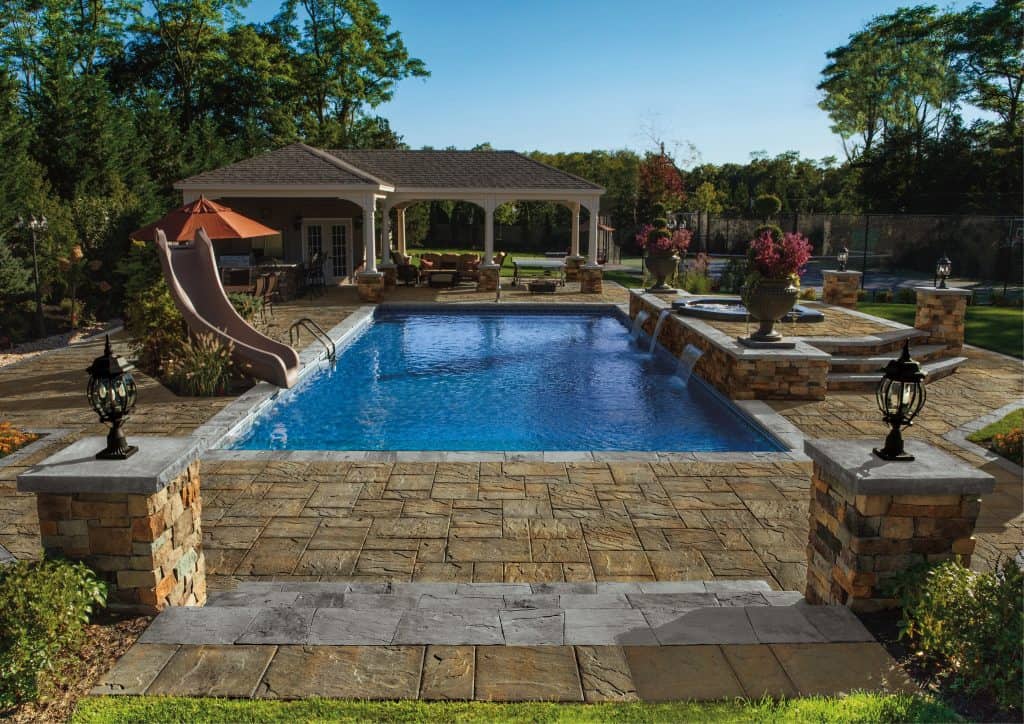
Is there a third option worth considering? Yes — interlocking concrete pavers, like the Cambridge ArmorTec line we carry, offer a performance profile that neither asphalt nor poured concrete can match. They flex with ground movement like asphalt, last longer than concrete, and can be repaired one piece at a time without redoing the whole surface. They also come with a transferable lifetime warranty — something no poured surface offers. The upfront cost is higher, but the long-term math and curb appeal are hard to argue with.
Which Driveway Material Is Right for Your Nassau County Home?
There’s no universal answer — but there is a right answer for your specific situation, your soil, your budget, and how long you plan to stay in your home. Asphalt makes sense if upfront cost is the priority and you’re committed to the maintenance schedule. Concrete makes sense if you want a longer-lasting surface with minimal ongoing attention and you’re working with a contractor who takes base preparation seriously. And if you want something that outperforms both and holds its value at resale, pavers are worth a serious look before you decide.
What we’d tell you is the same thing we’ve been telling Nassau County homeowners since 1956: the material matters, but the base matters more. Get that right and almost any surface will hold up. Cut corners on it and no material will save you.
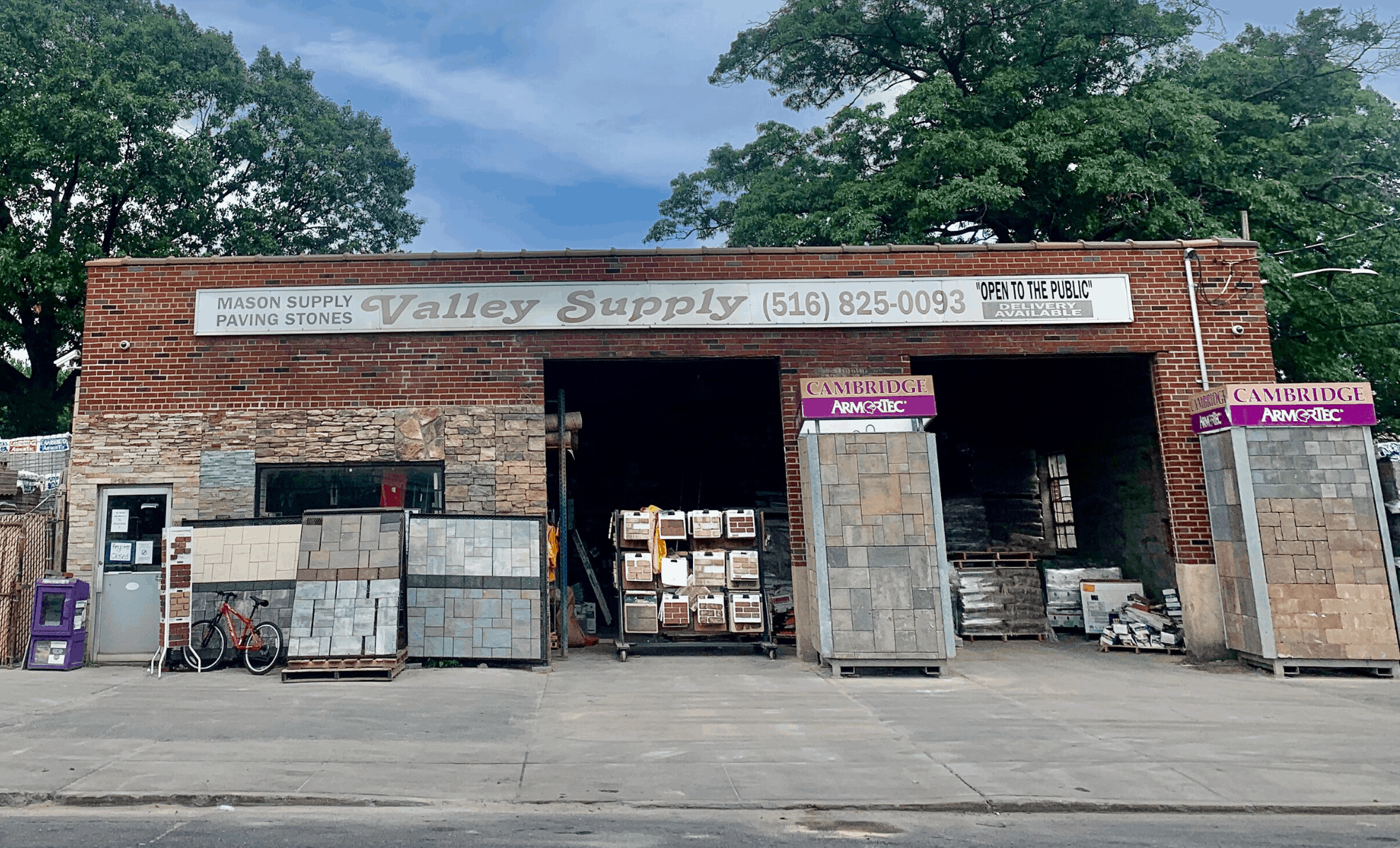
If you want to see real driveway materials in person before you commit to anything, come by Valley Supply Corp at 747 Meacham Avenue in Elmont. We have hands-on displays, no sales pressure, and staff who’ve been answering these exact questions for decades. We’re open Monday through Friday 7AM to 5PM and Saturday 7AM to 2PM.