Summary:
If your driveway survived another Long Island winter looking worse for wear, you’re probably doing the math on what it would cost to replace it. The problem is that most of the pricing you find online is national data — and Nassau County is not a national market. Labor rates here are higher, the soil conditions are more demanding, and the winters are harder on paved surfaces than most guides account for. This page gives you real 2026 driveway paving cost ranges for Nassau County, broken down by material, with honest context about what pushes prices up and what actually holds up over time.
2026 Driveway Replacement Cost Breakdown for Nassau County
The typical driveway project in Nassau County falls somewhere between $3,000 and $10,000, with an average closer to $3,000 for a straightforward asphalt replacement on a standard residential lot. But that range stretches considerably depending on what material you choose, how large the driveway is, and what’s happening underneath the surface.
Demolition and removal of an existing driveway adds cost that a lot of homeowners don’t budget for upfront. If you’re tearing out old asphalt, expect that to run $1–$2 per square foot before any new material goes down. Permits are another line item — Nassau County driveway permits are issued at the town level, so requirements vary depending on whether you’re in the Town of Hempstead, North Hempstead, or Oyster Bay. Budget $50–$200 for permitting, and verify your town’s requirements before work begins.
Labor accounts for up to half of a total project cost on Long Island, which is one reason why quotes here consistently run above national benchmarks. That’s not contractors padding their margins — it’s the reality of operating in this market.
Asphalt Paving Cost in Nassau County: What to Expect Per Square Foot
Asphalt remains the most common driveway material in Nassau County, and for a lot of homeowners, it’s still the default choice when it’s time to replace. In 2026, installed asphalt driveway costs in Nassau County run approximately $7–$15 per square foot, depending on thickness, site conditions, and whether you’re doing a full replacement or an overlay. A standard 20×20 driveway — around 400 square feet — typically comes in between $3,000 and $4,500 for a full replacement with proper base prep included.
An asphalt overlay, where new material is laid over an existing surface, can save $2–$4 per square foot compared to full replacement. It’s a legitimate option when the existing base is still solid and the surface damage is purely cosmetic. But if the cracking you’re seeing is structural — if it’s following the same pattern after every winter — an overlay won’t fix the underlying problem. In Nassau County, that underlying problem is often the soil itself.
A two-car driveway in the 600 square foot range runs $4,200–$9,000 installed. Larger driveways with Belgian block edging — a detail that’s nearly standard in many Nassau County neighborhoods — can add $3,000–$10,000 or more to the total. Brick aprons at the street connection are another common detail that adds both cost and curb appeal. These aren’t optional extras in this market; they’re what the neighborhood expects.
One thing worth knowing: asphalt needs ongoing maintenance. Sealcoating every three to five years is standard practice, and most asphalt driveways need resurfacing or replacement within 10–20 years. In Nassau County’s freeze-thaw climate, that timeline often runs toward the shorter end.
How Nassau County's Clay Soil Affects Driveway Installation Cost
This is the part most online guides skip entirely, and it’s one of the most important cost factors for Nassau County homeowners specifically. Much of Nassau County sits on clay-heavy soil. Clay doesn’t drain well — it holds water, expands when wet, and contracts when it dries out. That cycle of expansion and contraction is what causes driveways to crack and heave, and it’s why so many Nassau County homeowners end up replacing driveways that were only installed 10 or 12 years ago.
The fix isn’t complicated, but it adds cost: proper base preparation. For a paver driveway, that means a minimum of 8 inches of compacted recycled concrete aggregate beneath the setting bed. For asphalt, the base requirements are similar. In areas with particularly poor drainage, contractors may recommend excavating deeper or adding a geotextile fabric layer between the native soil and the base aggregate — a step that adds to the upfront cost but meaningfully extends how long the finished surface lasts.
When you’re getting quotes, ask specifically about base depth. A contractor who can’t answer that question clearly, or who gives you a price that seems too low for the scope of work, may be planning to cut corners on the base. That’s where most driveway failures in Nassau County start.
The freeze-thaw cycling compounds the clay problem. Water infiltrates small cracks in the surface, freezes, expands, and widens those cracks. Over several winters, what started as a hairline crack becomes a pothole. This is why base preparation and surface material choice both matter more here than they would in a warmer, better-draining climate. It’s also why properly installed paver driveways — which can flex slightly as the ground moves, rather than cracking as a single slab — tend to hold up better over time in this market.
Asphalt vs. Concrete vs. Pavers: Nassau County Driveway Cost Comparison
The material you choose affects not just what you pay upfront, but what you’ll spend over the next 30 years. Asphalt is the lowest entry point. Concrete sits in the middle. Pavers cost more to install, but they’re the only option that comes with a transferable lifetime warranty — which matters if you’re thinking about resale value in a market where Nassau County home prices are as high as they are.
Understanding where each material lands on the cost-versus-longevity curve is worth spending a few minutes on before you call anyone for a quote.
Concrete Driveway Cost on Long Island vs. What You Actually Get
Concrete driveways in Nassau County run $12–$25 per square foot installed in 2026, putting them well above asphalt in upfront cost. Plain gray concrete is at the lower end of that range; decorative or stamped finishes push toward the top. The appeal of concrete is longevity — a well-installed concrete driveway can last 30–40 years. The drawback in this market is freeze-thaw vulnerability. Concrete is a rigid, monolithic surface, and when the ground beneath it shifts — which it will, in Nassau County clay — it cracks. Road salt, used heavily on Long Island through the winter, accelerates surface deterioration further.
That doesn’t mean concrete is a bad choice. For homeowners who want a clean, low-maintenance surface and are prepared for the possibility of crack repairs over time, it’s a reasonable option. But it’s worth understanding that the 30–40 year lifespan assumes proper installation and a relatively stable base — conditions that aren’t guaranteed in every part of Nassau County.
For context, a 600 square foot two-car driveway in concrete would run roughly $7,200–$15,000 installed on Long Island, before any decorative treatment. Add stamping or exposed aggregate and you’re looking at the higher end of that range or above it.
Paver Installation Cost in Nassau County — and Why the Math Changes Over Time
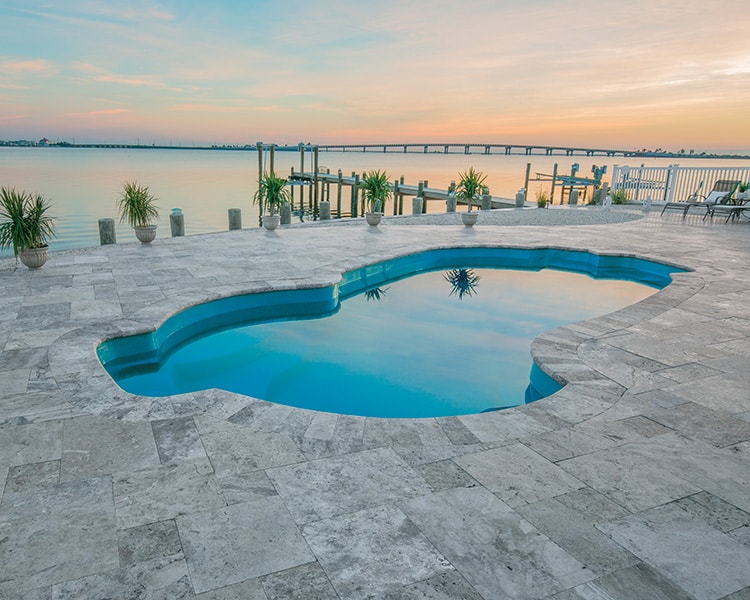
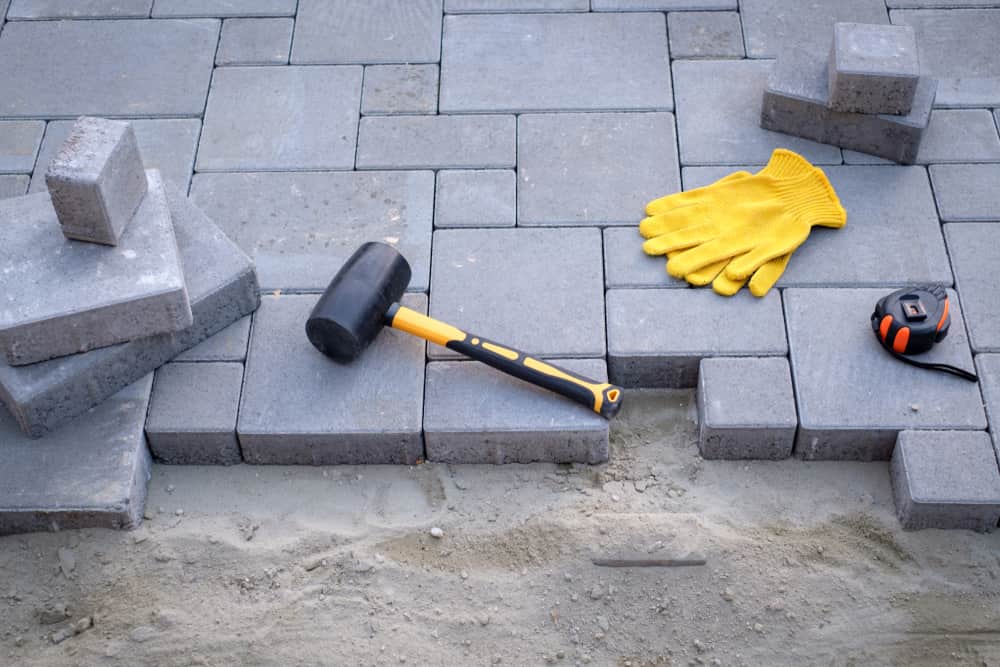
Paver driveways in Nassau County run $20–$35 per square foot installed, putting a standard two-car driveway in the $12,000–$21,000 range. Belgian block installations run higher — $30–$70 per square foot — and large paver projects with custom borders and aprons can reach $40,000 or more. Those numbers are real, and we’re not going to pretend otherwise.
What changes the math is what happens over the next 30–50 years. Asphalt needs sealcoating every few years and replacement within 10–20 years. Concrete can crack and may need patching within that same window. A properly installed paver driveway, with the right base depth and quality materials, can outlast both — and individual pavers can be lifted and reset if something shifts underneath, rather than requiring a full surface replacement.
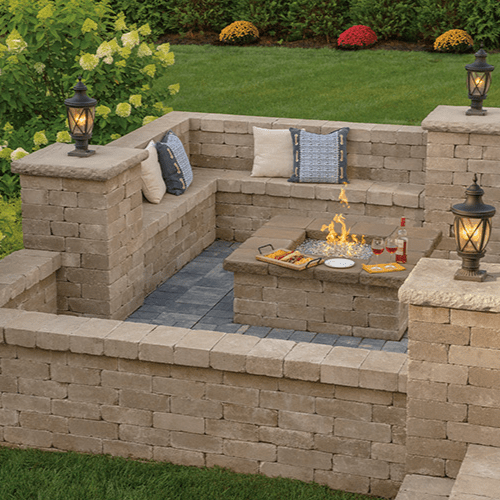
Cambridge ArmorTec pavers, which we carry as a Premier Cambridge Dealer, come with a transferable lifetime warranty. That warranty moves with the house if you sell — a documented selling point in a Nassau County real estate market where buyers pay attention to curb appeal and long-term maintenance. No asphalt or concrete driveway offers anything comparable.
There’s also a performance argument specific to this market. Because pavers are individual units rather than a continuous slab, they can accommodate slight ground movement without cracking. In Nassau County’s clay soil, that flexibility is a structural advantage, not just an aesthetic one. Cambridge’s ArmorTec surface is also engineered with a denser outer layer that resists road salt penetration — relevant for anyone on a street that gets treated through the winter.
We’ve been selling Cambridge products for over 20 years, and we’ve watched enough Nassau County driveways get installed and age to have a clear sense of what holds up and what doesn’t. The upfront cost of pavers is real. So is the difference in how they look and perform a decade from now.
Where to Start Before You Get a Single Driveway Quote in Nassau County
The most useful thing you can do before calling a contractor is to understand your options — what materials are available, what they actually cost in this market, and what questions to ask about base preparation. A contractor who quotes low but skips on base depth will cost you more in the long run than one who quotes higher and does it right.
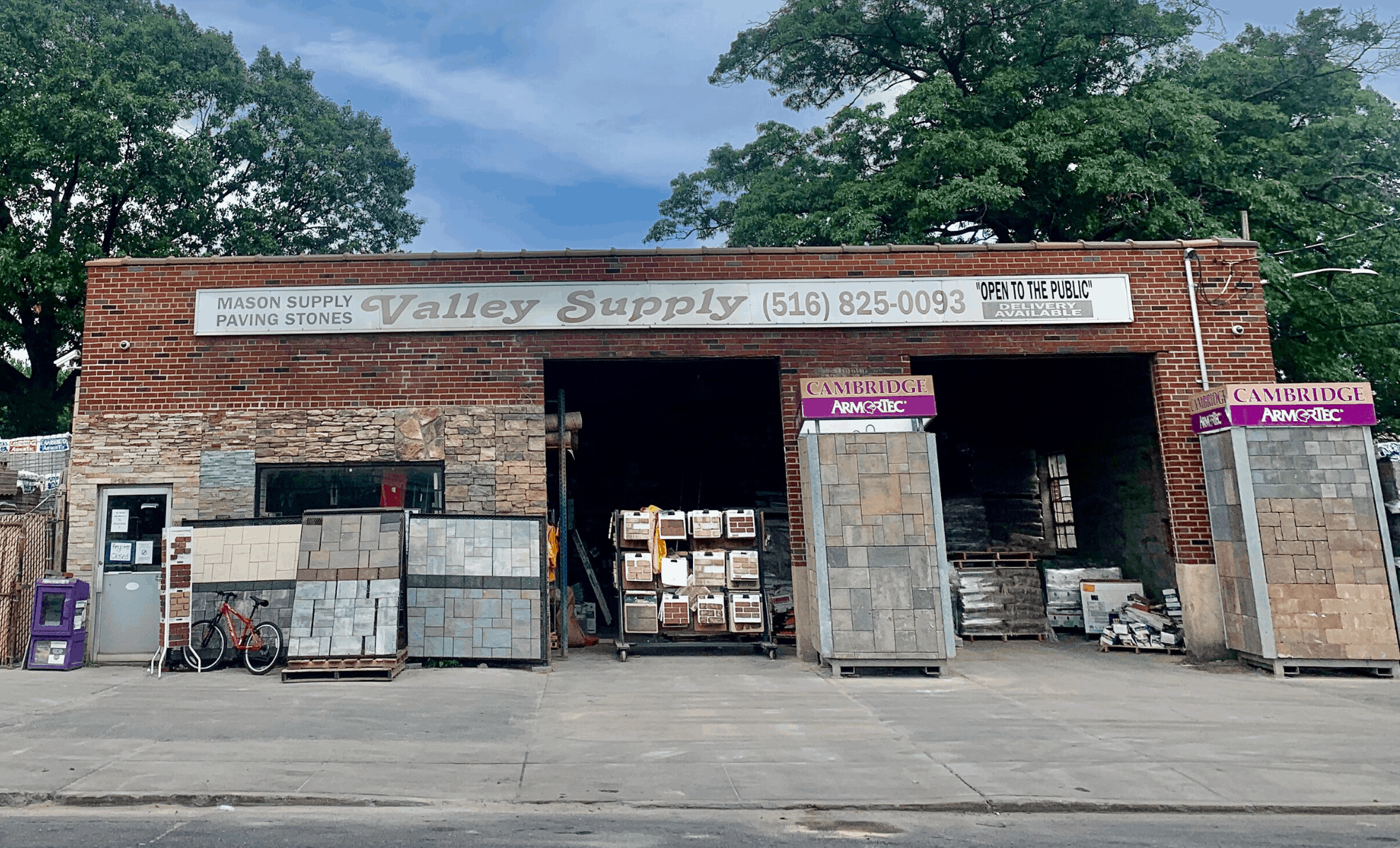
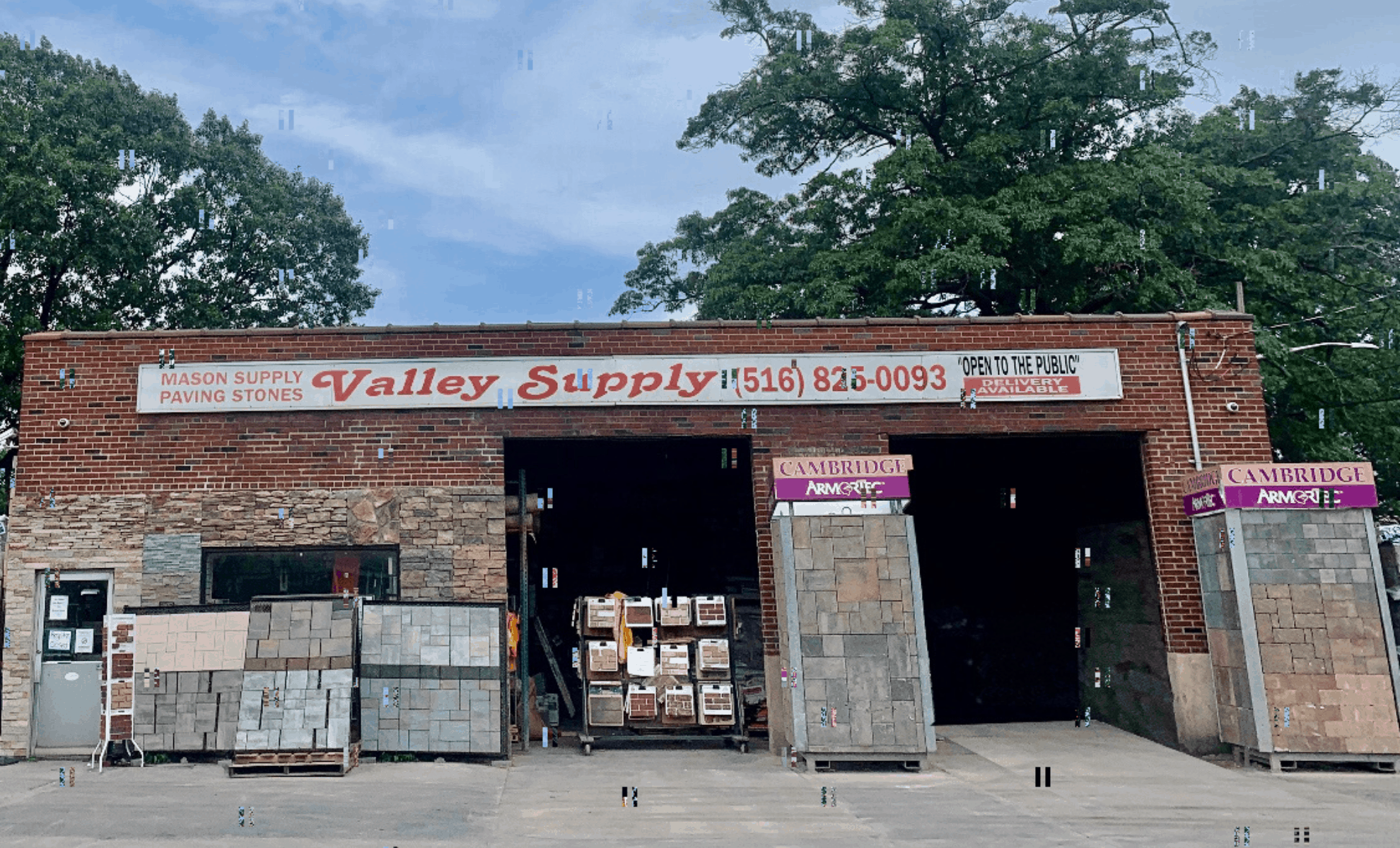
We’ve been at 747 Meacham Avenue in Elmont since 1956, and we’ve supplied materials for driveways across Nassau County, the Five Towns, Valley Stream, Hempstead, Garden City, and beyond. Our showroom is open to the public — no contractor license required — and our counter staff, Pete and Steve, bring over 50 years of combined experience to every conversation. Come in, look at the displays, ask questions, and leave with a clearer picture of what you actually want before anyone picks up a shovel.
If you need a recommendation for a vetted installer, we can help with that too. Valley Supply Corp is here Monday through Friday, 7AM–5PM, and Saturdays 7AM–2PM. Give us a call at 516-825-0093 or stop by — no appointment needed.