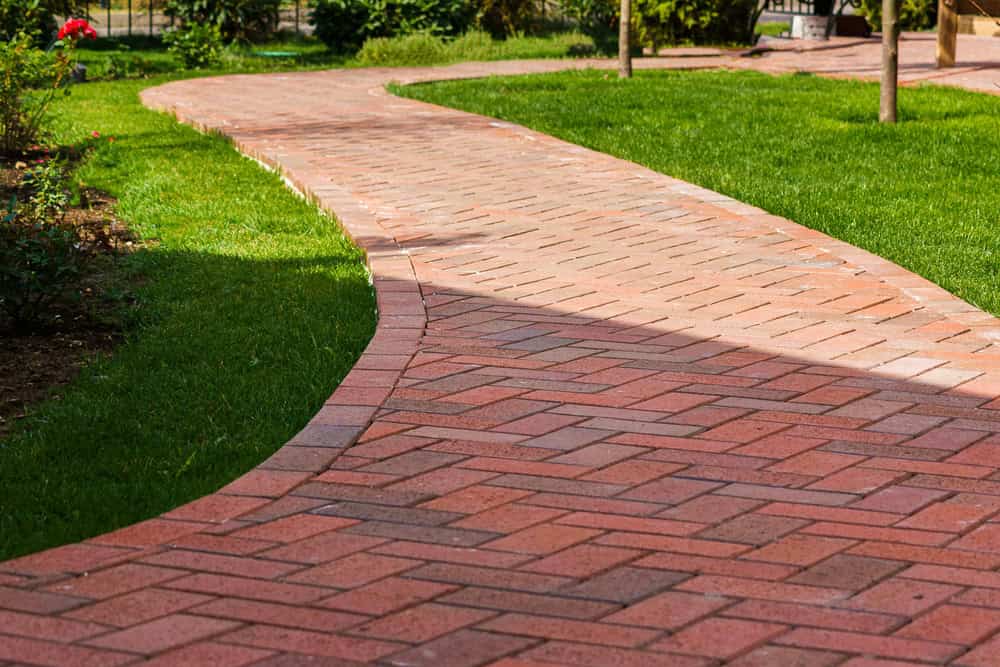
Summary:
If you’ve been putting off a driveway or patio project all summer, you’re not alone — and you still have time. But the window is shorter than most people think. Nassau County’s first frost can arrive by mid-to-late October, and once ground temperatures drop, your options get limited fast. The material you choose now will either hold up through years of Long Island winters or start showing cracks by spring. We’ve been supplying paving materials to Nassau County homeowners and contractors since 1956, and the one thing we hear most in the fall is: “I didn’t realize how close the deadline was.” Here’s what you need to know.
Asphalt Paving Materials: What Fall Installation Actually Requires
Asphalt is the most common driveway material on Long Island, and it’s earned that reputation for a reason. It handles ground movement better than rigid concrete, costs less upfront, and when it’s installed correctly over a solid base, it can last 15 to 20 years. But asphalt has a hard temperature requirement that catches a lot of homeowners off guard.
For hot mix asphalt to compact and cure properly, air temperatures need to be above 50°F. Below that threshold, the mix cools too quickly before it can be properly worked, and you end up with a surface that’s prone to cracking before the first winter even hits. In Nassau County, that 50°F cutoff typically becomes a real constraint by late October or November — which means September and most of October are your realistic window for new asphalt work.
How Nassau County's Climate Shortens the Asphalt Installation Window
Here’s something most homeowners don’t know about Long Island’s climate: Nassau County’s average winter temperature sits around 33.7°F — right at the freeze-thaw threshold. That might sound like it’s barely freezing, but that’s actually the worst possible range for paving surfaces. Colder climates that stay frozen solid all winter experience fewer freeze-thaw cycles. Nassau County oscillates around 32°F repeatedly, meaning water seeps into surface cracks, freezes, expands with up to 25,000 psi of pressure, thaws, and does it all over again. Dozens of times in a single winter.
The Atlantic Ocean is part of the reason for this. The coastal air moderates temperatures enough that Nassau County rarely stays locked in a hard freeze the way inland areas do. What looks like a mild winter on the surface is actually a relentless cycle of expansion and contraction happening inside every crack in your driveway. A snowstorm that dumps two feet further inland might fall as rain in Elmont or Valley Stream — and that rain refreezes overnight.
For asphalt specifically, this means the curing timeline matters. Asphalt can be driven on within a few days of installation, but full curing takes close to 12 months. A surface that goes into winter before it’s fully cured is more vulnerable to freeze-thaw stress. That’s not a reason to avoid asphalt — it’s a reason to stop waiting and get the project done while conditions still cooperate. Once you’re deep into November, you’re not just racing the cold. You’re racing the point where asphalt plants in the Northeast start reducing production entirely.
The practical takeaway is straightforward: if you’re planning an asphalt project in Nassau County, September through mid-October is your target window. Later than that and you’re gambling on the weather, and Long Island weather doesn’t reward gamblers.
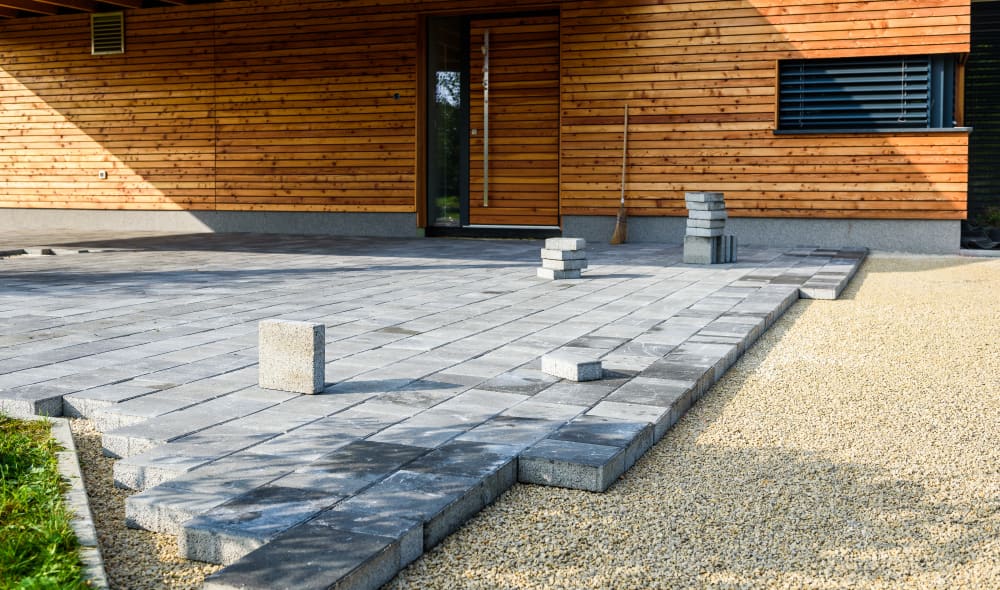
Road Salt and Long Island Asphalt: The Damage You Don't See Coming
Freeze-thaw cycles are the most talked-about threat to asphalt on Long Island, but road salt is the one that sneaks up on you. Nassau County roads get heavily salted through the winter, and that salt doesn’t stay on the road surface. It migrates. Salt naturally attracts water, and salty water seeps into small surface cracks and porous areas in asphalt. When that water refreezes below 25°F, the damage compounds faster than freeze-thaw alone would cause.
Over a few winters, this process can turn minor surface cracking into structural failure — not because the asphalt itself is bad, but because water found its way in and the freeze-thaw cycle did the rest. The base preparation underneath the asphalt matters just as much as the surface material. A properly compacted aggregate base — at least four inches deep — is what keeps water from sitting under the surface and creating the conditions for heaving and cracking. Skimping on the base to save money upfront is one of the most common reasons driveways fail within five years.
If you’re seeing cracks in your current driveway every spring, the issue usually isn’t the asphalt itself — it’s what happened underneath it over time. Before you invest in a new surface, it’s worth understanding whether a base issue is the root cause. That’s a conversation worth having with someone who knows Nassau County soil conditions, not just someone who wants to sell you a new driveway. The soil here is a mix of sandy and clay-heavy composition, and clay expands when wet and contracts when dry — creating ground movement that stresses any paving surface from below, independent of what’s happening at the surface level.
Paving Stone Materials That Hold Up to Long Island Freeze-Thaw Cycles
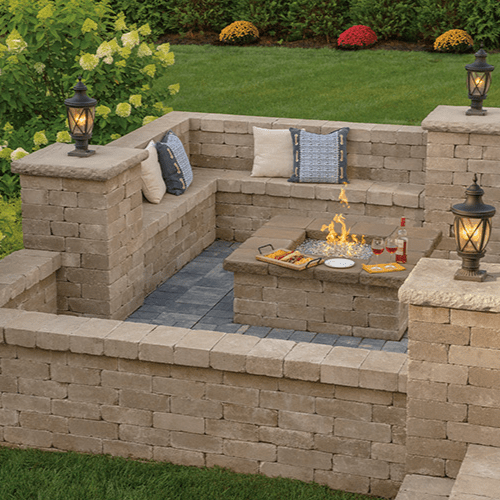
If you want a surface that’s built for Nassau County’s specific climate — the coastal salt air, the oscillating temperatures, the nor’easters — interlocking concrete pavers are worth serious consideration. Not because they’re the most expensive option, but because they’re engineered to flex with freeze-thaw cycles rather than fight them.
Unlike a poured concrete slab, which is one rigid piece with no room to move, individual pavers can shift slightly with ground movement and be reset or replaced without disturbing the entire surface. That’s a meaningful difference when you’re dealing with Long Island’s clay-heavy soils and the kind of ground movement that comes with decades of wet-dry and freeze-thaw cycling.
Driveway Materials for Nassau County: Why Cambridge ArmorTec Pavers Perform Differently
We’ve been a Cambridge Premier Dealer for over 20 years, and one of the most common questions we get is what makes Cambridge pavers different from what you’d find at a big-box store. The short answer is ArmorTec — a manufacturing process that makes the paver and its surface one continuous, dense piece rather than a standard block with a coating applied on top.
ArmorTec uses super-fine sand granules and high-quality cement to create a surface with no voids, holes, or exposed aggregate. That density is what matters in Nassau County. A denser surface absorbs less water, which means there’s less water available to freeze inside the material. When you’re dealing with a climate that cycles through freezing and thawing dozens of times between November and March, lower water absorption is a direct performance advantage — not a marketing claim.
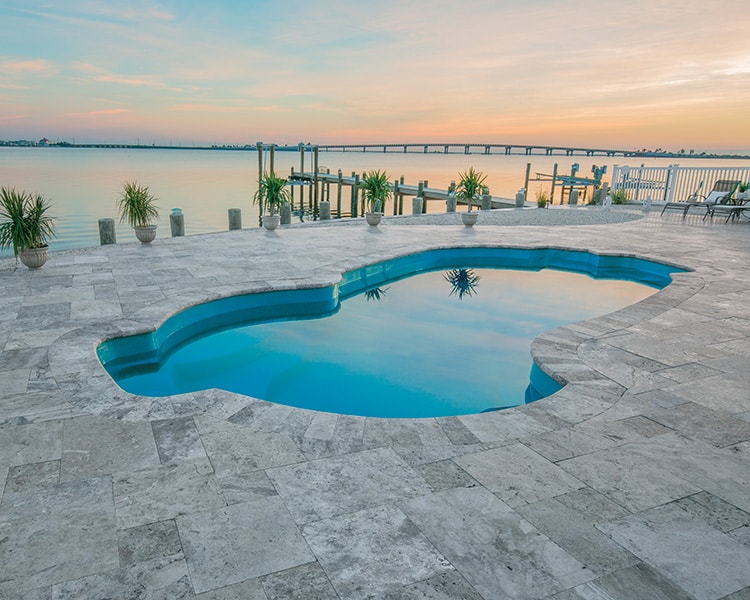
Cambridge pavers are manufactured in New York and specifically engineered for Northeast freeze-thaw conditions. They meet ICPI (Interlocking Concrete Pavement Institute) certification standards and comply with ASTM International benchmarks for strength, color stability, and slip resistance. The slip resistance point matters more than people realize — ArmorTec pavers surpass ADA standards for traction, which makes them genuinely appropriate for pool decks, front walkways, and steps where wet surfaces are a real safety concern.
The other thing worth knowing is the warranty. Cambridge offers a transferable lifetime warranty on their pavers, provided they’re installed according to ICPI guidelines. Transferable means if you sell your home, the warranty goes with it. For a homeowner in Valley Stream or Elmont who might sell in the next 10 to 15 years, that’s not a small thing — it’s a documented, warranted improvement that a buyer can verify. No asphalt driveway comes with that.
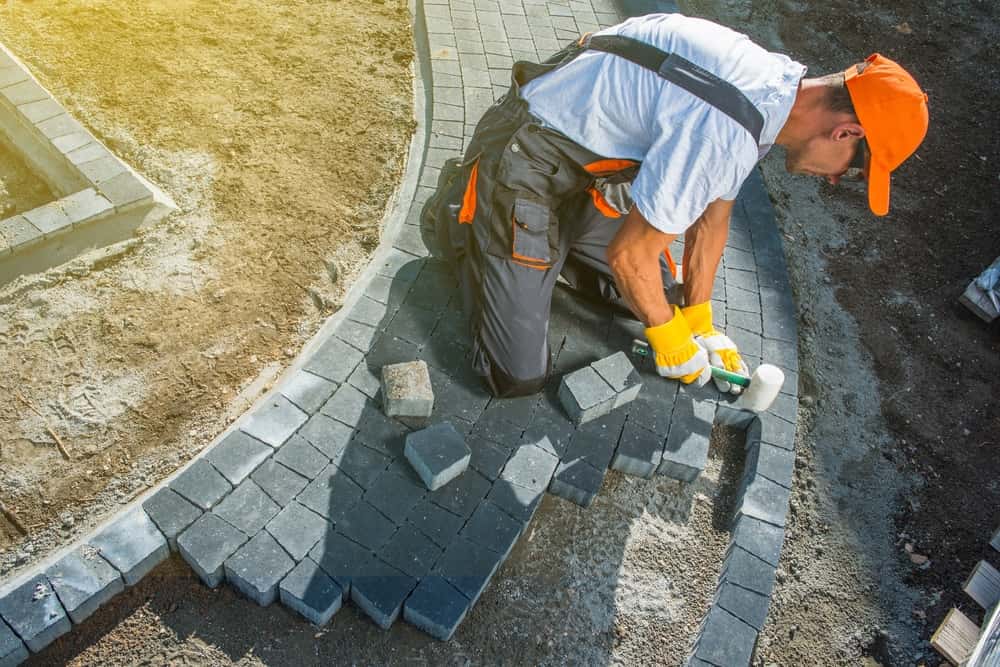
Fall Paving Stone Installation in Nassau County: How Late Is Too Late?
One of the biggest misconceptions we hear in October is that it’s already too late to install pavers. It’s not — but the window is real, and it does close. The critical factor isn’t air temperature so much as ground temperature. Once the ground starts to freeze, the bedding sand and base materials can’t be properly compacted, and the installation quality suffers in ways that show up the following spring.
In Nassau County, the practical deadline for completing a paver installation is typically October, with some flexibility into early November depending on the year. The coastal moderation that creates all those freeze-thaw cycles actually works in your favor here — ground temperatures stay workable a bit longer than they would further inland. But “a bit longer” is not an invitation to keep putting it off.
Fall is genuinely a good time to install pavers, not just an acceptable one. Temperatures are moderate, which allows base materials and jointing sand to settle properly before winter arrives. Contractors are less booked than they are in June and July. And if you’re sourcing Cambridge Pavers , getting your materials secured in September or October means you have access to the full range of colors and patterns before popular options sell out for the season.
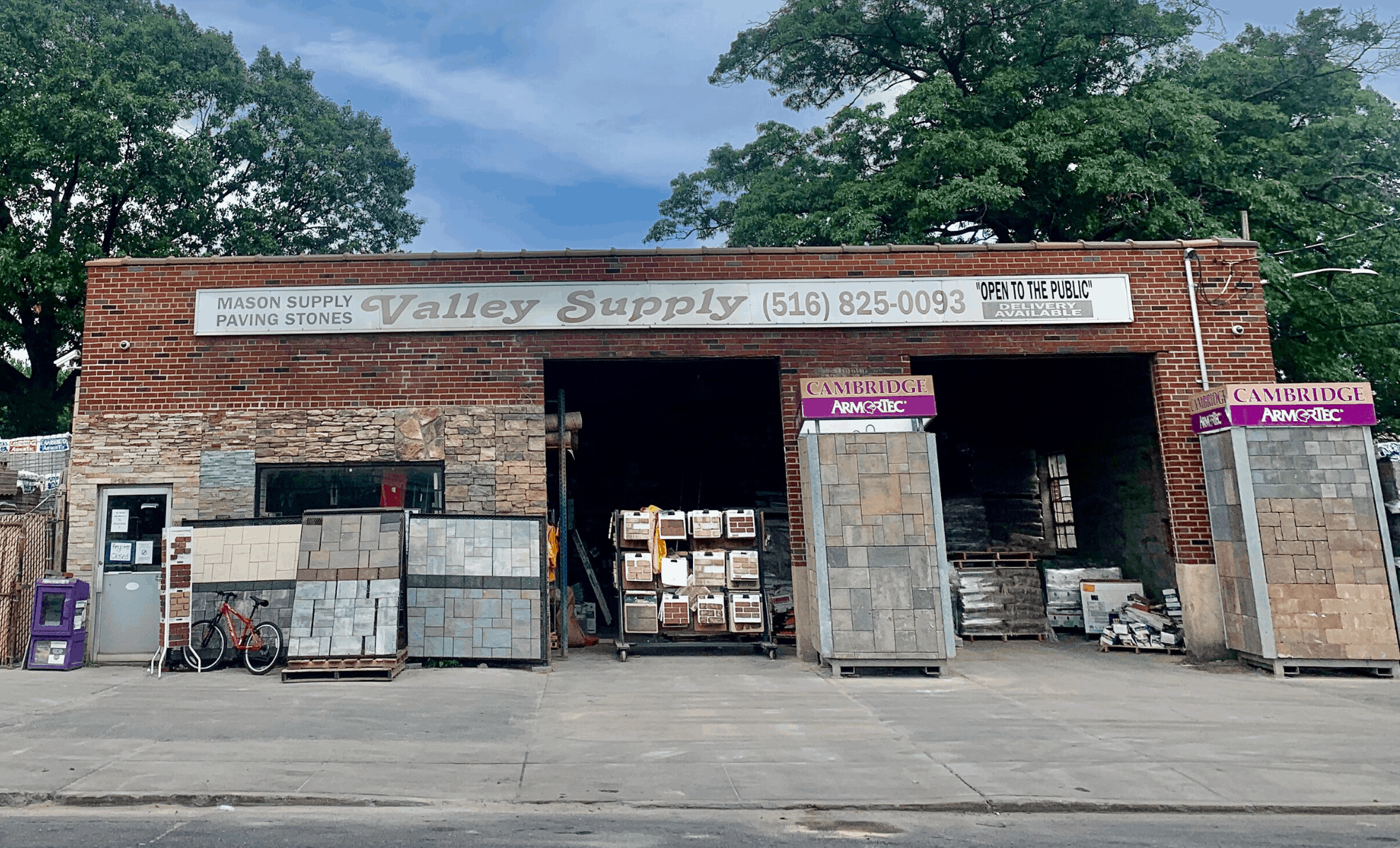
That last point is one people overlook. We carry the complete Cambridge line — every style, color, and product type — because we’re a Premier Dealer, not a partial distributor. Popular patterns do move, especially in the fall rush. Homeowners who come in knowing what they want and ready to move tend to get exactly what they envisioned. Homeowners who wait until late October sometimes find that their first choice isn’t available and their project gets pushed to spring. Coming into our 20,000 square foot facility and seeing the hands-on displays in person — actually touching the materials, comparing colors in natural light — is the step that makes the rest of the project go smoothly. No screen can replicate that.
How to Choose the Right Paving Materials Before Nassau County Winter Arrives
The decision between asphalt and paving stones comes down to your priorities — budget, longevity, aesthetics, and how much you want to think about maintenance over the next 20 years. What doesn’t change regardless of which direction you go is the importance of timing. Nassau County winters are not forgiving, and the fall window for completing paving projects is shorter than most people expect.
If you’re still figuring out what you need, that’s exactly the kind of conversation we’re set up for. Pete and Steve have over 50 years of combined experience at the counter, and they’ve helped homeowners and contractors across Nassau County and Queens work through these decisions more times than they can count. We can help you figure out the right material, calculate how much you need, and point you toward a vetted contractor if you need one.
We’ve been at 747 Meacham Avenue in Elmont since 1956. We’re open Monday through Friday from 7AM to 5PM and Saturdays from 7AM to 2PM. Stop in before the season closes — the displays are here, the materials are here, and so are the people who can answer your questions straight.