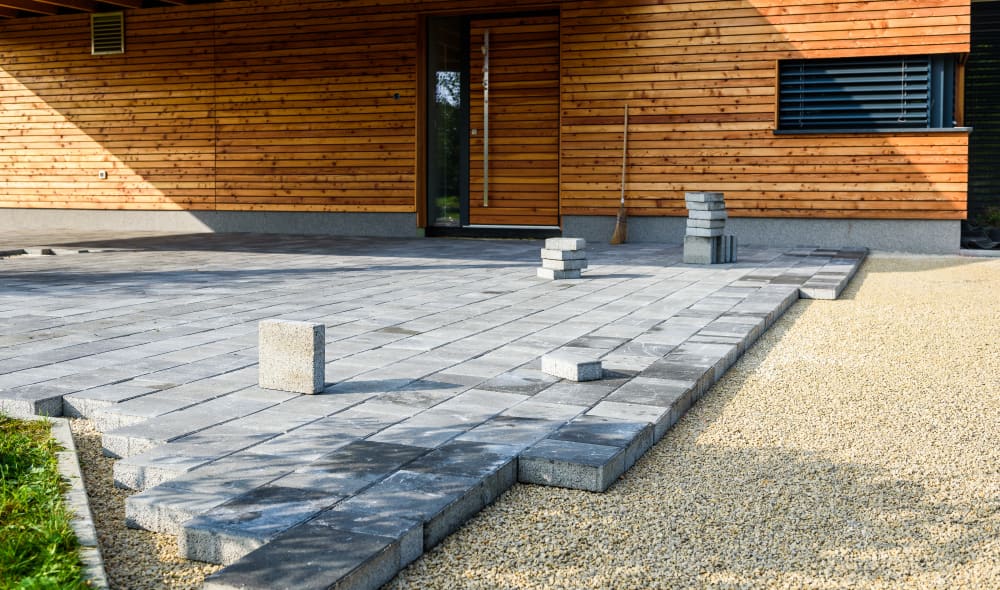
Summary:
If you’re planning a patio, driveway, or walkway in Nassau County, you’ve probably run into this question already: gravel or sand? Maybe a contractor mentioned both. Maybe you got three different answers from three different people. It’s one of the most common points of confusion in any outdoor hardscape project — and it matters more than most people realize. Use the wrong material in the wrong spot, and you’re not just wasting money. You’re setting up a failure that won’t show up until the damage is already done. Here’s a clear, honest breakdown of what each material actually does, where it belongs, and what Nassau County’s specific conditions mean for your project.
Choosing the Right Base Material for Nassau County Projects
The short answer most people are looking for is this: you need both. Gravel and sand aren’t competing options — they’re two different layers in the same system, and each one has a job the other can’t do. Gravel goes down first as the structural base. Sand goes on top as the bedding layer. Swap them, skip one, or use the wrong depth, and the whole thing becomes unstable.
What makes this especially important in Nassau County is the soil. A large portion of Nassau County’s western communities — Elmont, Valley Stream, Lynbrook, Uniondale — sit on clay-heavy subsoil. Clay holds water. It swells when wet and shrinks when dry, which means the ground underneath your project is constantly moving in small ways. Without a properly compacted gravel base acting as a drainage buffer between that clay and your pavers, water pools below the surface, builds pressure, and starts pushing things up. That’s where the sinking, cracking, and shifting come from.
Why Drainage Gravel Is Non-Negotiable in Nassau County's Clay Soil
Drainage gravel — typically angular crushed stone like 3/4″ crushed stone or Dense Grade Aggregate — is the foundation of any hardscape installation that’s going to hold up over time. The reason it works comes down to physics. Angular stone compacts into a tight, interlocked matrix that resists shifting under load. It also creates void space between particles, which gives water somewhere to go instead of pooling against your clay subsoil.
Round river gravel might look similar, but it doesn’t behave the same way. Round particles roll under pressure rather than locking together, which means your base stays loose no matter how well you compact it. This is one of those details that gets skipped over a lot, but it’s the kind of thing that separates an installation that holds for 20 years from one that starts showing problems in three.
For most residential paver projects in Nassau County, you’re looking at four to eight inches of compacted gravel, installed in two-to-three inch layers — called lifts — with each lift compacted before the next goes in. This isn’t extra work for the sake of it. Compacting in lifts is the only way to achieve consistent density throughout the base. Dump it all at once and compact the top, and the bottom stays soft.
Nassau County gets roughly 44 to 48 inches of rain per year, spread fairly evenly across all four seasons. That’s a lot of moisture working against any base that doesn’t drain well. A properly graded gravel base channels water away from the surface and down through the base rather than letting it sit. In a county where you’re dealing with clay soil and a wet climate simultaneously, that drainage performance isn’t a bonus feature — it’s the whole point.
How Nassau County's Freeze-Thaw Winters Punish a Weak Base
If you’ve lived in Nassau County for more than a few winters, you already know what happens to a poorly built driveway or patio. It shifts. It cracks. Pavers pop up in spots they weren’t before. And it almost always traces back to the same root cause: water got under the surface, froze, expanded, and moved things that weren’t designed to move.
Water expands by roughly nine percent when it freezes. That doesn’t sound like much until you consider what it means for a surface sitting on top of saturated clay soil. The ground freezes, expands, and physically lifts whatever is above it. Then it thaws, settles back down, and the surface above it doesn’t always settle the same way it started. Repeat that process dozens of times over a single Nassau County winter — which is realistic, given how often temperatures cross the freezing threshold overnight and climb back up during the day — and you end up with a surface that looks like it aged ten years in one season.
A compacted gravel base solves this by eliminating the moisture that causes it. When water drains through the gravel layer instead of pooling beneath it, there’s nothing to freeze in place. The base stays stable because it’s dry. That’s the reason a proper installation for this region calls for eight to ten inches of excavation minimum for driveways — you need enough depth to get below the zone where freeze-thaw activity does its worst damage.
This is also why a sand-only base fails so predictably in this climate. Sand compacts reasonably well, but it doesn’t drain the way gravel does. Water sits in it, freezes in it, and moves it. The pavers above follow. It’s a cheaper option upfront and a more expensive problem within a few years.
Construction Sand: What It Actually Does in a Paver Installation
Sand gets a bad reputation in base material conversations, mostly because people assume it’s the wrong choice entirely. It’s not — it’s just the wrong choice for the wrong layer. Construction sand, specifically coarse concrete sand, has one job in a paver installation: it’s the one-inch bedding layer that sits between the compacted gravel base and the pavers themselves.
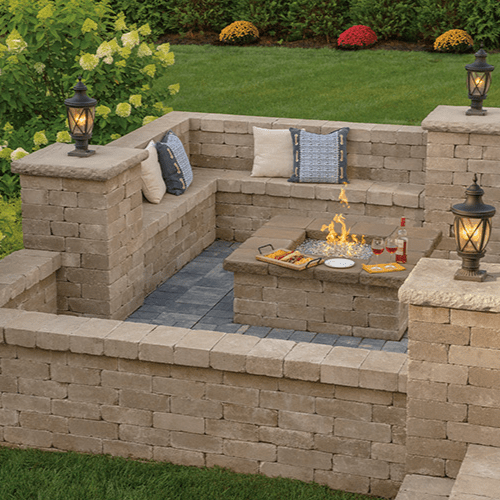
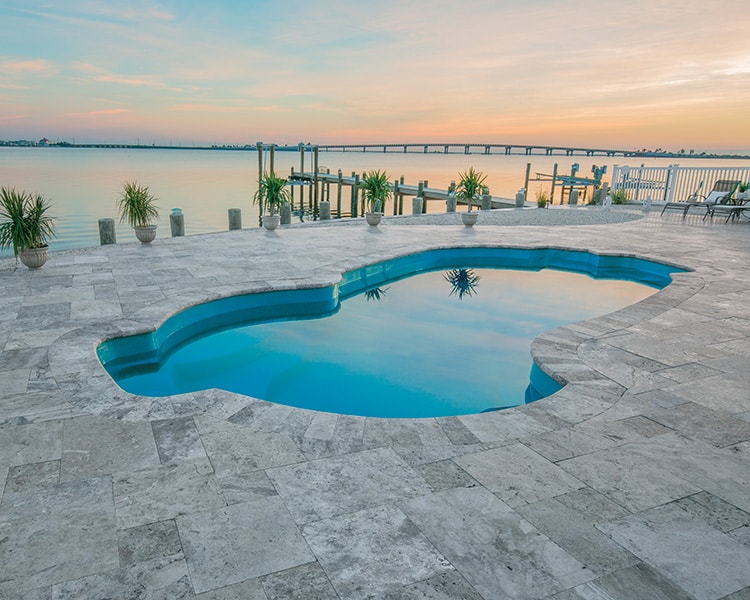
That one inch of sand lets you fine-tune the level and slope of each paver as you set it. It fills small irregularities in the gravel surface and gives pavers a consistent contact plane to settle into. Done right, it’s what makes a finished paver surface look clean and even. The critical detail is that it needs to stay at one inch. More than that, and the surface becomes spongy and unstable — pavers start to rock and shift under foot traffic or vehicle weight. When selecting the pavers for your project, cambridge pavers can be considered alongside the proper base and bedding materials to create a durable, finished surface.
Concrete Sand vs. Polymeric Sand: Which One Goes Where
There are actually two places sand shows up in a standard paver installation, and they’re not the same product. Concrete sand — sometimes called coarse sand or mason sand — is the bedding layer we just described. It’s what goes under the pavers. Polymeric sand is a different product entirely, and it goes in the joints between pavers after they’re set.
Polymeric sand is mixed with a binding agent that activates when it gets wet. Once it cures, it hardens in the joints and stays there. Regular sand in paver joints washes out with rain, which leaves gaps that allow weeds to root and water to work its way into the base. In Nassau County’s wet climate, that’s a real problem. Polymeric sand eliminates both issues — it holds in place through rain, resists weed growth, and keeps the joint tight enough that pavers maintain their lateral lock against each other.
The distinction matters because a lot of homeowners don’t realize these are separate products used in separate parts of the installation. Ordering the wrong type or substituting one for the other leads to joint failure, weed infiltration, or a bedding layer that doesn’t behave the way it should. This is the kind of detail that’s easy to get right when you’re buying from someone who knows the difference — and easy to get wrong when you’re grabbing whatever’s available at a big-box store from a staff member who isn’t sure what you’re asking.
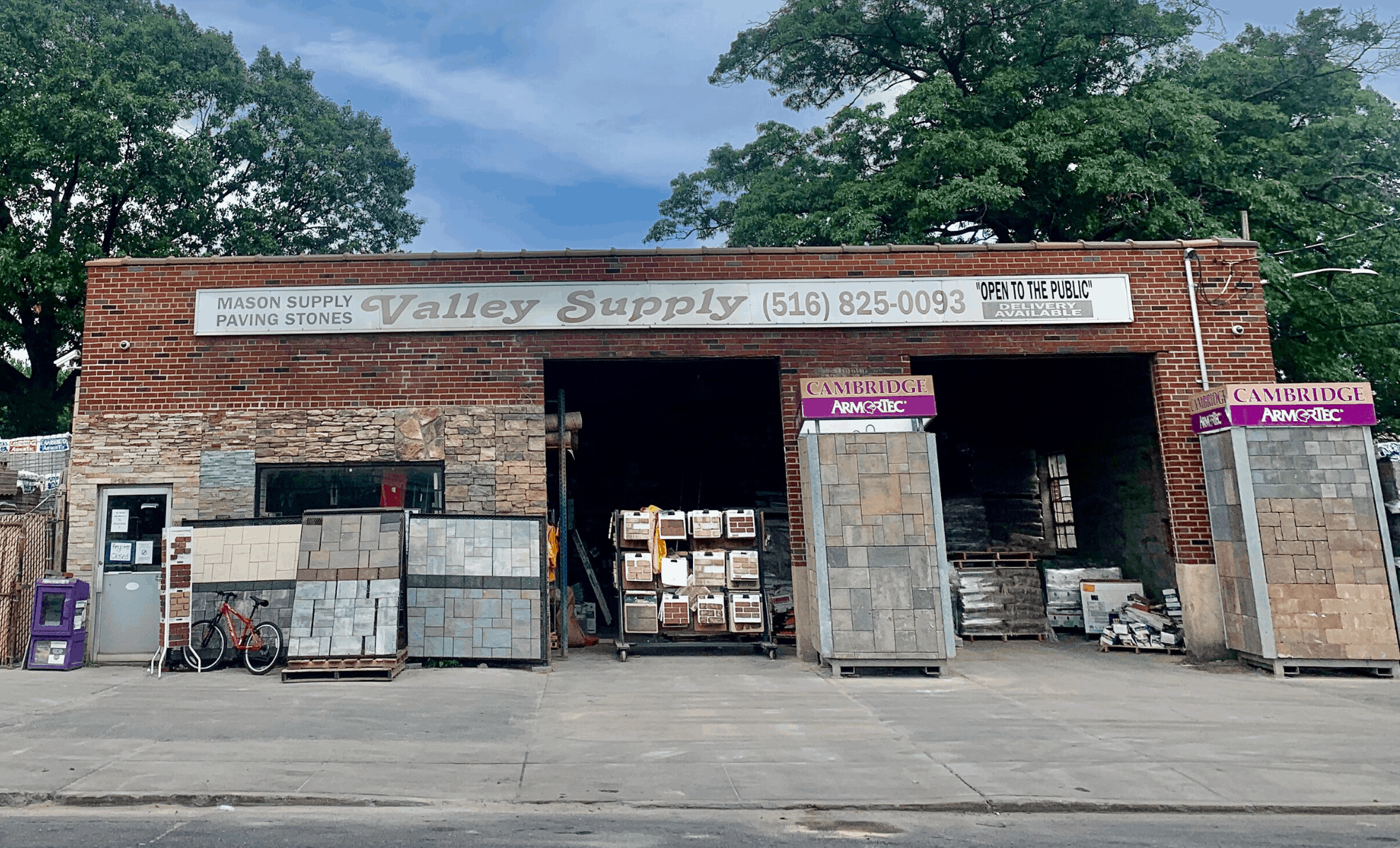
We’ve been answering these questions at our counter in Elmont for over 67 years. Pete and Steve between them bring more than 50 years of combined counter experience, and they’ve helped contractors and homeowners across Nassau County and Queens sort out exactly this kind of material question before it becomes a job-site problem.
What a Proper Base System Actually Looks Like From the Ground Up
It helps to see the whole system laid out in order, because the gravel vs. sand question makes a lot more sense when you understand what each layer is doing relative to the others.
You start with excavation — typically six to ten inches deep depending on the application. Driveways need more depth than patios because they carry vehicle weight. In Nassau County, where the ground shifts seasonally, erring toward deeper excavation is almost always the right call. Some installers also lay a geotextile fabric at the bottom of the excavation before the gravel goes in. That fabric prevents the fine particles in your clay subsoil from migrating up into the gravel base over time, which would eventually compromise the drainage performance you built in.
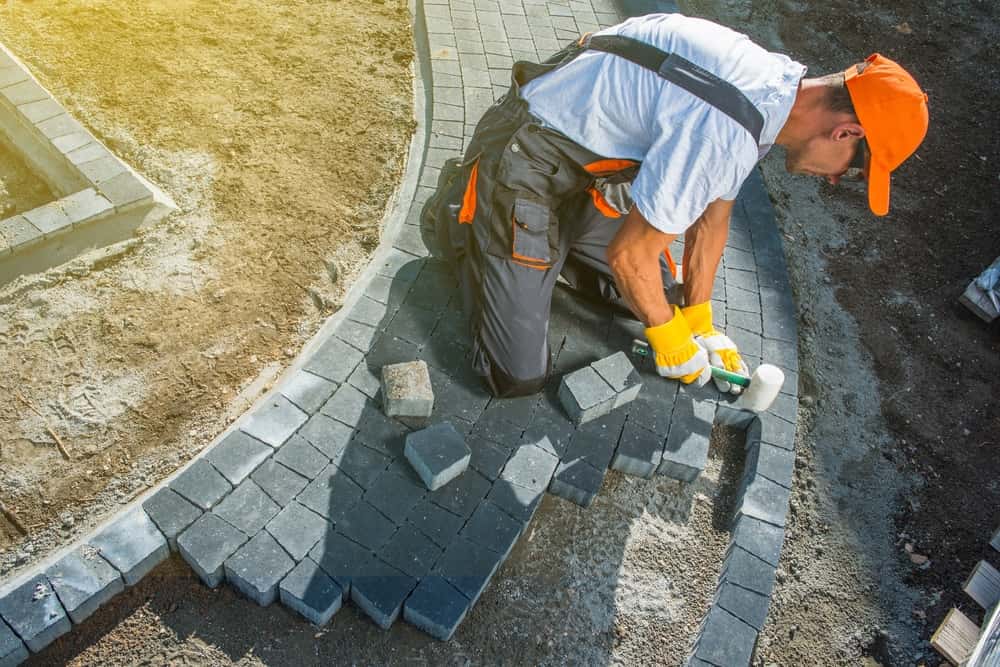
The gravel base goes in next, compacted in those two-to-three inch lifts we mentioned earlier. Each lift needs to be fully compacted before the next one is added. A mechanical plate compactor is the right tool for this — hand tamping doesn’t achieve the density you need for a stable base, no matter how much effort goes into it.
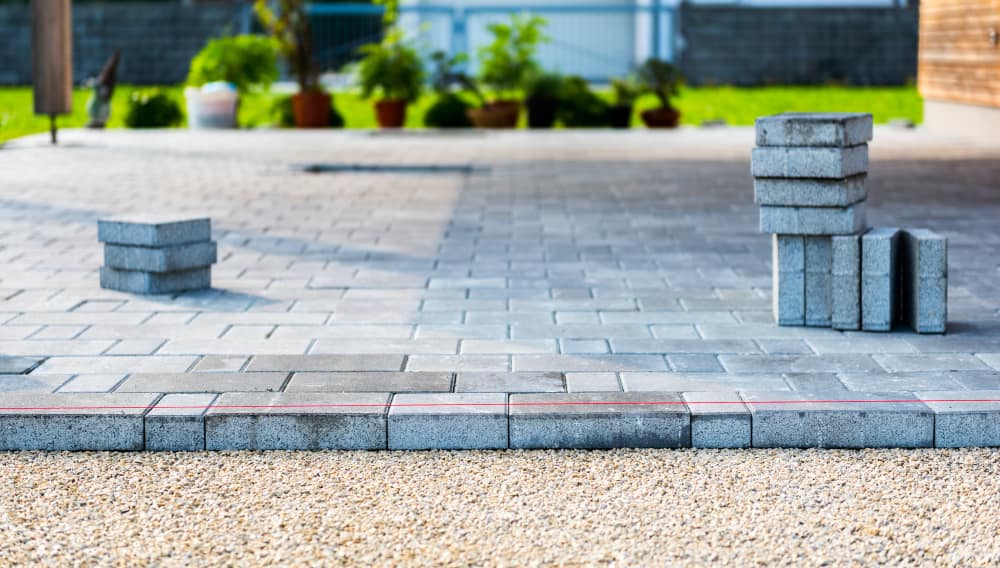
Once the gravel base is compacted and graded for drainage, one inch of coarse concrete sand goes on top. This layer gets screeded flat before the pavers are set. Then the pavers go down, edge restraints get installed to prevent lateral spread, and polymeric sand gets swept into the joints and activated with water.
That’s the complete system. Each layer has a purpose. The gravel handles structural load and drainage. The sand handles precision leveling. The polymeric sand handles joint stability. Skip or shortcut any one of them, and the layer above it pays the price eventually.
We carry everything you need at our 20,000 square-foot facility at 747 Meacham Avenue in Elmont, whether you’re a contractor sourcing materials for a Nassau County installation or a homeowner doing your homework before hiring someone.
Gravel vs. Sand in Nassau County: The Bottom Line
Gravel and sand aren’t rivals. They’re partners in a system that, when built correctly, holds up through Nassau County winters, sheds water off clay subsoil, and keeps your pavers looking the way they did on day one. The question was never really which one wins — it’s whether both are being used correctly.
For Nassau County projects specifically, the gravel base is where most of the structural and drainage work happens. Get that layer right — correct material, correct depth, compacted in lifts — and the rest of the installation has a solid foundation to stand on. The sand layer matters too, but it can only do its job when the gravel beneath it is doing its job first.
If you’re not sure what you need for your specific project, that’s exactly the kind of question we’re here to answer. Valley Supply Corp has been serving Nassau County and Queens from our Elmont location since 1956, and we’re open to the public Monday through Friday, 7AM to 5PM, and Saturday, 7AM to 2PM. Come in, walk the yard, and talk to someone who actually knows the material.