
Summary:
If your pavers have shifted, your driveway cracked after one winter, or water pools on your patio every time it rains — the problem probably started below the surface. Nassau County’s soil conditions are more variable and more demanding than most homeowners expect, and they directly affect how any paving or masonry project holds up over time. Get the ground right, and your project lasts. Ignore it, and you’re back to square one in a few years. Here’s what you need to know before anything gets installed.
Understanding Nassau County Soil Conditions for Construction
Nassau County’s soil is not uniform. It never has been. The ground beneath Elmont looks different from the ground beneath Rockville Centre, which looks different again from what you’ll find in Island Park or Garden City. That variability traces back to the last ice age — specifically, the Wisconsin-stage glacier that retreated across Long Island roughly 20,000 years ago and left behind two very different types of terrain.
South of the Harbor Hill Moraine, you’re largely in the Hempstead Outwash Plain — a zone of glaciofluvial deposits where meltwater sorted sand and gravel into relatively workable layers. North of the moraine, the soil shifts to unsorted glacial till: a dense, unpredictable mix of clay, silt, sand, and boulders that drains poorly and moves under load. Understanding which side of that line your property sits on is the first step in any serious construction plan.
How Clay Soil in Nassau County Affects Drainage and Paving
Clay soil is the most common construction challenge in inland Nassau County, and it causes problems in ways that aren’t always obvious until something fails. Clay holds water. It swells when it’s wet and contracts when it dries out. That constant expansion and contraction puts stress on anything sitting above it — pavers, concrete slabs, retaining walls, steps. Over time, that movement shows up as sunken sections, uneven surfaces, and cracked edges.
The drainage issue compounds this. Clay doesn’t let water pass through easily, so it accumulates near the surface instead of percolating down. In communities like Hempstead, Floral Park, and parts of Garden City, this means that even a moderate rainstorm can leave water sitting on or just below your paved surface for hours. That standing water doesn’t just look bad — it works its way into joints, undermines base layers, and accelerates wear on any material that wasn’t designed to handle it.
For paving projects on clay-heavy soil, proper excavation depth is non-negotiable. Industry guidelines call for 8 to 12 inches of excavation in clay conditions — significantly more than the 6 to 8 inches standard for sandy loam areas. That extra depth accommodates the base layers needed to stabilize the surface and manage water. Skipping it, or shortchanging it by a few inches, is exactly how a driveway that cost thousands of dollars starts failing within three years.
A geotextile fabric layer at the base of the excavation is also standard practice in clay-heavy areas. It separates the native soil from the compacted aggregate above it, preventing clay from migrating upward into the base over time — which is one of the slower, less visible failure modes that shows up years after installation.
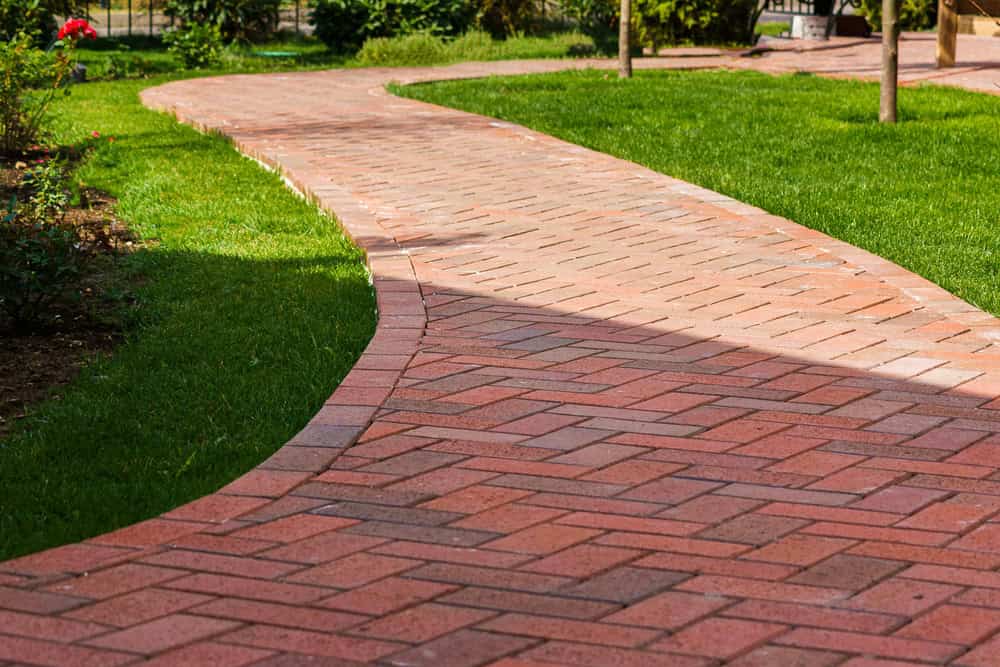
High Water Tables and Drainage Challenges Along Nassau County's South Shore
The South Shore communities face a different version of the same problem. In Valley Stream, Lynbrook, Elmont, and across the Five Towns — Lawrence, Inwood, Cedarhurst, Hewlett, Woodmere — the land sits low. Much of it is at or near sea level, and the seasonal water table rises close to the surface in spring and after heavy rain events. This became impossible to ignore after Superstorm Sandy in 2012 reshaped how South Shore residents think about water management on their properties.
When the water table is high, the ground is saturated from below, not just above. That means even a well-installed paver system with proper slope and drainage can face hydrostatic pressure pushing upward from beneath the base. The surface may look fine for a season or two, then start lifting or shifting as the base material loses its stability.
Permeable paver systems offer a meaningful solution here. Rather than shedding water off the surface and into an already-stressed drainage system, permeable pavers allow water to flow through stone-filled joints into an open-graded base below — slowing runoff, reducing surface pooling, and working with the site’s natural drainage rather than fighting it.
Slope matters too. Any paved surface needs to direct water away from structures at a minimum of a quarter inch per foot. That’s not a large number, but it makes a real difference in how quickly water clears after rain — and how much sits against your foundation or pools at the low end of your driveway.
How Nassau County's Climate Makes Material Selection Critical
Soil conditions don’t act alone. They interact with climate — and Nassau County’s climate is not gentle on outdoor construction. The combination of cold winters, coastal moisture, and multiple freeze-thaw cycles each season creates a stress environment that separates quality materials from the ones that look fine in a catalog but start deteriorating after a few winters.
The frost line on Long Island sits at roughly 20 inches. That means the ground is moving — contracting in cold weather, expanding as it thaws — on a seasonal cycle that puts constant mechanical stress on anything installed above it. Materials that absorb water are the most vulnerable, because water expands by approximately 9 percent when it freezes. Even small amounts of moisture trapped in pores or joints can fracture a surface from the inside out.
Why Freeze-Thaw Cycles Damage Pavers on Long Island
Freeze-thaw damage is the most common paving failure we see in Nassau County, and it’s almost always preventable. The mechanism is straightforward: water infiltrates a porous surface or gets underneath an improperly installed paver, temperatures drop below freezing, the water expands, and the material cracks or shifts. Repeat that process over a dozen or more freeze-thaw cycles in a single winter — which is typical for Long Island — and the cumulative damage adds up fast.
The problem is that most of this damage is invisible until spring. Homeowners walk outside after the snow melts and find cracked pavers, sunken sections, or lifted edges that weren’t there in October. By that point, the failure has already happened. The question is whether it’s a surface issue or a base issue, and the answer usually involves digging up part of the installation to find out.
Lower-quality pavers absorb more water because their manufacturing process produces a less dense product with higher porosity. Cambridge ArmorTec pavers are manufactured with a denser surface layer using fine-grain aggregates and high-quality cement, which limits water absorption and reduces the material’s vulnerability to freeze-thaw cycling. We’ve been selling Cambridge products for over 20 years, and the performance difference in Nassau County conditions is real and consistent.
The base preparation still matters just as much as the product. Even a high-quality paver will fail if it’s sitting on a base that wasn’t built to handle Nassau County’s soil conditions and frost depth. Both things have to be right — the material and the installation — for a project to hold up long-term.
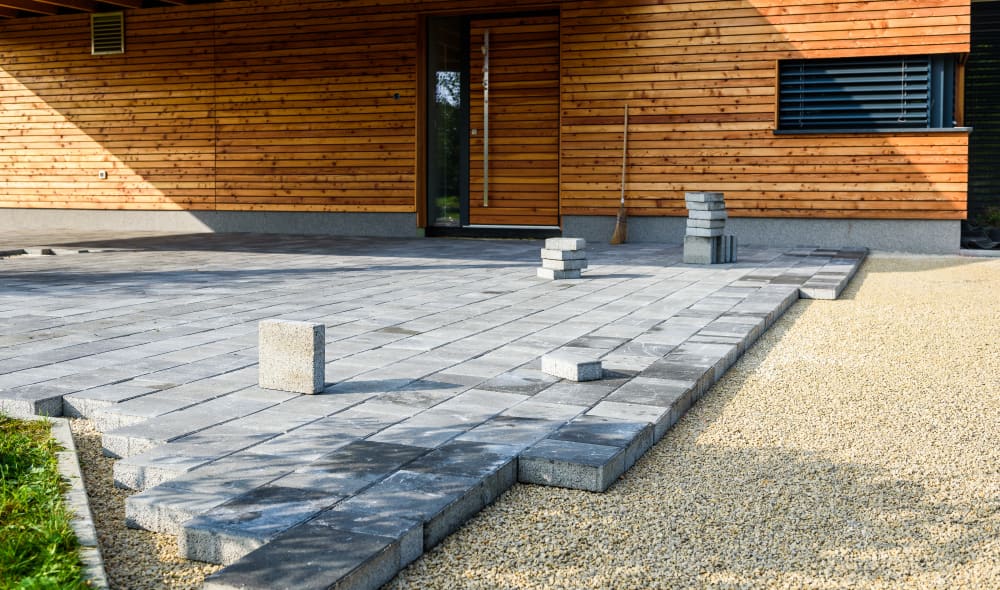
Choosing the Right Paving Materials for Nassau County Soil and Weather
Material selection for a Nassau County project isn’t just about aesthetics. It’s about matching the product to the conditions it will actually face — clay-heavy soil, high seasonal water tables, salt air from the Atlantic and Long Island Sound, and winters that cycle between freezing and thawing more times than most people count.
Concrete pavers, when properly manufactured and installed, outperform poured concrete in freeze-thaw environments because they’re a flexible system. A poured concrete slab is monolithic — when the ground moves beneath it, the slab cracks. Individual pavers can accommodate minor ground movement without catastrophic failure, and if a section does need attention, individual units can be replaced without tearing out the entire surface. That’s a meaningful advantage in a climate like ours, and it’s part of why quality pavers can last 25 to 75 years while asphalt typically needs full replacement every 15 to 20 years.
For Nassau County projects specifically, we recommend products that meet ICPI standards and ASTM specifications for compressive strength and water absorption. These aren’t just industry checkboxes — they’re performance benchmarks that directly correspond to how a material behaves under freeze-thaw stress and load. Cambridge ArmorTec® meets and exceeds both, and it carries a transferable lifetime warranty that holds up in the real world, not just in a brochure.
The transferable aspect of that warranty matters more than people initially realize. In Nassau County’s housing market — where the median home value has crossed $684,000 and most residents have owned their homes for decades — a paving project is an investment in property value, not just curb appeal. A warranty that transfers to the next buyer is a genuine asset when it comes time to sell.
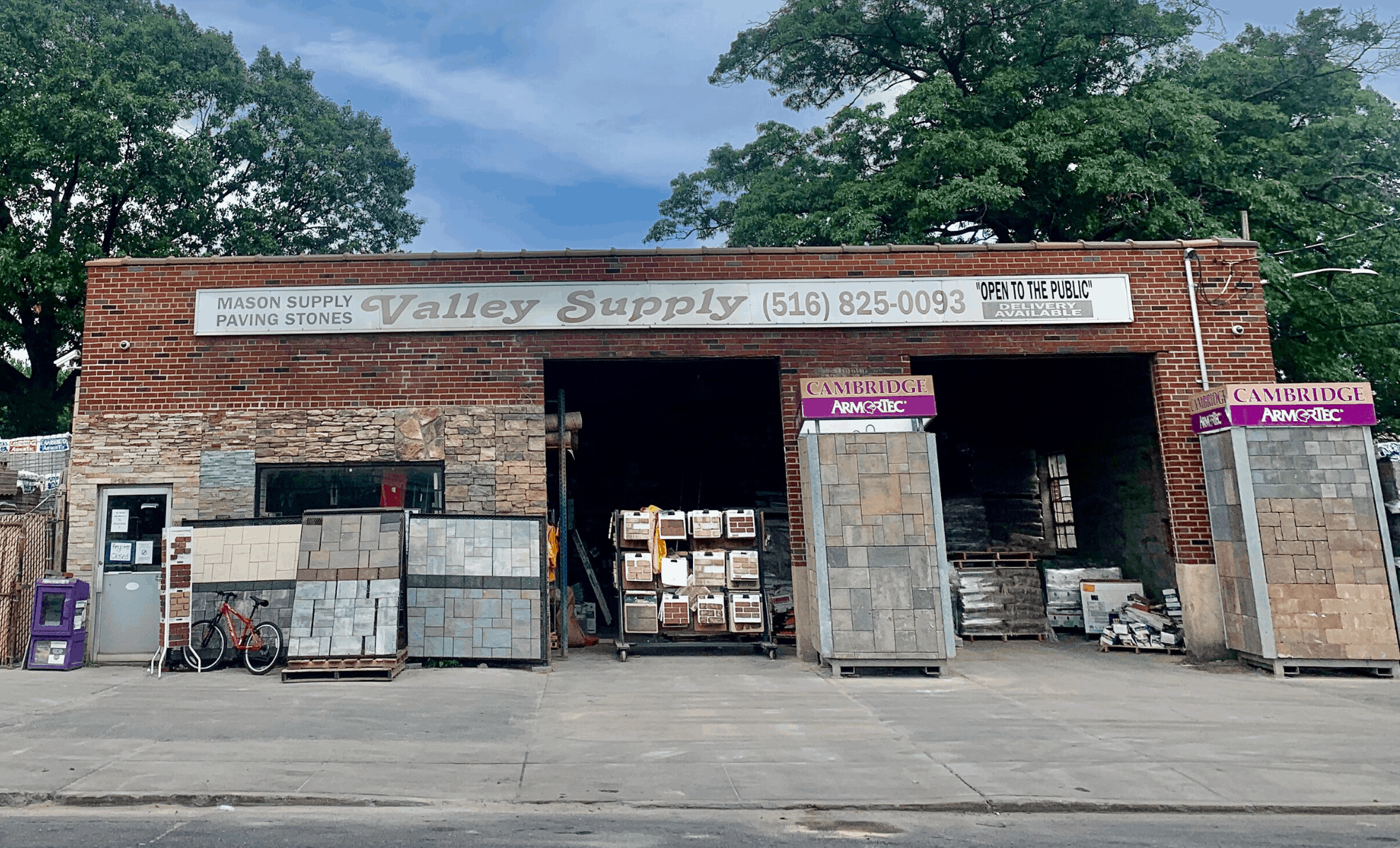
If you’re unsure what your site’s soil conditions actually look like, that’s a conversation worth having before a contractor starts digging. We’ve been at 747 Meacham Avenue in Elmont since 1956, and between Pete and Steve at the counter, there’s over 50 years of combined experience helping Nassau County and Queens homeowners and contractors figure out exactly what their project needs — and what it doesn’t.
Planning a Paving Project in Nassau County? Start With the Soil
Most paving failures in Nassau County aren’t product failures. They’re planning failures — projects that moved too fast past the soil assessment, the base preparation, and the material selection that determine whether a surface lasts five years or fifty. The good news is that none of this is complicated once you understand what you’re working with.
Know your soil type. Build the base to match it. Choose materials rated for freeze-thaw performance and low water absorption. Get the slope right so water moves away from your home instead of pooling against it. These aren’t advanced concepts — they’re fundamentals that get skipped when someone’s trying to cut corners or move quickly.
If you’re planning a project and want to talk through what makes sense for your specific site, stop by our facility in Elmont. We’ve been helping Nassau County homeowners and contractors get this right for nearly 70 years, and we’re not going anywhere. No pressure, no pitch — just honest answers from people who know this market.