Summary:
You’ve probably already seen the national averages — somewhere between $8 and $50 per square foot — and thought, okay, that tells me nothing. Fair. Those ranges are too wide to be useful, and they don’t account for the fact that building a paver patio in Nassau County is a different animal than doing it in, say, Phoenix.
The soil is different. The winters are harder. The contractors are busier in spring than almost anywhere else on Long Island. And the material choices you make will either hold up through 30 freeze-thaw cycles or start showing problems by year three.
Here’s what the numbers actually look like locally — and what’s behind them.
Paver Patio Cost Breakdown for Nassau County
In Nassau County, most homeowners spend between $20 and $35 per square foot for a professionally installed paver patio — fully loaded. That means excavation, base material, compaction, bedding sand, the pavers themselves, edge restraints, polymeric sand, and cleanup. It’s not a materials-only number, and it’s not a lowball estimate that leaves out half the job.
For a 300-square-foot backyard patio — a pretty typical size for the lots you’ll find in Valley Stream, Franklin Square, or Floral Park — that puts the realistic budget somewhere between $6,000 and $10,500. Larger projects in the 500-square-foot range can run $12,000 to $17,000 depending on the material tier and how complex the layout gets.
What you’re paying for isn’t just the pavers. It’s everything underneath them.
Backyard Patio Cost: What Nassau County Lots Actually Require
Nassau County lots — especially in western Nassau — are not generous. Narrow side yards, fenced perimeters, and limited backyard access are the norm in communities like Elmont, Valley Stream, and West Hempstead. That affects how materials get delivered, how equipment gets in, and ultimately, what the labor costs.
But the bigger cost variable is what’s under your yard. Nassau County soil isn’t uniform. South Shore communities tend to have sandier, more permeable soil — which is actually favorable for paver installation and requires less aggregate base. Move inland toward Garden City or Mineola, and you’re more likely to hit heavier, clay-laden soil that needs deeper excavation and more crushed stone to achieve proper drainage and long-term stability.
This matters because the base is the most important part of any paver project. A patio that fails in five years almost never fails because of the paver — it fails because the base was too shallow, the compaction was rushed, or drainage wasn’t addressed. Proper base installation in Nassau County typically requires 6 to 10 inches of compacted crushed stone aggregate beneath a 1-inch screeded sand layer. On clay-heavy soil, that number can push higher.
Long Island averages 20 to 40 freeze-thaw cycles every winter. That’s 20 to 40 times the ground expands and contracts beneath your patio. A properly built base handles that without a problem. A shortcut base turns into a shifting, cracking, weeding mess within a few seasons — and that’s a repair bill, not a warranty claim.
When you’re comparing quotes, ask every contractor what base depth they’re planning and what aggregate they’re using. A contractor who can’t answer that question specifically is a contractor worth being cautious about.
How Design Complexity and Material Choice Affect Your Final Number
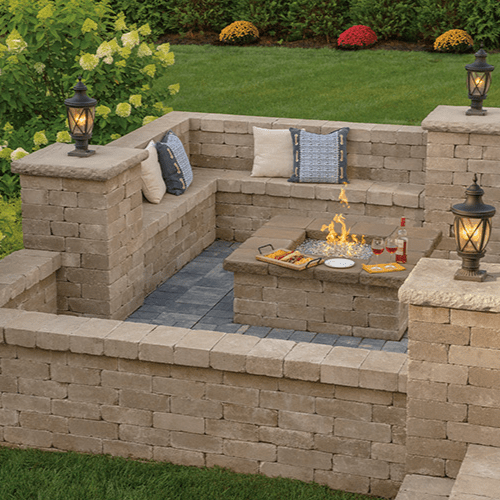
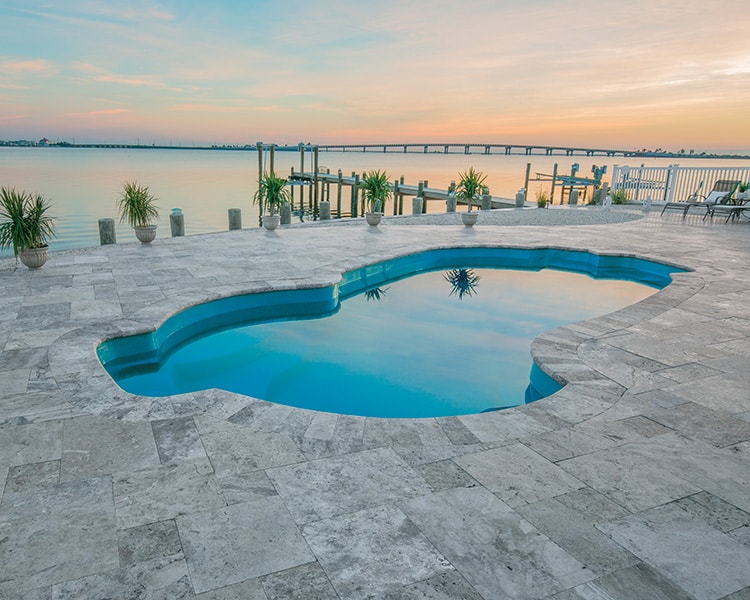
The paver you choose has a real impact on cost — but maybe not as much as you’d expect. Standard concrete pavers run roughly $2 to $6 per square foot in materials. Premium options like Cambridge Pavingstones with ArmorTec technology sit in the $4 to $8 range per square foot depending on the collection and size. Natural stone can push $10 to $15 per square foot in materials alone.
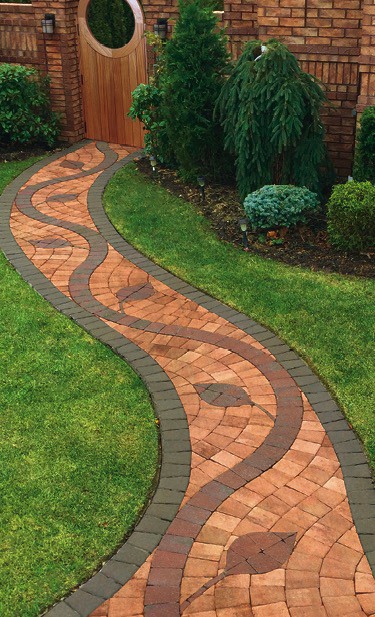
The bigger swing often comes from design complexity. A straightforward running bond pattern — the most common layout — is the most efficient to install. Herringbone, diagonal, or custom multi-border designs can add 15 to 25 percent to labor costs because they require more cuts, more time, and more precision. If you’re working with a tight budget, the pattern choice is one of the more controllable variables.
One thing that often surprises homeowners: the material warranty can actually affect the long-term cost equation significantly. Cambridge pavers carry a full transferable limited lifetime warranty, including a fade-proof color guarantee. ArmorTec technology protects the paver from the inside out — it’s not a surface coating that wears off over time. For Long Island winters specifically, that matters. Pavers that absorb water will eventually crack under freeze-thaw pressure. Pavers that don’t absorb water won’t.
The transferable aspect is worth noting too. If you sell your home — and with Nassau County’s median home value approaching $800,000 and 61 percent of homes selling within 30 days, a lot of homeowners eventually do — that warranty transfers to the next owner. That’s a real selling point, not a marketing footnote.
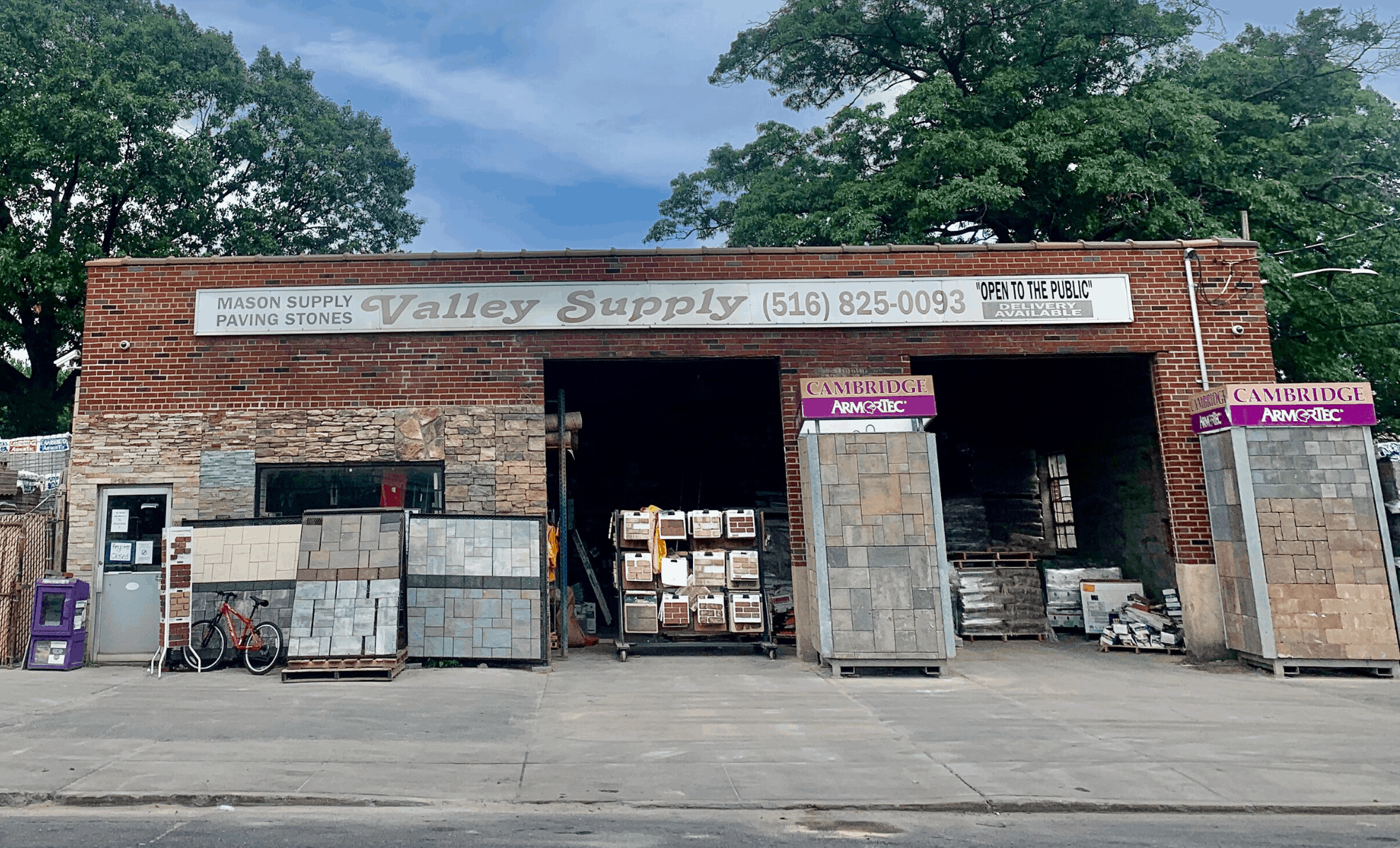
We’ve been selling Cambridge products for over 20 years and carry the full line at our 20,000-square-foot facility in Elmont. If you want to see the difference between collections in person — not on a screen — we have hands-on displays of the most popular styles and colors. It’s a different experience than scrolling through a catalog.
Patio Installation Cost Factors Nassau County Homeowners Should Know
Labor is typically 40 to 60 percent of a paver project’s total cost. On Long Island, professional installation rates run $50 to $80 per hour, and a 300-square-foot patio takes a good crew roughly 35 to 40 hours from start to finish. That’s before you account for site-specific complications — access issues, utility locations, drainage modifications, or permit requirements.
Speaking of permits: Nassau County has 64 incorporated villages, and each can have its own rules. Some municipalities require permits for patios above a certain size or within specific setback distances from property lines. It’s worth checking before a shovel hits the ground. A knowledgeable local contractor — or a quick call to your town’s building department — can save you a headache later.
Should You Buy Pavers Directly or Let the Contractor Source Them?
This question comes up more than you’d think, and the honest answer is that it depends — but the math often favors buying materials directly from a supplier.
Contractors typically mark up materials 20 to 40 percent. That’s not unreasonable — they’re managing logistics, taking on liability, and handling delivery coordination. But if you’re working with a Premier Cambridge Dealer directly, you can purchase the same professional-grade materials your contractor would use, at supply pricing, and simply hand the installation off to a licensed crew.
The other advantage of sourcing materials yourself is that you control the product. You know exactly what’s going on your patio, you have the warranty documentation in your name, and you’re not relying on a contractor’s supplier relationship to determine your paver quality. We’ve had customers come in after the fact — after a contractor substituted a cheaper paver without telling them — and there’s not much anyone can do at that point.
We maintain a short list of vetted hardscape contractors who have a track record of quality work for our customers in Nassau County. It’s not widely advertised, but if you’re buying materials from us and need a reliable installer, ask. We’re not a contractor referral service in the formal sense — we just know who does good work and who doesn’t cut corners on the base. After 67 years in this business, you develop a sense for that.
One more thing worth mentioning: we’re open to the public. You don’t need to be a contractor to walk in, ask questions, get a material calculation, or take samples home. Pete and Steve at the counter have over 50 years of combined experience between them — the kind of depth you’re not going to find at a big-box store. If you come in with your measurements and a rough idea of what you want, you’ll leave with a real number, not a range.
When to Buy and How Timing Affects Your Patio Budget in Nassau County
Spring is the busiest season for paver projects on Long Island, and by mid-April, most quality contractors are booked 6 to 8 weeks out. If you’re planning a project for Memorial Day weekend — a very common goal — you need to be moving in February or March at the latest. Waiting until April means waiting until July.
Fall is a second peak window. Homeowners who missed the spring rush often push to get projects done before November, which creates another wave of contractor demand in September and October. It’s not as intense as spring, but it’s real.
The practical implication: homeowners who plan in winter have more leverage. Contractors are more available, some offer off-season pricing, and material lead times are shorter because supply yards aren’t stretched. Cambridge pavers are manufactured in Yonkers — less than 30 miles from Nassau County — so lead times are already shorter than brands produced out of region. But local stock at our Elmont facility means you’re not waiting on a production run at all.
There’s also a budget planning angle here. If you visit us in January or February, you can get an accurate material cost, lock in your paver selection, and go into contractor conversations with a clear number in hand. That changes the dynamic. Instead of accepting whatever quote comes back as a black box, you know what the materials cost. You’re evaluating the labor and the contractor’s approach — which is where the real quality differences live anyway.
For homeowners in the Five Towns, Valley Stream, or anywhere in western Nassau County, we’re a 10-to-15-minute drive from most of the area. That proximity also matters for delivery — shorter hauls mean lower delivery costs and the ability to handle multiple smaller deliveries on tight lots without the logistics becoming a problem.
How to Get an Accurate Patio Paver Cost Estimate in Nassau County
The wide range you see in cost guides isn’t wrong — it’s just incomplete. What actually determines your number is the size of the project, the soil under your yard, the material you choose, the complexity of the design, and who’s doing the installation. Every one of those variables is knowable before you sign anything.
The best first step isn’t getting a contractor quote. It’s getting a clear picture of what your materials will cost — because that anchors everything else. Once you know what quality pavers cost per square foot, you can evaluate every quote you get against a real baseline instead of guessing.
We’ve been helping Nassau County homeowners and contractors make those calls since 1956. Stop by our facility at 747 Meacham Avenue in Elmont, take a look at the displays, bring your measurements, and let’s work through the numbers together. No pressure, no pitch — just a straight answer from people who’ve been doing this a long time.