
Summary:
If you’ve been putting off your driveway project until fall — thinking things will slow down, contractors will have more time, maybe prices will drop — you’re not alone. It’s one of the most common assumptions homeowners in Nassau County make. It’s also one of the most expensive ones.
The reality is that fall is the second-busiest season for paving contractors in this area, not the slowest. By the time September rolls around, the qualified crews are already booked. Summer is actually when your options are widest and conditions are best. Here’s what that means for your project — and how to use it to your advantage.
Why Summer Is the Right Season for Paving Contractors in Nassau County
Nassau County’s climate creates a pretty specific window for quality paving work. Hot mix asphalt needs outdoor temperatures to stay above 50°F — ideally between 70 and 90°F — so the material stays workable long enough to compact correctly. June through August land almost exactly in that range, consistently and reliably.
That’s not just a technicality. When asphalt cools too fast, it doesn’t compact properly, and that leads to premature cracking — often within just a few years. Getting the installation done in summer isn’t just convenient; it’s one of the factors that determines how long the finished surface actually lasts.
How Nassau County's Clay Soil Affects Your Paving Timeline
Here’s something a lot of homeowners don’t think about until it’s too late: the soil under your driveway matters as much as the surface on top of it. In much of Nassau County — particularly in communities like Elmont, Valley Stream, and Franklin Square — the ground has significant clay content. Clay expands when it’s wet and contracts when it dries out. That constant movement is one of the main reasons driveways crack and sink.
The fix isn’t complicated, but it has to be done right. Contractors working in Nassau County typically need to excavate 8 to 12 inches deep to get below the problem layer and build up a proper base of compacted aggregate. That depth accounts for the local frost line and gives the finished surface something stable to sit on through winter freeze-thaw cycles.
Summer is the best time to do that kind of excavation work. The ground is dry, access is easier, and contractors can work efficiently without fighting wet, unstable conditions. Projects that start in October — when the ground is already softening and temperatures are dropping — face a much tighter margin for doing the base prep correctly.
There’s also a drainage piece to this that often gets overlooked. Clay soil doesn’t drain well. Water pools on top of it, saturates the base layer, and accelerates the exact kind of failure people are trying to avoid. Summer is the ideal time to address drainage alongside a paving project — before fall rains arrive and expose every weak point in the system. Getting the grading right, adding drywells where needed, and making sure water flows away from the structure rather than toward it — all of that is easier to plan and execute in dry summer conditions.
If you’ve had a driveway installed before and watched it start failing within a few years, there’s a good chance the base prep or drainage was the issue — not the surface material itself. It’s worth asking any contractor you’re considering exactly how deep they plan to excavate and how they’re handling drainage. If they can’t give you a specific answer, that’s a signal.

Asphalt vs. Pavers in Hot Weather: What Actually Holds Up
Most Nassau County homeowners default to asphalt because it’s familiar and the upfront cost is lower. That’s a reasonable starting point, but it’s worth understanding what you’re comparing before you commit.
Asphalt performs well in summer conditions — that’s when it’s installed at its best. But it does have a temperature ceiling. When ambient temperatures push above 90°F, freshly installed asphalt can become too soft for immediate heavy traffic and needs time to cure properly. It also requires periodic sealcoating — typically every few years — to protect against UV damage, water infiltration, and the kind of surface deterioration that shortens its lifespan. A properly maintained asphalt driveway in Nassau County can last 20 to 30 years. Without maintenance, that timeline shrinks considerably.
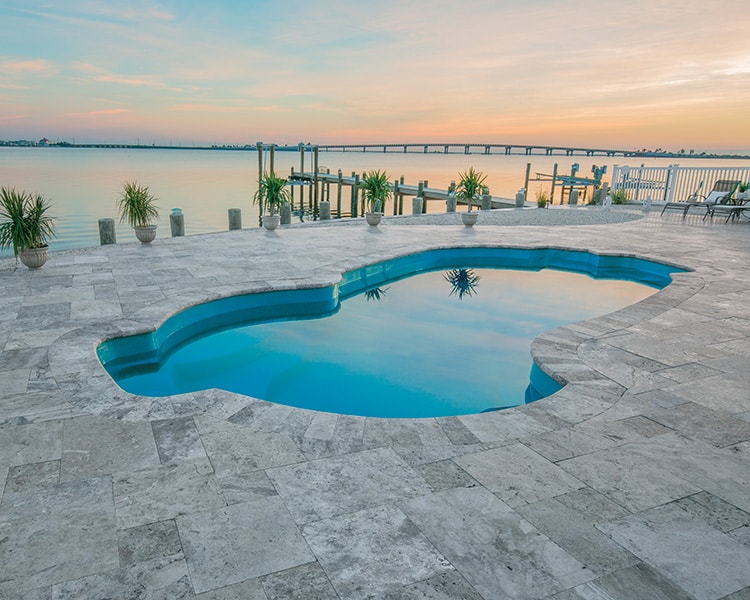
Cambridge interlocking pavers work differently. They’re not temperature-sensitive the way asphalt is — they can be installed across a much wider range of conditions without the same compaction concerns. More importantly, they’re individually replaceable. If one paver shifts or cracks, you pull it out and reset it. You don’t resurface the entire driveway. That repairability, combined with a transferable lifetime warranty from Cambridge, makes pavers a fundamentally different kind of investment.
The transferable warranty is worth pausing on. If you install an asphalt driveway and sell your home in 10 or 15 years, that investment carries no warranty value to the next owner. Cambridge Pavers carry a lifetime warranty that transfers with the property. In Nassau County’s competitive real estate market — where curb appeal directly affects what buyers will pay — that’s a real, tangible advantage.
The upfront cost of pavers is higher, no question. But when you factor in the lifespan (40-plus years with proper installation), the elimination of recurring sealcoating costs, the repairability, and the warranty, the long-term math often favors pavers. It depends on how long you’re planning to stay in the home and what you want the finished product to look like. Both are legitimate choices — the key is understanding what you’re actually buying.
Booking Driveway Paving Contractors in Nassau County Before the Rush Hits
The fall rush is real, and it happens the same way every year. Homeowners who spent summer thinking about a paving project start making calls in September. They find out quickly that the contractors they want — the ones with strong reviews, proper Nassau County licensing, and a track record of doing base prep correctly — are already booked through October.
What’s left is whoever has availability, which isn’t always the same as whoever does quality work. Booking in early summer, June or July at the latest, gives you access to the full pool of qualified contractors. By August, that pool starts to thin.
What to Look for When Hiring a Paving Company Near Me in Nassau County
Nassau County requires paving contractors to carry a Home Improvement Contractor license through the Nassau County Office of Consumer Affairs. This isn’t optional — any contractor doing driveway work in the county needs this license, and getting it requires at least five years of documented construction experience under a licensed contractor. They also need to carry general liability insurance and workers’ compensation coverage.
Verifying that license before signing anything is the single most important step you can take. It costs you nothing and tells you immediately whether you’re dealing with a legitimate operation or someone who shouldn’t be on your property.
Beyond licensing, the questions that matter most are about the work itself. How deep are they planning to excavate? What base materials are they using? How are they handling drainage and grading? A contractor who gives you vague or impatient answers to those questions is telling you something important. The ones who do this work correctly are usually happy to explain their process — because they know it’s what separates a 10-year driveway from a 40-year one.
Watch out for the door-to-door pitch — “we have leftover asphalt from a job down the street.” It’s a known pattern in Nassau County and surrounding communities, and it almost never ends well. No base prep, no drainage assessment, no warranty, no accountability. The price looks good until the driveway starts failing two winters later.
Getting multiple quotes is smart, but the cheapest number isn’t the metric to optimize for. A quote that doesn’t itemize excavation depth, base materials, and drainage provisions isn’t really a quote — it’s a guess. Ask for specifics, compare the details, and check references from local projects. Homeowners in Elmont, Lynbrook, and the Five Towns who’ve had work done recently are often willing to share their experience if you ask.

How to Plan Your Summer Paving Project Timeline to Avoid Fall Delays
The homeowners who end up happy with their paving projects in Nassau County almost always started earlier than they thought they needed to. Here’s roughly how the timeline tends to work when things go smoothly.
Planning and material selection happen in late spring or early summer — May through June. That’s when you’re visiting showrooms, looking at paver styles and colors, deciding between asphalt and pavers, and getting a realistic sense of what your project will cost. It’s also when you’re getting quotes and vetting contractors, not after they’ve already filled their schedules.
Contractor booking and project scheduling typically locks in June through July for summer work. If you want your project done before Labor Day, you need a confirmed contractor by mid-July at the latest — and even that’s cutting it close for some of the more in-demand crews in Nassau County.
Material sourcing is something a lot of homeowners don’t think about until their contractor asks for it. Supply shortages and lead times are a real factor, especially during peak season. Smaller supply yards run out of specific Cambridge colors and styles when demand spikes. Working with a supplier that has the inventory depth to fill a full project order without delay matters more than most people realize until they’re in the middle of a job and waiting on materials.
Installation and completion for summer projects typically runs July through September, depending on project size and contractor scheduling. A standard residential driveway can be completed in a few days once the crew is on-site, but the scheduling lead time is what determines when that actually happens.
The homeowners who start this process in October — thinking they’ll get it done before winter — are usually the ones who end up waiting until the following spring. Not because the work can’t be done in fall, but because the good contractors are already committed and the weather window is closing fast.
Start Your Nassau County Paving Project Before the Season Gets Away From You
Summer doesn’t last forever, and neither does contractor availability. The homeowners who end up with quality paving work — done right, on schedule, with materials that hold up through Nassau County winters — are the ones who planned ahead instead of hoping for the best in September.
Whether you’re replacing a cracked asphalt driveway that’s been patched one too many times, or you’re finally ready to put in the Cambridge paver driveway you’ve been thinking about for years, the time to move is now. Get your material questions answered, get your contractor booked, and get ahead of the fall rush before it’s no longer a choice.
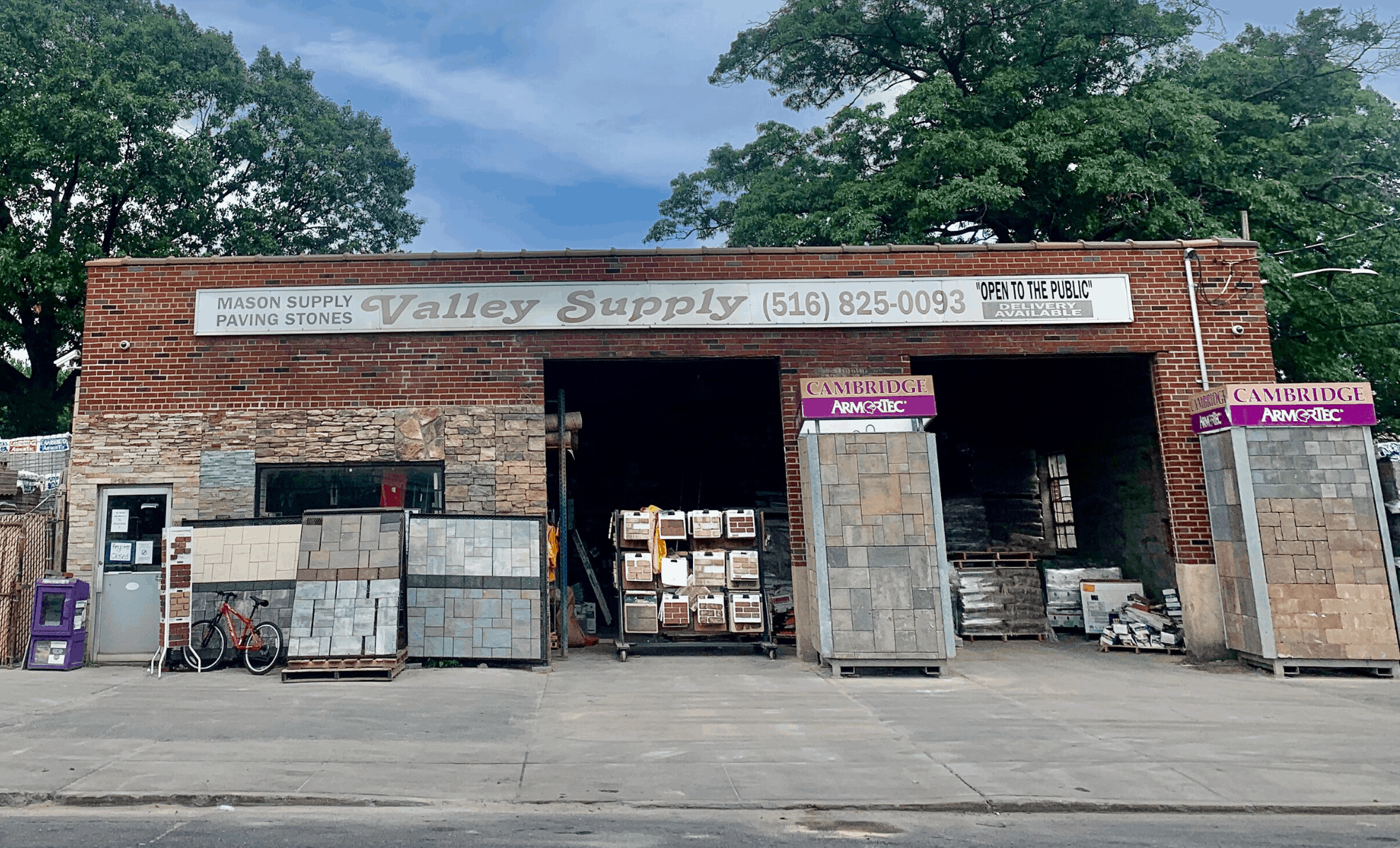
We’ve been helping Nassau County homeowners and contractors source the right materials since 1956. Stop in at 747 Meacham Avenue in Elmont, give us a call at 516-825-0093, or come by any weekday between 7AM and 5PM — or Saturday from 7AM to 2PM. Pete and Steve will point you in the right direction.