Summary:
If you’ve been pricing out a driveway, patio, or outdoor project in Nassau County, you’ve probably run into the same question: is it worth paying more for sustainable materials, or is that just a premium for a label?
It’s a fair question. And the honest answer is that the cost gap is a lot smaller than most people assume — and the long-term math often flips entirely. This page walks through what sustainable building materials actually are, how they compare to traditional options on cost and durability, and what’s worth knowing before you make a decision that affects your property for the next few decades.
What Are Sustainable Building Materials, and How Do They Compare to Traditional Options?
Sustainable building materials are products that are manufactured with lower environmental impact, built to last longer, or designed to reduce ongoing resource consumption — often all three at once. That can mean natural stone, recycled content, permeable paving systems, or low-carbon concrete alternatives. The common thread is that they’re made with the full lifecycle in mind, not just the installation day.
Traditional materials — standard concrete, asphalt, basic block — aren’t inherently bad. They’re proven, widely available, and familiar to every contractor on Long Island. But they tend to carry hidden costs: cracking under freeze-thaw cycles, requiring resurfacing every decade or so, and contributing to drainage problems that Nassau County homeowners know all too well.
The comparison isn’t really about “green vs. not green.” It’s about what your project actually costs over time — and which materials hold up in this specific climate.
Are Sustainable Building Materials More Expensive Than Traditional Materials?
This is the question that stops most people. The short answer: not by as much as you’d think, and rarely when you account for the full picture.
According to U.S. Green Building Council data, sustainable buildings typically cost about 1.8 to 2 percent more upfront than conventional construction — roughly $3 to $5 per square foot. On a patio or driveway project in Nassau County, that’s often a few hundred dollars, not thousands. And that premium tends to disappear quickly once you factor in what you’re not spending on repairs, resurfacing, and replacement.
The World Green Building Council puts it plainly: 75 percent of a building’s total expenses happen during its operational phase — maintenance, repairs, and upkeep over the life of the property. Choosing a durable material upfront isn’t a luxury; it’s the more financially conservative move. Green buildings average 14 percent lower operational costs and 20 percent lower maintenance costs over five years compared to conventional construction. Most sustainable material investments reach full ROI within 5 to 10 years.
For Nassau County homeowners, there’s another layer to this. The freeze-thaw cycles we get every winter are brutal on standard concrete and asphalt. You’ve probably seen it — driveways that were installed 10 years ago that now look 30. When you’re replacing a traditional surface every decade versus getting a lifetime out of a more durable alternative, the math on “which one costs more” changes completely.
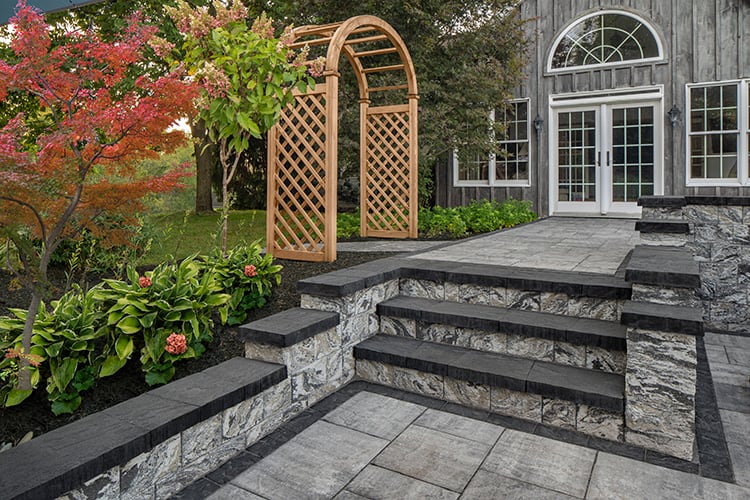
Cambridge ArmorTec® pavers are a good example of this. They’re engineered specifically for freeze-thaw conditions, carry a transferable lifetime warranty, and are made from 100 percent natural materials. That warranty transfers to new owners when you sell the home, which means the investment shows up in your property value — not just in your driveway.

How Permeable Pavers Solve Nassau County's Drainage Problem
If you’ve dealt with pooling water, flooded yards, or runoff issues after a heavy rain in Valley Stream, Elmont, or anywhere in the Five Towns area, you already understand why impervious surfaces are a problem. Nassau County’s flat topography and dense suburban development don’t give water many places to go. When every driveway and patio sheds water straight into the street, the drainage system gets overwhelmed fast.
Permeable pavers are one of the most practical sustainable building materials available for this exact situation. Instead of shedding water, they allow it to filter through the surface and recharge the groundwater below. That means less runoff, less flooding, and fewer pollutants washing into local waterways. It also means less heat absorption — permeable surfaces run significantly cooler than dark asphalt on a summer afternoon, which matters in densely developed neighborhoods.
From a certification standpoint, Cambridge Permeable Interlocking Concrete Pavement systems — what the industry calls PICP — can earn up to four LEED certification points under Sustainable Sites and Water Efficiency categories. For contractors working on projects where LEED certification is a factor, that’s a direct, quantifiable benefit from a single material choice.
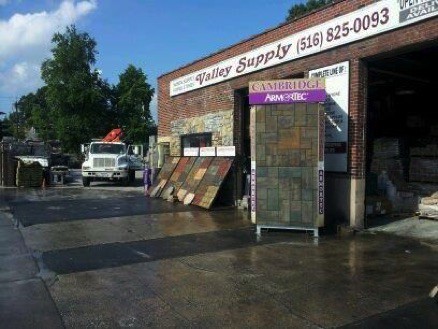
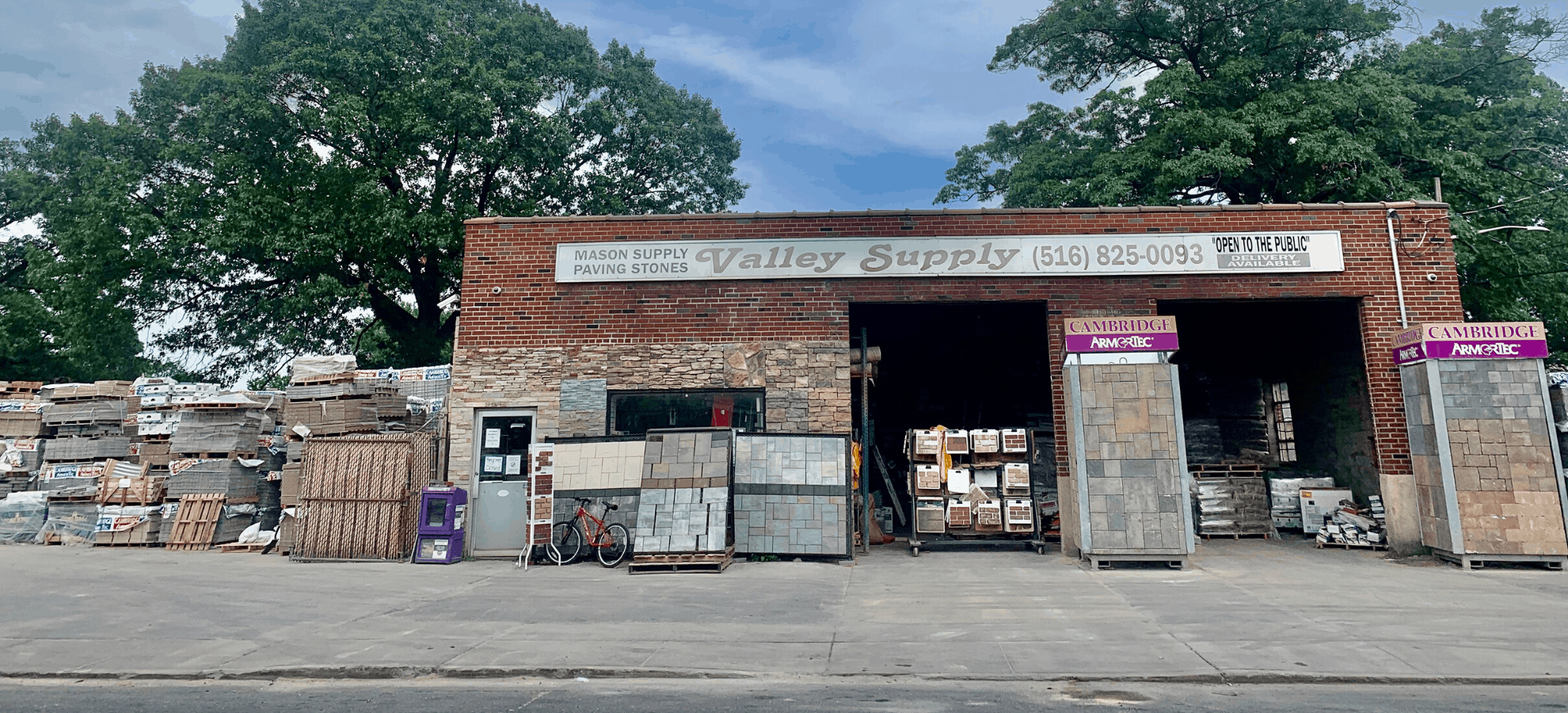
We carry the complete line of Cambridge permeable systems at our Elmont location, including Aqua-Bric, Enviro-Edge, Holland Permeable, and Permeable Ledgeston. These aren’t catalog items — they’re on the floor, available to see in person. If you’re trying to solve a drainage problem and want something that will actually last, it’s worth coming in and looking at what’s available before you commit to a solution.
Green Building Supply in Nassau County: What Local Sourcing Actually Means
One angle that doesn’t get talked about enough is the sustainability of the supply chain itself. When you’re sourcing materials from a supplier 60 miles out in Suffolk County or ordering from a national distributor, the freight emissions are part of your project’s environmental footprint — and so is the lead time.
Our location at 747 Meacham Avenue in Elmont sits right at the Nassau/Queens border. For most Nassau County residents and contractors, that’s a short drive. Shorter supply chain, lower transport emissions, and materials you can see before you load them. It’s not a dramatic point, but it’s a real one.
Nassau County’s building codes now incorporate green building standards as of 2025, meaning sustainable material choices aren’t just aspirational for local contractors — they’re increasingly relevant to code compliance. Planning ahead matters.
Surplus Building Materials: How to Make Sustainable Choices Work on Any Budget
One of the most persistent myths about sustainable building is that it’s only for projects with a generous budget. The reality is more flexible than that, and surplus building materials are a big part of why.
Surplus stock — overruns, discontinued colorways, end-of-run inventory — often means premium materials at reduced prices. The product itself is identical in quality to full-price inventory. The only difference is timing and availability. For homeowners who are price-sensitive but don’t want to compromise on durability or aesthetics, this is worth asking about directly when you visit our showroom.
There’s also the over-ordering problem, which is more common than people realize. Buying 20 percent more material than your project requires isn’t just wasteful — it’s expensive. Our staff has been calculating quantities for Nassau County projects for decades. Pete and Steve together have over 50 years of counter experience, and a significant part of what they do is help customers figure out exactly what they need — not more, not less. That alone can save you more than the cost difference between sustainable and traditional materials on a mid-size project.
If you’re working with a tighter budget and want to explore what’s currently available in surplus or overstock inventory, the best move is simply to come in and ask. We’re open Monday through Friday from 7 AM to 5 PM and Saturdays from 7 AM to 2 PM. No pressure, no pitch — just an honest conversation about what makes sense for your project.
Where to Find Discount Building Supplies Without Sacrificing Quality in Nassau County
“Discount building supplies” can mean a lot of different things. At one end, it means lower-grade materials that save money upfront and cost more later. At the other end, it means smart sourcing — knowing where to look, what questions to ask, and how to find quality materials at a fair price without driving to three different suppliers or waiting on a freight delivery.
The big-box stores carry a fraction of what we stock. Their staff are generalists. There are no hands-on displays where you can see how a paver actually looks at scale, compare finishes side by side, or get a straight answer about which product handles Long Island winters better. For a project where you’re spending $10,000 or more, that information gap is expensive.
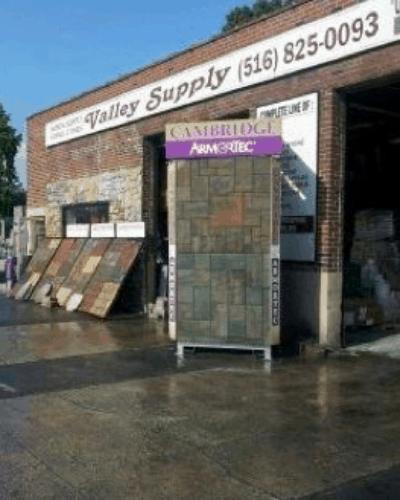
We’ve been a Premier Cambridge Dealer for over 20 years, which means we carry the complete Cambridge line — not just the popular SKUs. That designation isn’t self-assigned; it’s awarded by Cambridge based on volume, expertise, and sustained commitment to the full product range. It matters because it means you can walk in looking for a specific permeable system or a particular wall stone profile and actually find it, rather than being told it needs to be ordered.
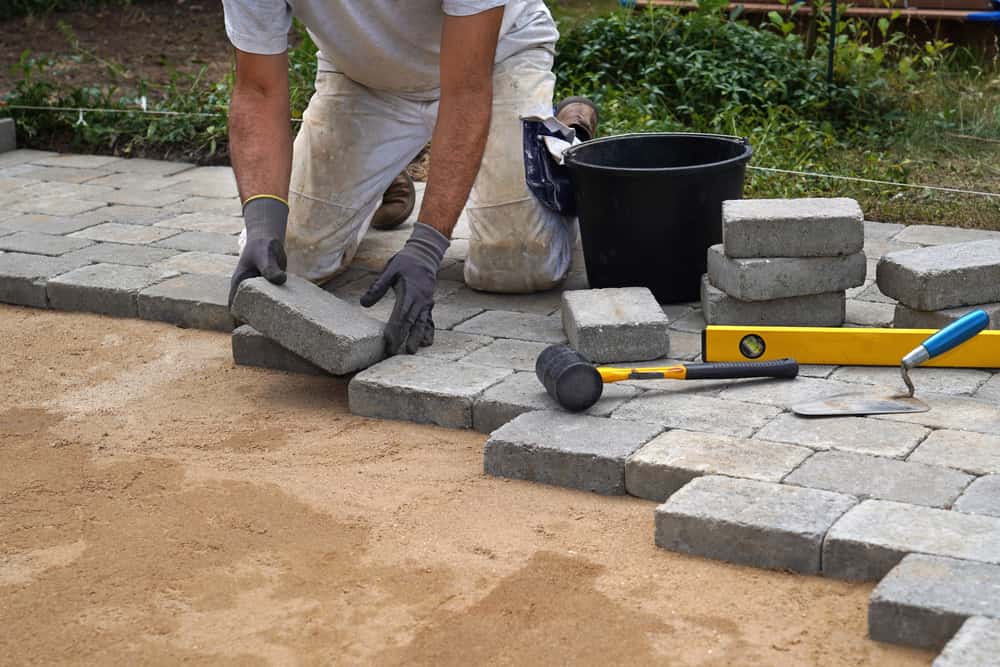
We also maintain a short list of vetted hardscape contractors who do installation work. If you’re a homeowner who needs materials and a reliable installer, you don’t have to solve both problems separately. That referral network is something we’ve built over decades, and it’s available to anyone who asks. For Nassau County homeowners who’ve had frustrating experiences finding both quality materials and trustworthy contractors, it’s worth knowing that option exists.
Choosing the Right Building Materials for Your Nassau County Project
The sustainable vs. traditional debate is less of a debate once you look at the actual numbers. The upfront cost difference is smaller than most people expect. The long-term savings are real. And for Nassau County specifically — with its drainage challenges, freeze-thaw winters, and updated building codes — the practical case for durable, sustainable materials is as strong as the environmental one.
The best decisions in this category come from seeing materials in person, asking specific questions about your project, and working with someone who’s been doing this long enough to give you a straight answer. That’s what we’ve been doing at 747 Meacham Avenue since 1956.
If you’re planning a project and want to talk through your options, Valley Supply Corp is open six days a week and happy to help — no appointment needed, no sales pressure, just honest advice from people who know this product line inside and out.