Summary:
If you’ve ever walked into a Home Depot looking for masonry or hardscape supplies and walked out empty-handed — or worse, walked out with the wrong thing — you already know the problem. Nassau County projects have specific demands. The soil here is sandy and unstable. The water table is high, especially along the South Shore. And every winter, freeze-thaw cycles test whatever you installed the season before. Generic advice doesn’t cut it. This guide covers the landscaping tools and equipment that actually matter for Long Island conditions, and what to look for when you’re sourcing them locally.
Professional Landscaping Equipment Suppliers in Nassau County
Nassau County has no shortage of places to buy tools, but there’s a real difference between a supplier that stocks product and one that actually knows what you’re working with. We carry professional-grade inventory, understand Long Island’s specific soil and drainage challenges, and our staff can tell you what you need before you start — not after you’ve already made a costly mistake.
For contractors, that kind of counter expertise is non-negotiable. For homeowners tackling a first patio or walkway installation, it’s the difference between a project that holds up for decades and one that heaves after the first hard winter.
What Landscaping Equipment Do You Actually Need for Long Island Projects?
Most landscaping tool guides are written for a generic national audience. They cover mowers, trimmers, and leaf blowers — and stop there. If you’re doing any kind of hardscaping or drainage work in Nassau County, that list barely scratches the surface.
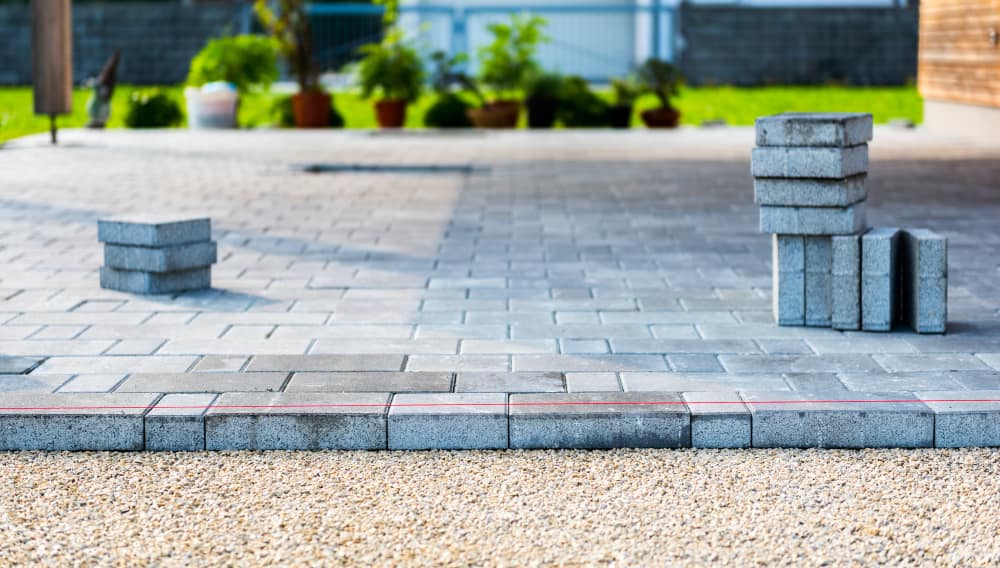
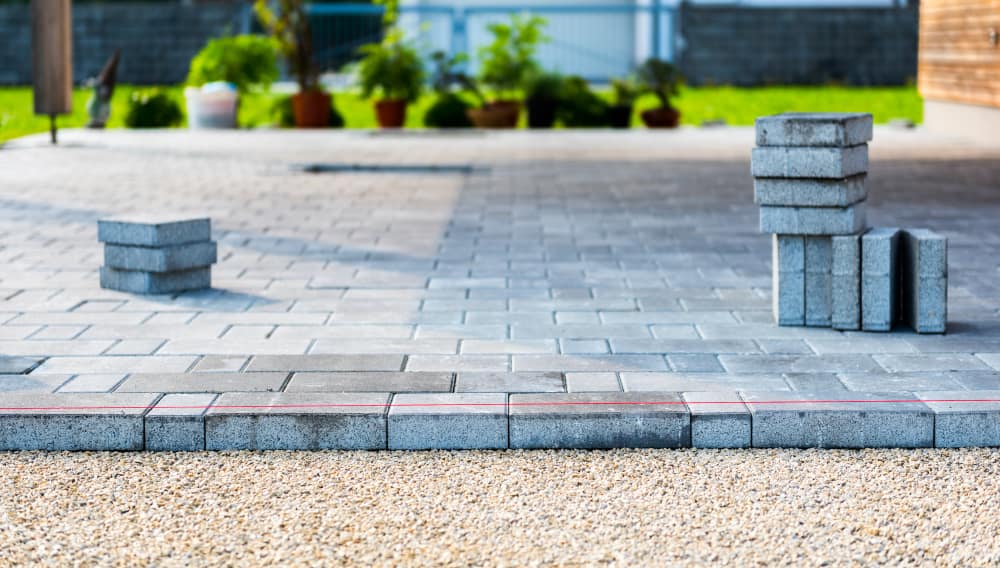
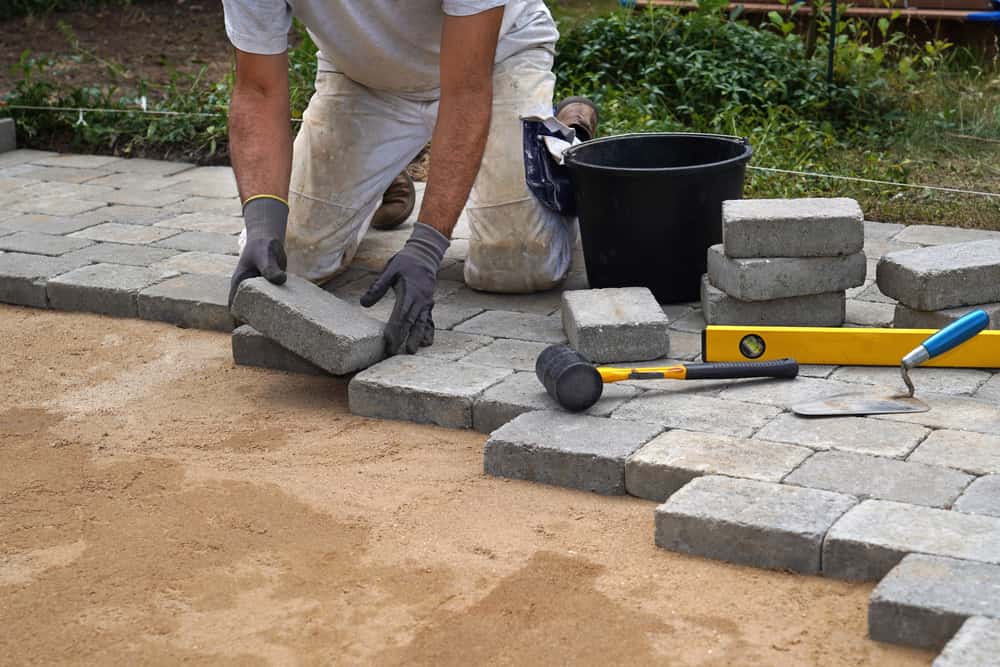
For paver installation, you’re looking at a plate compactor to properly compact the gravel base, a rubber mallet for setting individual pavers without cracking them, a paver saw or angle grinder for cuts around edges and curves, a screed board and level for getting the sand bed flat, and polymeric sand and a hand tamper for locking the joints once everything is set. Skip the plate compactor and your base won’t be tight enough to handle Long Island’s freeze-thaw cycles — and by April, you’ll see it.
Drainage work adds another layer. French drain installation requires a trenching shovel or a rented trenching machine, a laser level or line level to ensure proper slope, pipe and aggregate, and a tamper to compact the backfill. Nassau County’s South Shore communities — Elmont, Valley Stream, Lynbrook, Oceanside — deal with high water tables that make drainage an active issue, not an afterthought. If your yard floods after a heavy rain, the right tools installed correctly are what fix it for good.
For general landscape maintenance, the standard toolkit applies: a quality round-point shovel, a spading fork, a bow rake for grading, a wheelbarrow with a pneumatic tire that handles uneven ground, and hand pruners or loppers depending on what you’re trimming. The difference at the professional level is durability — fiberglass handles over wood, forged heads over stamped steel, tools that hold up to daily use in Long Island’s humid coastal climate rather than sitting in a garage between occasional weekend projects.
One thing worth knowing: the coastal communities in Nassau County — Long Beach, Atlantic Beach, and parts of Oceanside — deal with salt air that accelerates corrosion on metal tools. If you’re working near the water regularly, stainless steel or coated tool heads aren’t a luxury, they’re a practical call.
Garden Tools for Nassau County Homeowners: Where to Start
Not every project needs a plate compactor and a paver saw. For homeowners working on planting beds, lawn edging, or smaller-scale yard improvements, the core garden tools are simpler — but the same principle applies: buy for your actual conditions, not a generic checklist.
Long Island’s sandy glacial soil is actually forgiving in one way — it’s easier to dig than clay-heavy soils you’d find in other parts of New York. But that same sandy composition means it drains fast, dries out quickly in summer, and doesn’t hold amendments the way denser soils do. A quality border spade with a sharp, flat blade handles edging and bed work well in this soil type. A hand cultivator is useful for working in compost without disrupting root systems. And a good-quality hose with adjustable pressure is more valuable than most people realize — sandy soil can wash out under too-heavy watering.
For anyone putting in a new planting bed from scratch, a rear-tine tiller makes the initial soil prep significantly faster, especially in areas where the ground has compacted over time. Most equipment rental companies in Nassau County carry them, and for a one-time project, renting almost always makes more sense than buying.
The question of buy versus rent comes up a lot, and the honest answer depends on frequency. If you’re installing a patio once and never touching a plate compactor again, rent it. If you’re a contractor running multiple jobs a season, own it. For hand tools — shovels, rakes, cultivators — buy quality once rather than cheap twice. A well-made shovel with a fiberglass handle will outlast three of the bargain versions, and you’ll feel the difference by the end of a full day of digging.
What most homeowners in Nassau County underestimate is how much the right tool speeds up a project. A flat spade cuts clean edges in a fraction of the time a round-point shovel does. A bow rake grades sand beds faster and more accurately than improvising with whatever’s in the garage. These aren’t upsells — they’re the tools that make a weekend project actually finish on the weekend.
Landscaping Equipment Rental vs. Buying in Nassau County
For larger projects — patio installations, retaining walls, drainage system work — some of the equipment you need isn’t practical to own unless you’re a working contractor. Plate compactors, paver saws, trenching machines, and skid steers are available from equipment rental companies across Nassau County, and renting makes financial sense for one-time use.
The key is knowing what to rent versus what to own, and making sure you’re working with a supplier who can advise on both — not just sell you whatever’s available.
When to Rent Landscaping Equipment for a Nassau County Project
The rule of thumb most experienced contractors use is straightforward: if you’ll use a piece of equipment fewer than a dozen times a year, renting is usually the smarter call. For homeowners, that threshold is even lower — most large-scale tools get used once per project, and once is rarely enough to justify the purchase price, storage space, and maintenance.
Plate compactors are the clearest example. A quality compactor runs $800 to $2,000 to buy. Rental rates in Nassau County typically run $75 to $150 per day depending on size and the rental company. For a single patio project, the math isn’t close. Rent it, use it for a day or two, return it.
The same logic applies to paver saws, trenching machines, and concrete mixers. These are precision tools that require some experience to use correctly, and rental companies often include a brief orientation when you pick up the equipment — which is worth more than it sounds if you’ve never run one before.
Where renting gets complicated is availability and scheduling. During peak season — spring through early fall in Nassau County — rental equipment books up fast. Contractors who know the rhythm of the season reserve equipment weeks in advance. Homeowners who wait until the weekend they want to start a project often find the equipment they need is already out. If you’re planning a spring project, reach out to rental companies in February or March to check availability.
One thing rental companies don’t always provide is the materials expertise to go with the equipment. Knowing how to run a plate compactor is one thing — knowing the correct base depth for a Cambridge paver installation in Nassau County’s sandy soil is another. That’s where we fill the gap: the rental company handles the machine, we handle the material quantities, mix specifications, and installation guidance.
How to Find Landscaping Tools and Technical Support in the Same Place
One of the more frustrating parts of planning a hardscape or landscaping project in Nassau County is that the information tends to be scattered. You might find the tools at one place, the materials at another, and the actual project guidance nowhere — or buried in a YouTube comment section that may or may not apply to Long Island conditions.
The suppliers worth working with are the ones who can do more than hand you a product. We can look at your measurements and tell you how much material you need. We can explain the difference between Type S and Type N mortar and why it matters for your specific application. We can tell you whether your project needs polymeric sand or regular jointing sand, and what happens if you use the wrong one. That kind of counter knowledge is what separates a specialty supply house from a big-box aisle.
We’ve been operating out of 747 Meacham Ave in Elmont, NY since 1956 — right at the Nassau/Queens border — and the reason contractors and homeowners keep coming back isn’t the location alone. It’s that Pete and Steve, between them, have over 50 years of hands-on masonry supply experience. When a contractor calls at 7AM to talk through a drainage project in Valley Stream, or a first-time homeowner comes in overwhelmed by paver options, the answer they get is based on decades of working with Long Island projects specifically — not a generic script.
As a Cambridge Premier Dealer, we carry the full Cambridge line — every style, every color — with the transferable lifetime warranty that comes with Premier Dealer purchases. That matters if you’re a homeowner investing in a patio you plan to sell with the house someday. It matters to contractors who want to offer their clients a product backed by the manufacturer, not just the installer. And it matters to anyone who’s watched a cheaper paver installation fall apart after two or three Nassau County winters.
Our 20,000 square foot facility has hands-on wall and paver displays so you can see full-scale installations before committing to a style or color. Choosing pavers from a 4-inch sample chip is a gamble — seeing them in a full display under real light is a completely different experience. We’re open Monday through Friday from 7AM to 5PM and Saturday from 7AM to 2PM, which means contractors can stop in before heading to a job site without rearranging their schedule.
Where Nassau County Homeowners and Contractors Find the Right Landscaping Tools
Getting the right landscaping tools for a Nassau County project comes down to understanding what the work actually requires — and that starts with knowing your local conditions. Sandy soil, high water tables, coastal humidity, and freeze-thaw winters all shape what you need and how you use it. A generic tool list won’t get you there.
Whether you’re a contractor sourcing materials for a full paver installation or a homeowner planning your first backyard project, the right starting point is a supplier who knows Long Island. Not one who ships from a warehouse in another state, and not a big-box store where the staff can point you to an aisle but can’t tell you what’s actually in it.
If you’re ready to talk through what your project needs, Valley Supply Corp has been the go-to resource for Nassau County and Queens since 1956. Stop in, walk the showroom, and get a straight answer from people who’ve been doing this longer than most of the competition has been in business.