Summary:
You’ve probably already asked around. Maybe you posted on Nextdoor, got a few names, and now you’re staring at three quotes that don’t quite line up — different materials, different timelines, wildly different prices. That’s the Nassau County masonry market in a nutshell. There’s no shortage of contractors, but sorting the experienced professionals from the rest takes a little more than checking a star rating. This guide covers what to actually look for when hiring a masonry contractor here, what brick and stone work involves on Long Island specifically, and why the materials behind the job matter more than most homeowners realize.
Top-Rated Masonry Contractors in Nassau County: What Actually Sets Them Apart
The best masonry contractors in Nassau County share a few things that have nothing to do with how nice their website looks. They’re licensed through the Nassau County Department of Consumer Affairs — which requires a minimum of five years of documented, hands-on construction experience before a license is even issued. They carry general liability insurance and workers’ compensation, and they’ll hand over that paperwork without hesitation when you ask.
Beyond credentials, the contractors worth hiring are the ones who ask questions before they start quoting. They want to know about drainage, about the soil conditions on your property, about how the space gets used. That kind of conversation is a good sign. The ones who show up, glance around, and email you a number two days later — less so.
How Nassau County's Soil and Climate Affect Every Masonry Job
This is something most contractor websites skip entirely, but it matters a lot on Long Island. Nassau County’s soil varies significantly depending on where you live. The South Shore communities — Valley Stream, Elmont, Lynbrook, Rockville Centre — sit on predominantly sandy loam, which drains well but needs proper base compaction to prevent settling over time. Move inland toward Garden City, Mineola, or out toward the North Shore communities like Great Neck and Manhasset, and the soil gets heavier and more clay-rich. Clay holds water. Water, combined with Nassau County’s freeze-thaw cycles, is the single biggest reason masonry installations fail prematurely.
A properly installed paver driveway or patio in this climate requires excavation down six to twelve inches, a compacted gravel base, and drainage designed to move water away from the surface — not just sit under it. Contractors who cut corners on base depth are easy to spot a year or two later when the pavers start heaving or the patio develops a low spot that pools every time it rains.
If you’re near the coast — Long Beach, Atlantic Beach, Lido Beach — you’ve got an additional factor: salt air. That accelerates wear on lower-quality materials and makes the surface treatment on the products you choose genuinely important, not just a marketing point.
The contractors who understand Nassau County’s soil and climate design their installations around those realities. That’s local expertise. It’s not something you can learn from a general masonry training course — it comes from doing this work here, specifically, over many years.

What to Verify Before You Sign a Contract With Any Nassau County Mason
Nassau County law requires a written contract for any home improvement work over $500. That’s not a suggestion — it’s a legal requirement. A solid contract will spell out the scope of work, the specific materials being used (brand names, not just “pavers” or “stone”), the payment schedule, the timeline, and what happens if something goes wrong. If a contractor hands you a one-page handwritten quote and calls it a contract, that’s a flag.
Before anything is signed, ask for their Nassau County Home Improvement Contractor License number and look it up through the Department of Consumer Affairs. Ask for a Certificate of Insurance naming you as an additional insured — this protects you if a worker is injured on your property. These are standard requests that any legitimate contractor will handle without making it feel like an interrogation.
One thing that rarely comes up but absolutely should: ask what materials they’re using and where they’re sourcing them. A contractor installing Cambridge pavers should be sourcing through an authorized Cambridge dealer — that’s the only way the transferable lifetime warranty on those products applies. Cambridge’s ArmorTec surface treatment, which gives their pavers superior resistance to staining, weathering, and freeze-thaw damage, is specific to authentic Cambridge products. Generic pavers from a big-box store don’t carry that protection, and you won’t know the difference until a few winters have passed.
Nassau County also has 64 incorporated villages, each with its own municipal rules. Retaining walls above a certain height, structural repairs, and work near property lines often require permits. A contractor who knows this market will flag which projects need permits and handle the process. One who doesn’t mention permits at all is either inexperienced or hoping you won’t ask.
Brick Contractors in Nassau County: Repairs, Installations, and What to Expect
A significant portion of masonry work in Nassau County is brick — and a lot of it is repair work on homes built between 1945 and 1970. The post-war housing boom that built Levittown and filled out communities across the county left behind millions of brick stoops, walkways, chimneys, and retaining walls that are now 50 to 75 years old. Some have held up well. Many haven’t.
Tuckpointing — the process of removing deteriorated mortar and replacing it with fresh material — is one of the most common brick contractor jobs in the county. Done right, it extends the life of a brick structure by decades. Done wrong, or done with the wrong mortar mix, it accelerates the damage. The mortar ratio matters, the joint finishing matters, and the curing conditions matter. A contractor who understands brick knows this.
New Brick Installations in Nassau County: Driveways, Patios, and Outdoor Living
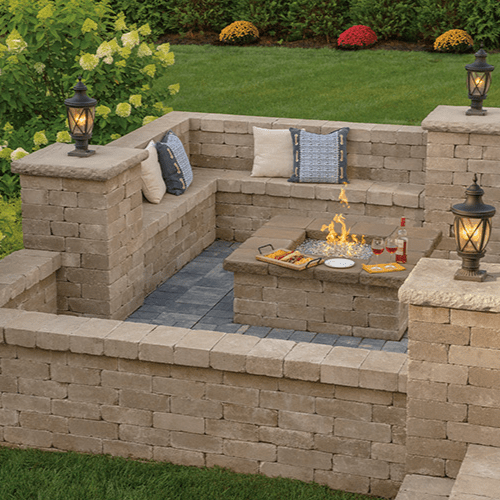
Beyond repairs, brick contractors in Nassau County handle new installations — driveways, patios, walkways, outdoor kitchen surrounds, fire pit areas, and full outdoor living spaces. The demand for this kind of work has grown significantly over the past several years, and the expectations have risen with it. Homeowners in Garden City, Manhasset, and Old Westbury aren’t just looking for functional — they want something that looks like it belongs on the property and holds up through a Long Island winter without looking tired after three years.
Brick paver systems — particularly Cambridge’s full line of ArmorTec products — have become the dominant choice for residential driveways and patios in Nassau County, largely because they outperform both asphalt and poured concrete in freeze-thaw conditions. Unlike a solid slab, individual pavers can flex slightly with ground movement and, if one area does settle or shift, specific sections can be lifted and releveled without tearing up the entire surface.
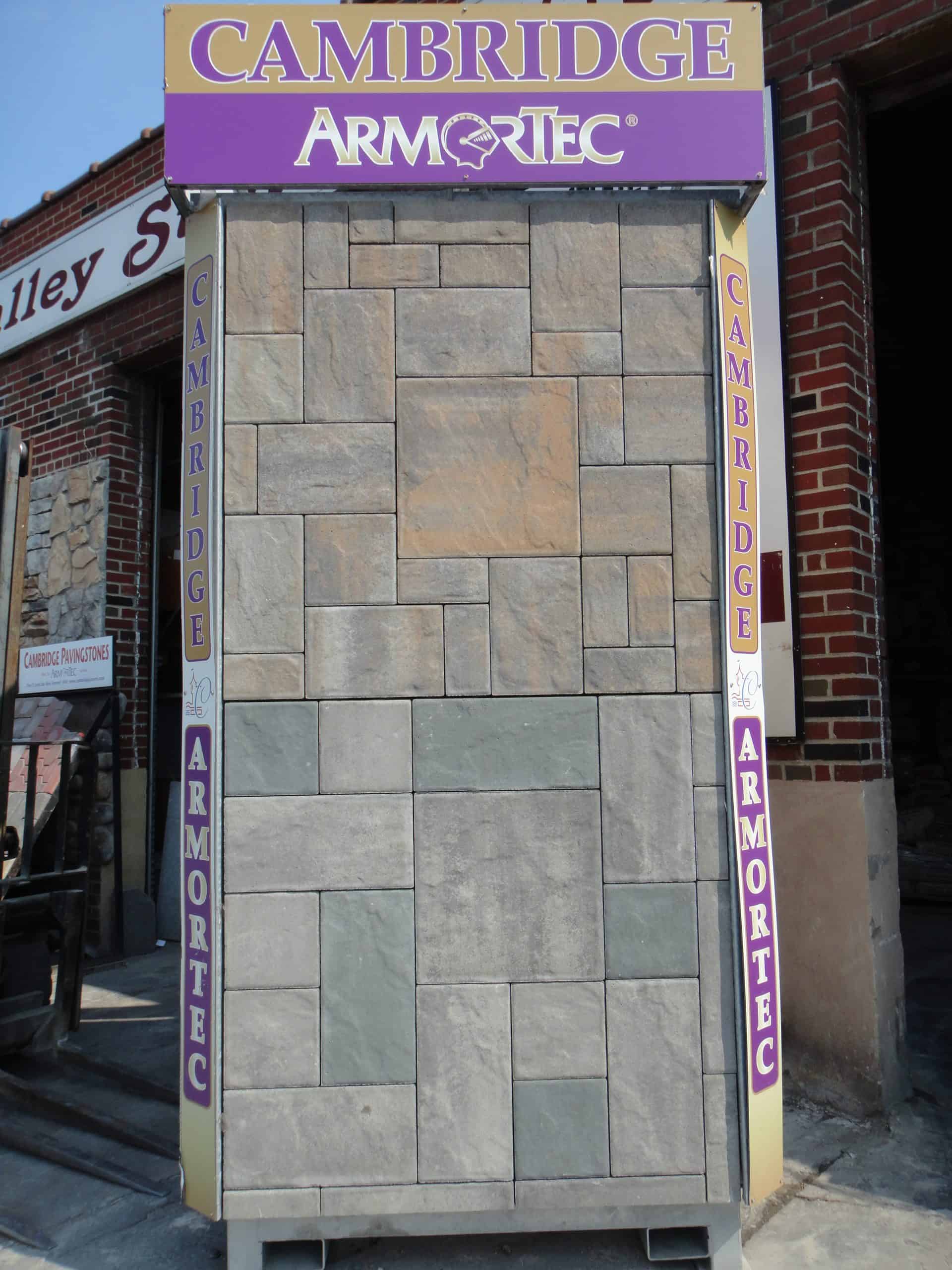
The design side of brick installation has also evolved. Cambridge’s product line includes pavers, wall systems, curbstone, edgestone, and outdoor living kits — fireplaces, waterfalls, garden structures — that let a skilled contractor build a cohesive outdoor space rather than a collection of unrelated elements. If you’re planning something at that scale, seeing the actual products in person before committing to a design makes a real difference. Catalog photos and website renders don’t tell you how a color looks in afternoon light or how a texture feels underfoot. That’s something you can only get by standing in front of an actual display.
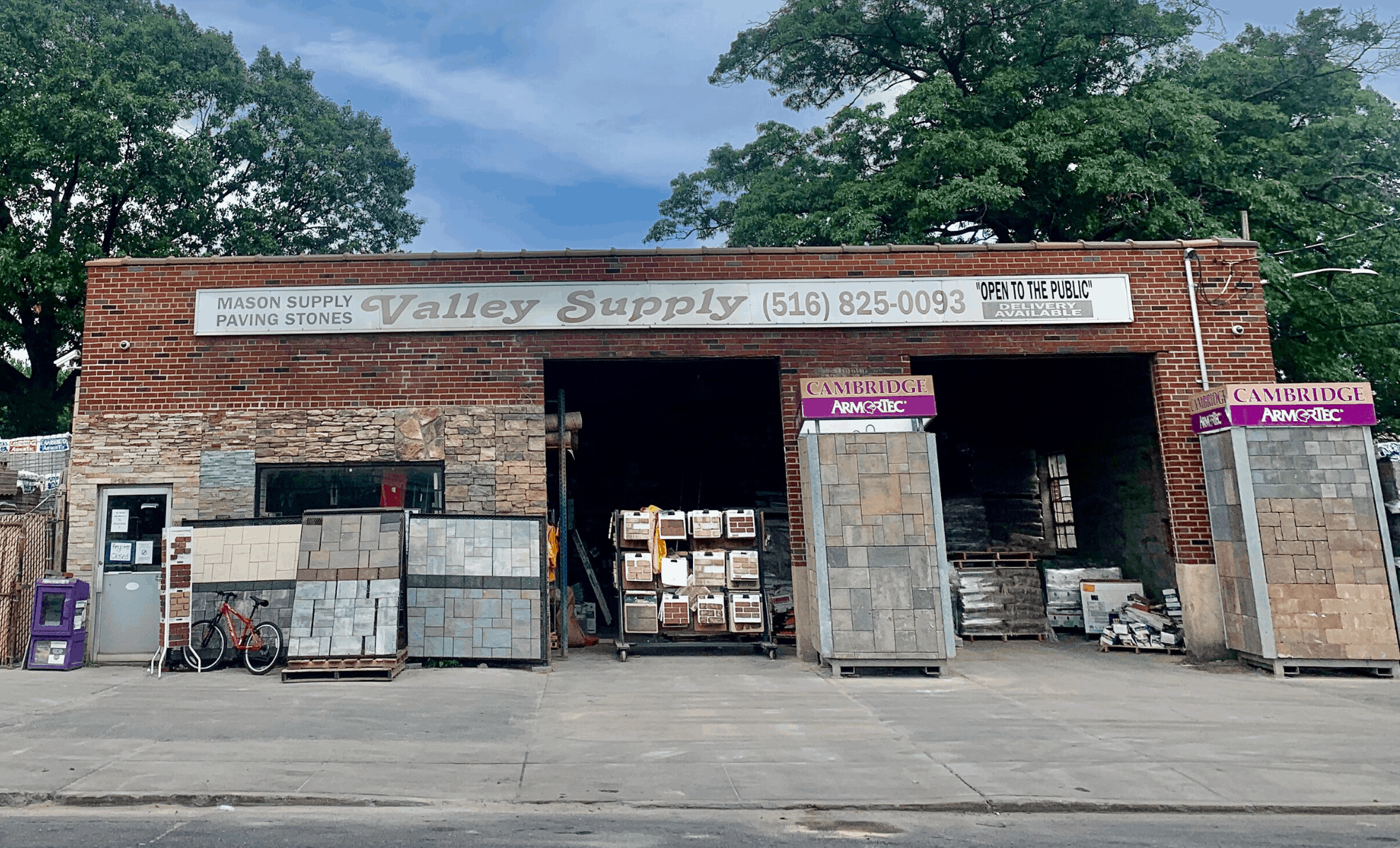
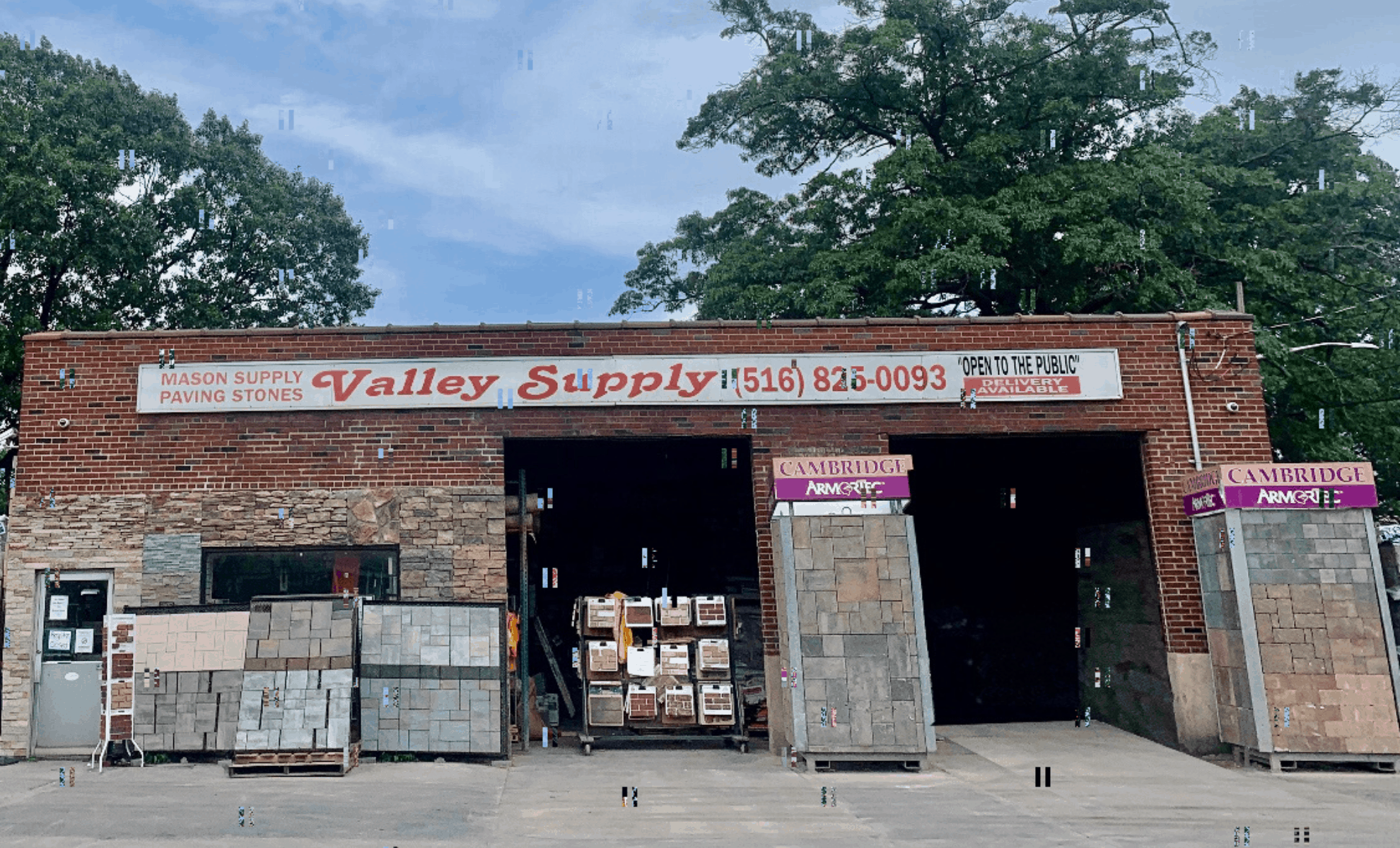
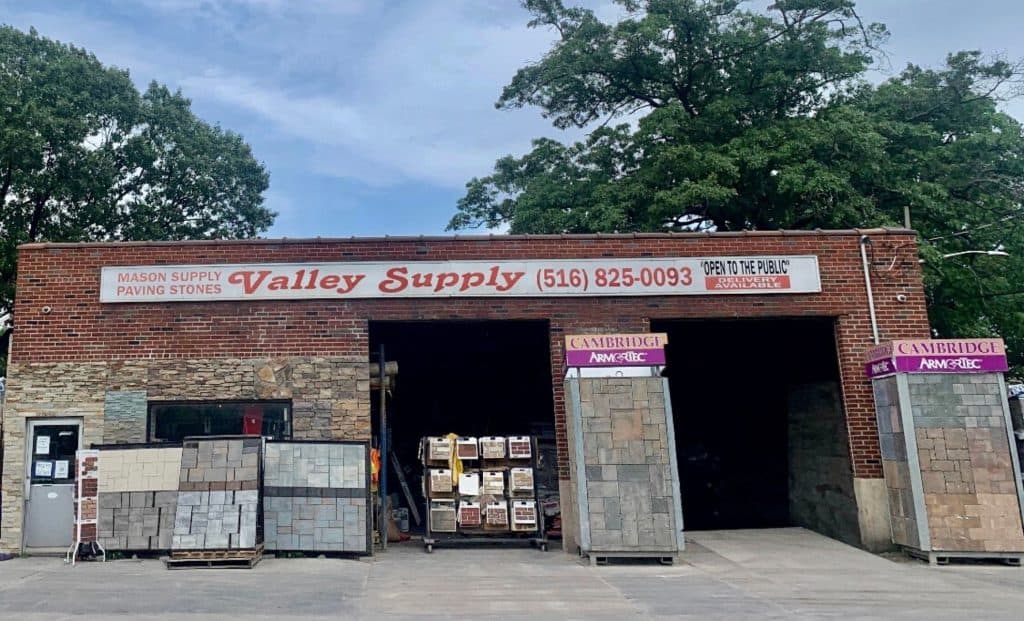
We’ve been a Premier Cambridge Dealer for over 20 years, and our 20,000 sq ft facility at 747 Meacham Avenue in Elmont has hands-on wall and paver displays specifically so you can make that call before the first pallet is delivered to your driveway.
Stone Contractors for Nassau County Hardscaping and Outdoor Projects
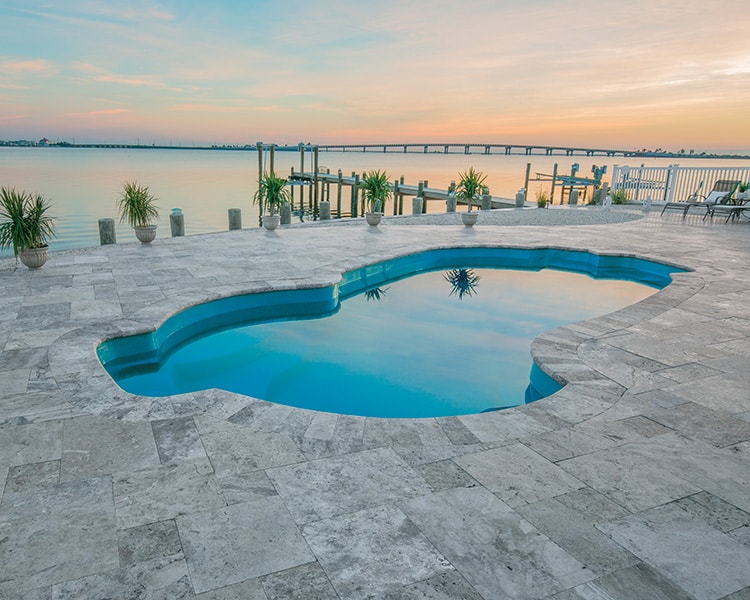
Natural stone brings a different character to a project than concrete pavers — more variation, more texture, a look that tends to age gracefully rather than just wear. Pennsylvania Bluestone is probably the most common natural stone used in Nassau County hardscaping: it’s well-suited to the climate, works for both formal and informal designs, and holds up well on patios, pool decks, and walkways. Indiana Limestone shows up on higher-end projects, particularly on North Shore properties where the architecture calls for something more refined.
Stone veneer is another category that’s grown considerably. Homeowners updating the exterior of an older Nassau County home — particularly the Levittown-era ranches and Cape Cods that define so much of the county’s residential fabric — often use stone veneer to modernize the facade without a full rebuild. Done well, it transforms the look of a house. Done with inferior materials or poor installation, it peels, cracks, and becomes an expensive problem.
Stone contractors working in Nassau County need to understand how natural stone behaves differently than manufactured products. It’s not uniform. Thickness varies. Cuts need to account for that. And the base preparation for a bluestone patio is just as critical as it is for a paver driveway — maybe more so, because natural stone doesn’t have the same flexibility as an interlocking paver system. Proper grading, drainage, and base depth are what keep a stone patio looking level and tight five years in, rather than uneven and weedy.
We carry Pennsylvania Bluestone, Indiana Limestone, and a full range of stone veneer products, along with the sand, gravel, mortar, and tools contractors need to do the job correctly. If you’re working with a stone contractor and want to see what the actual material looks like before it goes down, come by the yard. Pete and Steve between them have over 50 years of counter experience — they can walk you through the options and help you figure out what makes sense for your specific project and budget.
Finding the Right Masonry Contractor in Nassau County Starts Before You Call Anyone
The homeowners who end up happiest with their masonry projects are almost always the ones who did a little homework first — not because the process is complicated, but because knowing what to ask puts you in a much stronger position when you’re sitting across from a contractor.
Verify the license. Ask for the certificate of insurance. Get a written contract that names the actual materials. And if Cambridge pavers or natural stone are part of the plan, see the products in person before you commit. The difference between a job that looks great in year one and still looks great in year ten usually comes down to base preparation, drainage design, and material quality — things that are invisible once the work is done but impossible to fix without starting over.
We’ve been supplying masonry contractors and homeowners across Nassau County since 1956. If you’re planning a project and want to see what your options actually look like, Valley Supply Corp is open to the public Monday through Friday, 7AM to 5PM, and Saturdays from 7AM to 2PM. Stop in at 747 Meacham Avenue in Elmont — no appointment needed, no pressure to buy anything.
—
**Frequently Asked Questions**
**Who are the best masonry contractors in Nassau County?** There’s no single answer — the best contractor for your project depends on the scope, the materials involved, and your location within the county. What you can control is how you evaluate them: verify their Nassau County Home Improvement Contractor License through the Department of Consumer Affairs, confirm they carry general liability and workers’ comp insurance, and ask for references from projects completed in Nassau County specifically. Contractors who have done work in your neighborhood — whether that’s Levittown, Great Neck, or Rockville Centre — understand the local soil conditions and permit requirements that a generalist might miss.
**Do masonry contractors need to be licensed in Nassau County?** Yes. Nassau County requires all home improvement contractors — including masonry contractors — to hold a license issued by the Nassau County Department of Consumer Affairs. To qualify, applicants must demonstrate a minimum of five years of hands-on construction experience. This isn’t a formality — it’s a meaningful barrier that separates legitimate professionals from unqualified operators. Hiring an unlicensed contractor in Nassau County means you lose significant consumer protections if something goes wrong.
**What’s the difference between a brick contractor and a stone contractor?** In practice, many masonry contractors in Nassau County do both — but there are real differences in the work. Brick contractors typically handle paver installations, stoop and step work, tuckpointing, and brick veneer. Stone contractors specialize in natural stone — bluestone patios, limestone accents, fieldstone walls, and stone veneer applications. The material behaves differently, the installation techniques differ, and the base preparation requirements can vary. When you’re interviewing contractors, ask specifically about their experience with the material your project involves.
**When is the best time to hire a masonry contractor in Nassau County?** Earlier than you think. Top contractors in Nassau County are often booked six to ten weeks out by May. If you’re hoping to have a paver driveway or patio done by summer, the time to start making calls is late winter or early spring — and the time to start planning and choosing materials is even earlier than that. Winter is actually ideal for visiting a supply yard like ours in Elmont, seeing the displays without the spring rush, and getting a clear picture of what you want before the season kicks in.
**What is the Cambridge transferable lifetime warranty?** Cambridge pavers carry a transferable lifetime warranty on their ArmorTec products — meaning the warranty follows the product, not the original owner. If you sell your home, the new owners inherit the warranty. That’s a genuine benefit to your property’s resale value, and it only applies to authentic Cambridge products sourced through an authorized dealer and installed correctly. It’s one of the reasons we’ve been a Premier Cambridge Dealer for over 20 years — and one of the questions worth asking any contractor who quotes you a Cambridge installation.